

An AI outfit checker for October event outfits is useful because October dressing asks a lot from one look. You might be going from drizzle to a warm cinema, from an art fair queue to dinner, from office hours to a launch party, or from a train platform to a birthday table. The outfit has to photograph well enough, move well enough and survive a coat without looking like you gave up at the door.
The next few weeks are full of search-friendly dressing moments. Londonist’s autumn events guide lists the BFI London Film Festival from 7 to 18 October 2026 and Frieze London from 14 to 18 October 2026, while Time Out’s October guide points to film, literature and art events across the city. Those are exactly the kind of plans where people know the invite before they know the outfit. The problem is not a lack of clothes. It is choosing the combination that feels right in the room.
TryFits AI helps by turning the outfit check into a preview instead of a guess. You can test the dress with the actual jacket, swap the shoes, compare a satin skirt against jeans, and see whether the coat changes the balance. A mirror photo at home gives you one angle. A store photo gives you another person’s proportions. A virtual try-on gives you the missing part: your body, your clothes and the event brief in the same decision.
Start with the event type
Before you upload anything, name the event honestly. A film festival screening is not the same as a gala. A gallery opening is not the same as a full day walking through an art fair. A birthday dinner is not the same as cocktails where everyone stands. The best outfit check begins with the real conditions: how long you will be out, whether you will sit or walk, how much outerwear matters, and whether the venue will be overheated inside.
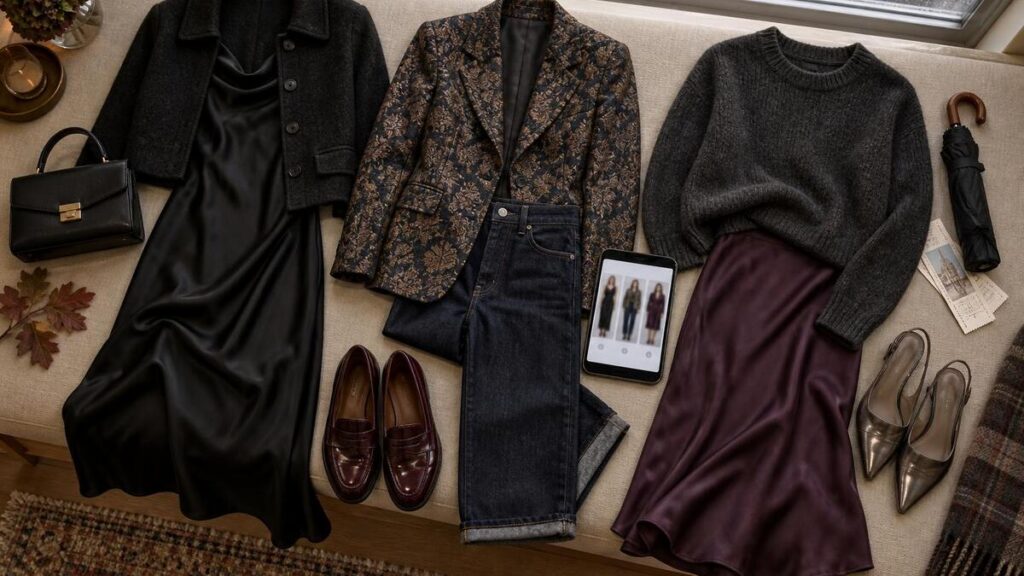
For film events, build around comfort with polish. A satin midi dress with a cropped wool jacket, a slim maxi with boots, or dark jeans with a brocade blazer can all work. The useful check is whether the outfit still looks considered when you are seated, because cinema dressing is full of awkward coat, bag and hem moments. If the preview shows the jacket riding too high or the skirt pulling when paired with boots, change the layer before changing the whole outfit.
For art fairs and gallery days, shoes become the outfit decision. Frieze or a design event asks for something visually interesting, but you will be on your feet. Test loafers, low boots, ballet sneakers or sturdy slingbacks with the same trousers or skirt. If the shoe makes the hem break badly, the outfit will look less intentional even if each piece is good alone. This is where an AI virtual try on for accessories can save you from buying the wrong shoe or bag just because it looked strong in isolation.
Upload the pieces you are actually choosing between
An AI outfit checker works best when you give it the real contenders, not a fantasy wardrobe. If you have three October event outfits in mind, upload the actual dress, blazer, trousers, coat, shoes and bag photos. The point is to compare the pieces you can wear this week, not to generate a new closet from scratch. That keeps the result useful and stops the process from turning into another scrolling session.
Take simple photos in daylight where possible. Lay the clothes flat, hang the jacket, or use clear product photos from the retailer. For shoes and bags, use side or three-quarter photos so the shape is obvious. If the fabric is textured, include a close enough image that the weave, shine or suede nap can be read. The more honest the inputs, the more helpful the outfit preview becomes.
Do not only test the statement piece. The quiet pieces often decide whether an October outfit works. A black knit under a brocade jacket can make it feel modern. A cream cardigan can soften a satin skirt. A navy trench can make a party dress look less bare on the journey. If you only upload the dress, you miss the parts that make the outfit wearable in real weather.
Check silhouette before colour
Most people start with colour because it is obvious in a product photo. For event outfits, silhouette usually matters first. Does the jacket cut you in the right place? Does the trouser width work with the shoe? Does the dress hem sit where you expected? Does a long coat make the outfit stronger or hide the best part? Colour is important, but shape is what makes the outfit feel like yours.
Use TryFits AI to compare one variable at a time. Keep the dress and shoes the same, then switch the jacket. Keep the trousers and blazer the same, then switch between loafers and boots. Keep the satin skirt, then test a slim knit against a softer cardigan. This makes the decision clearer because you can see what actually changed instead of reacting to a totally different outfit every time.
If one look feels almost right, ask what is off. A jacket might be too long, a boot might be too heavy, or a bag might sit at the wrong point on the body. The answer is rarely “nothing suits me.” More often, one proportion is arguing with another. An AI outfit checker is good at slowing that moment down so you can adjust the piece instead of blaming your body.
Plan for outerwear and weather
October outfits fail when the coat is treated as an afterthought. If you are dressing for the BFI London Film Festival, a birthday dinner, a gallery opening or a day near Regent’s Park, your outer layer will be visible for a meaningful part of the plan. Preview the full look with the coat, umbrella, bag and shoes, not just the indoor version. The journey outfit is still the outfit.
Short jackets work well with dresses and satin skirts because they keep the waist visible. Longer trenches and wool coats work better with trousers, slim maxis and cleaner columns. If the event is polished but not formal, try a dark trench, brocade jacket, navy coat or cropped leather layer. If the outfit already has shine, choose matte outerwear. If the outfit is mostly wool and denim, a satin bag or metallic shoe can add just enough light.
Rain matters too. Suede shoes may look perfect in the preview, but a wet pavement plan needs a backup. Try a second version with leather loafers, weather-friendly boots or a darker hemline. For art fairs and October city plans, the best outfit is often the one that still looks intentional after thirty minutes outside.
Use the preview as a decision tool
The strongest way to use an AI outfit checker for October event outfits is to narrow the choice, not chase perfection. Pick three looks, preview each one, then choose the outfit that matches the event and feels good on your body. If two are close, compare the practical details: comfort, coat, shoe height, bag size and whether the look works from day into evening.
This is especially helpful when you are shopping for one missing piece. Maybe you own the skirt and shoes, but need the jacket. Maybe you own the dress, but cannot decide between pewter slingbacks and black boots. Maybe you have the event ticket and two tabs open. Preview before buying so the new item earns its place. The post on what to wear to London Film Festival 2026 is a good example of how one event brief can still leave room for several personal outfit routes.
The final check is emotional but practical: would you stop thinking about the outfit once you left the house? If the answer is yes, that is the right one. If the answer is “only if I change shoes” or “only if the coat works,” the preview has done its job. It pointed to the fix before the event day.
Common questions
What is an AI outfit checker for events?
An AI outfit checker for events lets you preview outfit combinations on yourself before you wear or buy them. It helps compare dresses, jackets, shoes, bags and coats so you can choose a look that suits the event, weather and your proportions.
Can AI help me choose what to wear to a film festival?
Yes. AI can help you test whether a dress, suit, skirt or trouser outfit works with the right jacket and shoes for a film festival. It is especially useful for checking seated comfort, coat length and whether the look feels polished without being too formal.
How many outfit options should I compare before an event?
Three is usually enough. Compare one dress or trouser look, one more comfortable option and one slightly dressier option. If you test too many at once, the decision gets noisy and you stop noticing the details that matter.