

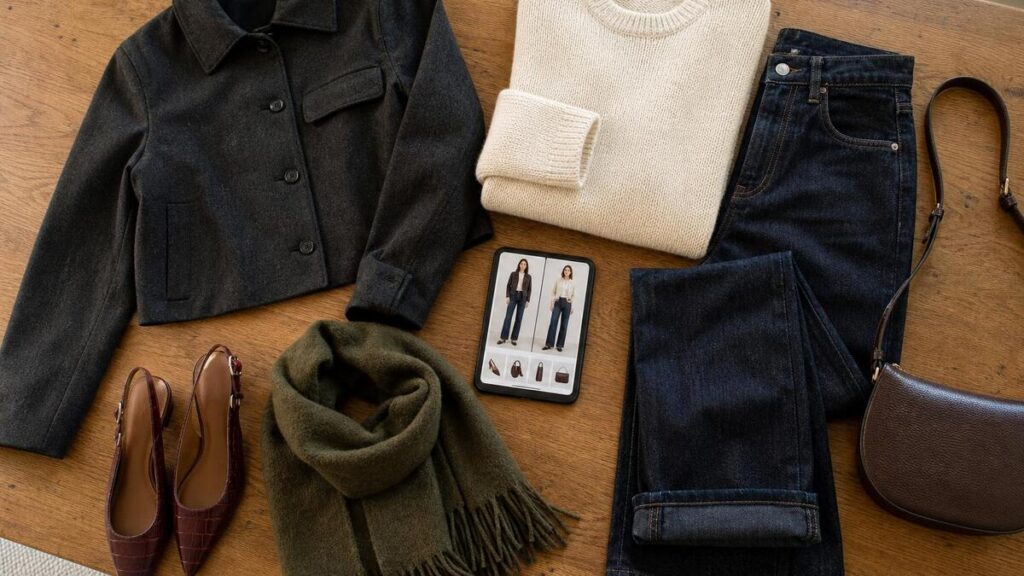
Fall shopping is where online outfit planning gets messy. You are not just buying one cute thing. You are trying to guess whether the jacket works with your jeans, whether the burgundy shoe fits your real wardrobe, whether the trouser length needs a heel, and whether the sweater that looked rich in a product photo will actually suit your coloring.
If you are looking for an AI outfit planner for fall shopping 2026, the useful version is not a random outfit generator that throws trends at you. It should help you test pieces against your own body, your own closet, your real plans, and the weather shift between late summer and proper autumn. The win is fewer wrong orders and fewer “almost right” outfits sitting in the return pile.
Fall 2026 trends are giving shoppers a lot to work through. Vogue has been pointing to modern suiting, countryside layers, Art Deco evening texture, and burgundy as a key color, while Who What Wear has highlighted animal print accessories, suede and leather jackets, and sharper cropped outerwear. Those signals are exciting, but they also create a practical question: which of these actually fits your life?
What an AI outfit planner should actually do
A good AI outfit planner should begin with your real inputs. That means a selfie or body reference, photos of clothes you own, product images from stores, and the occasion you are dressing for. Without those details, the advice becomes generic fast. “Wear a blazer with jeans” is not planning. Seeing whether that exact blazer length works with your exact jeans is planning.
The planner should also understand outfit context. A work outfit needs different shoes, bag size, and fabric weight from a weekend brunch outfit. A September city break needs layers you can carry. A fall wedding guest look needs weather backup without burying the dress. The stronger the context, the more useful the output.
TryFits AI is built around this more practical version of planning. Instead of only describing an outfit, it lets you see clothes on yourself before you buy or style them. That matters most with fall pieces because jackets, boots, trousers, and heavier fabrics change proportions more than summer clothes do.
How to use AI before buying fall clothes
Start with the piece you are most unsure about. For many people, that is the jacket. A barn jacket, suede bomber, cropped blazer, or leather jacket can look amazing in a product photo and still be wrong on your height, shoulder line, or usual bottoms. Upload the jacket image and compare it with the trousers, skirts, and shoes you actually wear.
Next, test color. Burgundy, olive, chocolate, charcoal, cream, and grey are all strong fall shades, but they behave differently depending on your closet. A burgundy bag may be the perfect update if you already wear black and denim. A burgundy coat may be too limiting if most of your outfits are warm brown and camel. AI planning helps you see the color next to your existing pieces before you order.
Then check silhouette. Wide-leg trousers need a different jacket length from slim straight jeans. A midi skirt changes when you swap ballet flats for boots. A cropped jacket can make the waist feel sharp, while a longer jacket can make the same outfit feel calmer. The best fall outfits are usually a series of small proportion decisions, not one big trend purchase.
A simple fall shopping workflow
First, photograph the pieces you already trust: your best jeans, black trousers, cream knit, grey tee, leather belt, everyday bag, and two shoe options. These become the anchor pieces. You do not need a perfect digital closet on day one. You need enough real pieces to stop yourself from buying things that only work in theory.
Second, save product images before checking out. Try the jacket with your jeans. Try the skirt with your shoes. Try the animal print flat with the quiet outfit you wear most often. If the piece only works when you invent a whole new wardrobe around it, pause. A strong fall purchase should unlock outfits, not create homework.
Third, compare two or three options side by side. This is where an AI outfit planner beats a normal wish list. You might discover that the cheaper charcoal jacket works better than the trendy brown one, or that the burgundy shoe adds enough newness without buying a full color trend. For workwear examples, how to use AI virtual try on for work outfits shows how much small fit decisions matter once clothes need to look professional.
Where AI helps most in fall outfits
AI outfit planning is most useful when the purchase changes shape, weight, or color. Outerwear, boots, trousers, skirts, evening pieces, and trend accessories are high-impact because they alter the whole outfit. A T-shirt is easy to imagine. A cropped suede jacket with wide jeans and loafers is not.
It also helps with occasion dressing. If you are planning what to wear to London Fashion Week, a fall wedding, a work conference, or a long weekend away, the outfit has to satisfy more than one condition. It needs to look right, feel like you, suit the weather, and survive the day. AI can help you test those tradeoffs before the clothes arrive.
There are limits. AI cannot feel whether a shoe rubs, whether wool makes you itch, or whether a fabric is worth the price. It also cannot replace your taste. Use it as a fitting room and comparison tool, then make the final call like a person with a life, not a trend checklist.
- Use AI for outerwear length, trouser shape, and color comparison.
- Use your own closet photos so the plan stays grounded.
- Compare outfits before buying, not after the order arrives.
- Skip pieces that only work with a fantasy wardrobe.
For more fall proportion advice, how to style oversized jackets petite is a good reminder that scale matters more than the trend name. The same jacket can be brilliant or awkward depending on the hem, shoe, and bottom shape around it.
The best AI outfit planner does not tell you to buy more. It helps you buy the pieces that make your real outfits better.
Common questions
What is the best way to use an AI outfit planner for fall shopping?
Use it before checkout. Upload product photos alongside pieces you already own, then compare jacket length, trouser shape, shoe choice, and color combinations on yourself.
Can AI help me build outfits from my own closet?
Yes. AI is most helpful when it starts with your real clothes. Photograph your staple jeans, trousers, knits, shoes, bags, and jackets so new purchases can be tested against what you already wear.
Does AI outfit planning replace trying clothes on?
No. It helps you narrow choices before buying, especially online. You still need to judge comfort, fabric feel, and quality when the clothes arrive, but you can reduce obvious shape and color mistakes first.