

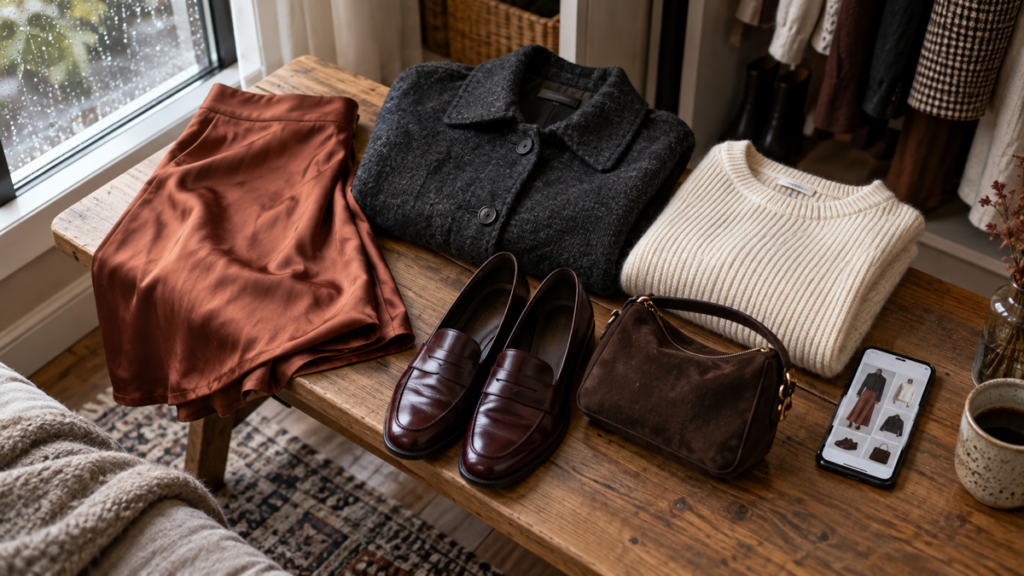
An AI outfit stylist for fall clothes is most useful when you already like one piece but cannot picture the complete outfit. Maybe it is a rust satin skirt, a chocolate suede jacket, a navy trench, or a pair of oxblood loafers. The item looks good online. The problem is everything around it: coat length, shoe height, knit texture, bag color, and whether it works with the clothes you already wear on repeat.
That is where fall dressing gets expensive fast. One new skirt can quietly demand new shoes, a different coat, and a better bag if you do not test the look properly. One jacket can seem perfect until you realize it only works with slim jeans and not the wide leg trousers you wanted to wear twice a week. A good AI outfit stylist should help you build looks around the piece before your cart turns into a small renovation project.
The trend is moving beyond simple product recommendations. Retail Technology Innovation Hub reported in September that Never Fully Dressed launched Persi powered Style Bundler and AI Stylist features, offering shoppable ways to wear an item plus personalised looks based on style, occasion, and search intent. That signal matters because shoppers are not only asking, will this fit? They are also asking, how would I actually wear this?
The best fall outfit tool does not just suggest more clothes. It helps you see whether the new piece makes sense with your real wardrobe.
Start with one hero piece
Do not ask an AI stylist to build a whole fall wardrobe from nothing. Start with one hero piece and one real plan. For example: a rust satin skirt for dinner, a charcoal scarf jacket for work, a suede shoulder bag for everyday outfits, or a pair of riding boots for weekend errands. The more concrete the item and occasion, the better the outfit suggestions will be.
Upload or select the piece, then name the setting. A satin skirt for a birthday dinner needs different partners than the same skirt for a casual office day. A barn jacket for a pumpkin patch should not be styled the same way as a barn jacket for a city lunch. Fall clothes are full of texture, which means context does half the work.
TryFits AI is strongest when the styling question stays visual. Instead of asking for vague outfit ideas, compare how the piece looks on you with two or three actual combinations. Rust satin with a cream knit and loafers will read softer than rust satin with a black fitted top and slingbacks. Seeing the shape on your body makes the decision less theoretical.
Use AI to check color, texture, and proportion
Fall outfits can go wrong when every good individual piece has the same visual weight. A suede jacket, ribbed knit, wool trousers, croc embossed bag, and heavy boots might all be beautiful, but together they can feel dense. An AI outfit stylist for fall clothes should help you spot when an outfit needs contrast: smooth satin against wool, denim against suede, a cream knit against a dark coat, or a sleek shoe under wide trousers.
Color is the next check. Current fall reporting keeps circling rich brown, burgundy, olive, navy, charcoal, soft pink, and red accessories. Those colors can be gorgeous together, but they are not automatically easy. Burgundy and chocolate can look expensive or muddy. Navy and black can look sharp or accidental. Soft pink can look fresh or too sweet, depending on the coat and shoe.
Proportion is the part static outfit boards miss. A cropped jacket might be perfect with a high waist skirt and wrong with low rise jeans. A long coat can make flat loafers feel grounded on one person and swallowed on another. If you are planning a haul, use the same logic in our AI virtual try on for fall shopping hauls guide: compare the pieces together before you decide what deserves a place in the order.
Build three fall outfits before buying
A good test is simple: can the new piece create three outfits you would actually wear? First, make the everyday version. This is the outfit for errands, coffee, campus, casual work, or a normal Saturday. If the piece cannot survive the everyday version, it may be more special than useful.
Second, build the polished version. Add a sharper coat, better shoe, cleaner bag, or a more intentional top. This is where satin skirts, suede jackets, wide leg trousers, and leather dresses either earn their keep or reveal that they only looked good in a product photo. The polished version should still feel like you, not like a costume from someone else’s saved folder.
Third, build the weather version. Fall dressing is not just color and silhouette. It is drizzle, warm trains, cold evenings, muddy pavements, and coats that have to close. Check whether your chosen shoe works in rain, whether the knit fits under the jacket, and whether the bag strap sits comfortably over outerwear.
Let the tool narrow your cart
The most useful AI styling result is sometimes a no. No, you do not need the second brown jacket. No, that skirt only works with shoes you never wear. No, the bag is beautiful but too warm for your mostly black and gray wardrobe. That kind of answer is boring in the best possible way because it saves money and returns.
TryFits AI can help you compare the styling suggestions on your own body before the order happens. If you are choosing between a leather dress and a satin skirt, or between two coats, bring the decision back to the outfits you already repeat. Our post on AI virtual try-on for leather dresses shows how much texture, shine, length, and shoe pairing matter before buying a statement piece.
Use the AI stylist as a filter, not a shopping engine. The goal is not more options. The goal is fewer better options that work with your real coat, your real shoes, your real proportions, and your real week. That is the difference between a fall wardrobe that looks good in a folder and one that gets worn.
Common questions
What should I ask an AI outfit stylist for fall clothes?
Ask it to build outfits around one specific fall piece and one setting, such as a suede jacket for work, a satin skirt for dinner, or loafers for weekend outfits. Then compare color, texture, proportion, shoes, outerwear, and whether the look works with clothes you already own.
Can AI help me decide what fall clothes to buy?
Yes, AI can help you decide what fall clothes to buy by showing whether a piece works in multiple outfits before checkout. It is especially useful for coats, boots, bags, trousers, dresses, and textured pieces where fit and styling change the whole result.
How do I avoid buying fall clothes I will not wear?
Test each item in three outfits before buying: everyday, polished, and weather ready. If the piece only works in one fantasy outfit, pause. A useful fall buy should work with your real shoes, coats, bags, colors, and weekly routines.