

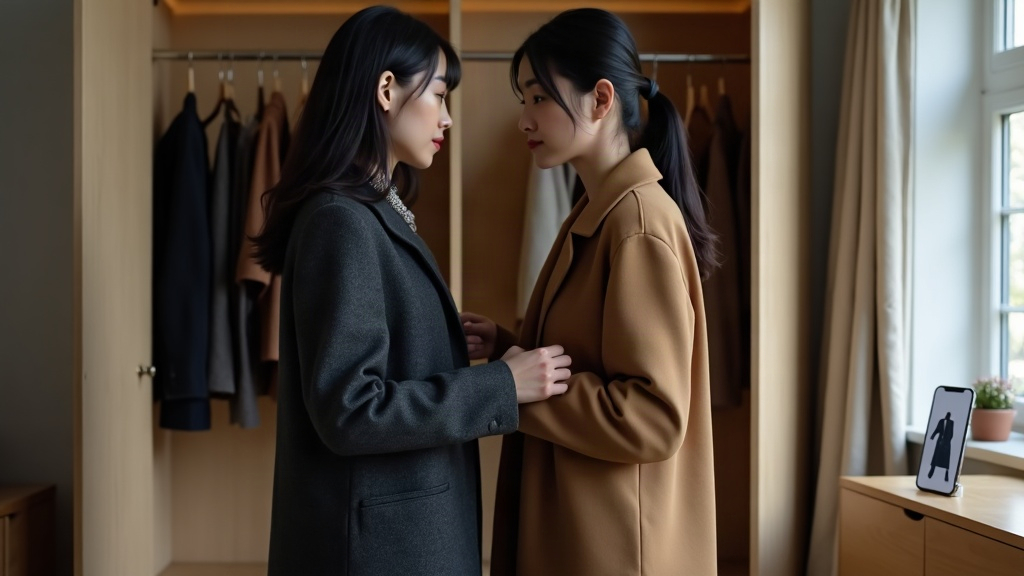
AI virtual try on for petite coats is useful because coat shopping is rarely just about whether a size technically fits. A long hem can swallow the line of an outfit, shoulders can sit too wide and an oversized sleeve can make even a beautiful coat feel borrowed. Seeing a few coat lengths and shapes on your own body before you order gives you a clearer first filter than a product photo on a model with different proportions.
The aim is not to follow a rule about what a petite person can or cannot wear. It is to see where the coat begins and ends on you, how it works with the trousers and shoes you already own, and whether its volume feels intentional. A sweeping coat can be brilliant. So can a cropped jacket. The best choice is the one whose shape feels balanced when you move.
Start by making your try-on comparison specific. Use the same base outfit for every coat, ideally a plain knit, straight-leg jeans or trousers and the shoes you would wear most. That makes differences in length, shoulder shape and sleeve volume easy to spot. A busy printed dress or a different shoe in every image can hide the very detail you are trying to judge.
Compare coat length against your real outfits
A hip-length jacket can sharpen the waistline and works well with high-rise jeans, wide trousers and midi skirts. A coat that ends around the knee is one of the most flexible options for daily wear because it covers a knit without cutting across the widest point of a thigh. A full-length coat can look elegant too, especially when it is clean through the shoulders and worn with a shoe that gives the hem a little lift from the ground.
Try each length with the same trousers first. Look for where the hem lands relative to your knees, calves and shoe. Then swap in a skirt or dress if that is how you will use the coat. The coat should not have to make you look taller to be right. It should make the pieces beneath it feel connected rather than chopped into unrelated sections.
If you are deciding between a city coat and a smarter event layer, compare a longer wool style with a cropped jacket over the same outfit. The difference is often clearer on your own image than in a product grid. For another way to think about proportion across a whole outfit, see how to compare outfit proportions with virtual try on.
Check the details a size chart cannot show
Shoulder seams are the first thing to inspect. A dropped shoulder can be a deliberate relaxed shape, but it should still leave enough definition that the sleeve does not seem to start halfway down your upper arm. Look at the coat with your arms relaxed and again with one arm bent. If the fabric bunches heavily at the elbow or the sleeve covers most of your hand, the size or cut may not suit the way you will actually wear it.
Next, look at the button position and pockets. Double-breasted styles can be great, but a very low button stance or oversized patch pocket can pull focus downward. A single row of buttons, a belt placed near your natural waist or clean vertical seams often gives a coat a more defined line. These are design choices, not restrictions, and seeing them on yourself makes the choice less abstract.
Use virtual try on to compare shapes, then use the retailer measurements to confirm the size.
Make the final decision with fit information
A virtual result is a styling tool, not a substitute for garment measurements. Once a coat shape looks promising, check the brand’s size chart, the sleeve length and whether the product notes say oversized, relaxed or fitted. Compare the garment measurements with a coat you already enjoy wearing. If reviews mention broad shoulders, a tight upper arm or unusually long sleeves, treat those notes as useful evidence.
Build a small comparison set instead of opening twenty tabs. Try one tailored knee-length coat, one cropped wool jacket and one relaxed long coat. Save the two images that feel most like your existing wardrobe, then compare them with the shoes and bags you actually reach for. That is more likely to surface a coat you will wear than choosing the most dramatic product image.
Colour matters alongside shape. Camel, charcoal and navy are useful if you want a coat that works with several outfits, while oxblood, olive or deep blue can give a simple wardrobe more character. Test a colour against the knitwear you already own. The right shade should make the outfit feel deliberate, not make every other item seem like a compromise.
Check the coat from the side as well as the front. A belt, back vent or slightly shaped seam can alter how the fabric moves when you walk. If you normally carry a work bag or wear a crossbody, include it in one comparison. It is better to discover that a wide lapel catches a strap before an order arrives than after the return window starts.
Keep the final choice grounded in the life you have. A beautiful coat that only works with one dress may still be worth it, but it is a different purchase from an everyday layer. Compare each candidate with your regular trousers, one evening outfit and the footwear you use in wet weather. The coat that joins those outfits easily will earn its place more often than the one that only shines in a product image.
Common questions
What coat length works best for petite people?
There is no single best length. Hip-length, knee-length and long coats can all work well. Compare each one over your usual trousers or dress and look for a proportion that feels balanced to you, with a hem that does not drag or overwhelm the rest of the outfit.
Can petite people wear oversized coats?
Yes. Choose an oversized cut with a clear shoulder line, manageable sleeve length and enough room for your normal layers. A relaxed coat looks intentional when the rest of the outfit has a little structure, such as straight jeans, a close knit or a defined shoe.
Does virtual try on replace checking a coat’s measurements?
No. Virtual try on helps you compare silhouette, length and styling on your own image. Always confirm the retailer’s measurements, fit notes and return policy before ordering, particularly for sleeve length and shoulder width.