


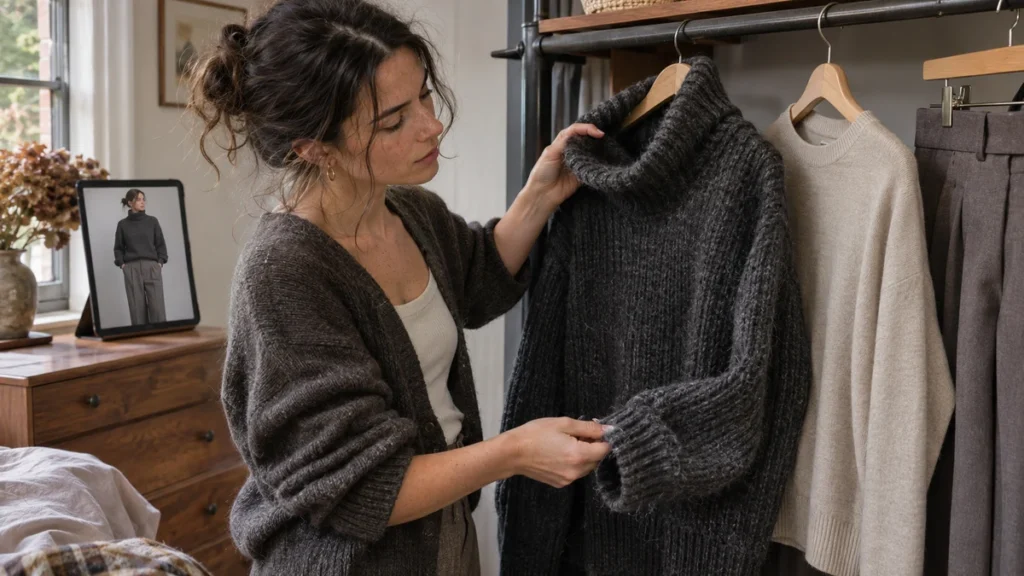
No, virtual try on cannot tell you whether a jumper will itch. TryFits AI can help you picture knitwear on your digital twin, but a generated image cannot reproduce the sensation of wool against your neck or a scratchy seam at your wrist. Use the preview to decide whether you like the look, then check comfort separately.
That is a useful division when shopping for knitwear online. A charcoal roll neck might look right with your trousers yet feel uncomfortable after ten minutes. A softer alternative might solve the comfort problem but have a completely different neckline or shape.
If you are asking, “Can virtual try on predict itchy knitwear?”, the practical approach is to separate two decisions: which jumper belongs in your outfits, and which fabric you can comfortably wear. A preview helps with the first. Fibre details, your existing clothes and a physical try-on help with the second.
What TryFits AI can show about a jumper
According to the TryFits AI FAQ, the service uses generative AI to show clothing on a digital twin created from a photo, or a selfie with measurements. Supported sources include store items, product links, uploaded garment photos and clothes from your digital closet.
For knitwear, that makes it useful for exploring the visible relationship between a jumper and the rest of your outfit. You can consider whether a broad crew neck suits your preferred styling, whether a long hem covers a skirt waistband, or whether an oatmeal knit gives dark denim the lighter finish you wanted.
TryFits AI describes its results as photorealistic. That is the company’s description, not independent proof of exact fit or fabric behaviour. A convincing knitted texture is still a generated representation, not evidence that the actual garment feels soft, stretches comfortably or has the same weight as the preview suggests.
Why softness cannot be judged from an image
A fluffy surface can look inviting while feeling prickly against sensitive skin. Conversely, a smooth, closely knitted jumper might feel comfortable despite looking less soft in a photograph. Visible fuzz, stitch definition and colour do not establish how a garment will feel on you.
Comfort also involves more than the main yarn. A high collar keeps fabric against your neck; snug cuffs create repeated contact at your wrists. Labels, shoulder seams and decorative yarns can bother you even when the body of the jumper feels fine.
Your wearing conditions change the experience too. A knit that feels comfortable in a cool room may become irritating when you are warm on a crowded train. Neither a still preview nor an animated digital twin can establish your response to that combination of warmth, friction and skin contact.
Check the fabric before comparing the outfits
Start with the composition label, not the product’s description of softness. “Wool blend” leaves important questions unanswered. Read the full fibre breakdown and check whether the retailer provides details about the yarn, construction and care requirements.
No fibre label guarantees comfort for everyone. Merino is often chosen for next-to-skin clothing, but that does not mean every merino jumper will suit you. Cotton can be a practical alternative if animal fibres bother you, although a thick cotton knit may feel heavier than expected.
- Compare the composition with a jumper you already wear comfortably, rather than relying on a general claim about softness.
- Look for reviews that describe neck irritation, rough cuffs or scratchy seams. Treat them as individual experiences, not guarantees.
- Check whether “soft” describes the fabric itself or merely the garment’s appearance.
- Read the care label before buying. A jumper that requires care you cannot maintain is a poor everyday choice.
- Confirm the return conditions before removing tags or wearing the garment beyond a permitted indoor try-on.
If the composition is missing, ask the retailer. A digital preview cannot fill that information gap, and a close-up photograph cannot confirm an undisclosed fibre blend.
Three outfit comparisons worth previewing
A roll neck versus a crew neck for commuting
Picture a charcoal ribbed roll neck with straight indigo jeans and a navy coat. It creates a continuous dark neckline, but it also puts knitwear directly against your neck. If that contact usually bothers you, consider a charcoal crew neck with a smooth cotton layer underneath.
Preview the alternative to check whether the lower neckline still gives you the look you want. For cold, dry weather, choose outerwear that supplies the warmth rather than expecting a thin base layer to do everything. Indoors, you can remove the coat without being left in a collar you dislike.
A textured jumper versus a smooth knit for work
An oatmeal cable jumper with chocolate tailored trousers has visible texture and a relaxed finish. If the cable knit you are considering feels rough, a smooth cotton crew neck in the same colour offers another route. It will not reproduce the cable texture, but it may preserve the light top and dark trouser combination.
Use the preview to decide whether you miss that texture enough to keep searching. A fine cardigan is another option, especially in a heated office where opening or removing a layer is useful. For outfit details, see how to wear a cardigan with tailored trousers.
A festive knit versus a comfortable base outfit
Try a burgundy jumper with a black satin midi skirt and leather ankle boots. If metallic yarn around the collar causes discomfort during a physical try-on, consider a plain burgundy knit instead. The colour can still carry the festive mood without requiring that particular yarn.
For a wet evening, choose a weather-appropriate coat and footwear with suitable grip. A virtual outfit can help you assess the combination visually, but it cannot tell you whether the knit is warm enough outside or whether the boots are safe on slippery paving.
Do a contact check when the jumper arrives
Follow the retailer’s try-on rules and keep tags attached where required. Try the jumper over the layer you actually intend to wear. Check the collar, inner elbows, cuffs and seams, then move your arms and sit down to notice pressure or rubbing.
A cotton base layer can reduce direct contact across your torso, but it will not necessarily protect your neck or wrists. If those areas remain uncomfortable, choose a different neckline or garment. Do not buy an irritating jumper on the assumption that washing will reliably fix it.
Common questions
Can TryFits AI tell whether a wool jumper will itch?
No. Its virtual try-on generates a visual representation of clothing on your digital twin. It does not measure your skin’s response to wool. Check the composition and assess the physical garment within the retailer’s return conditions.
Does adding measurements make virtual knitwear feel more accurate?
Measurements do not provide sensory information about yarn or seams. They may be part of creating your digital twin, but they cannot establish softness, breathability or irritation. Keep comfort checks separate from the visual preview.
What should I choose if I like a jumper’s look but dislike its fabric?
Look for the same colour, neckline and approximate silhouette in a composition you already tolerate. Preview that alternative with your intended trousers or skirt, then physically check its collar and cuffs before committing to it.