


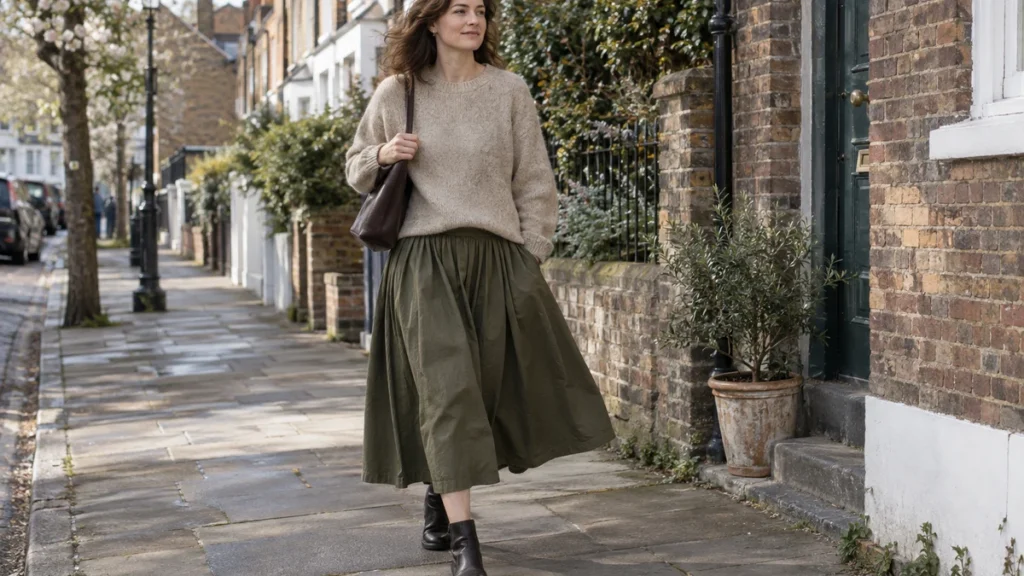
Yes, you can wear a loose jumper with a full skirt without tucking it in or adding a belt. Start with a jumper whose hem rests near the skirt’s waistband, or choose a longer knit with a soft hem that hangs freely. The useful question is where the clothes meet, not whether your body needs a different outline.
A full skirt might have gathered cotton, crisp box pleats or softly flared wool. Each responds differently to a loose knit: a firm waistband can support a small tuck, while a lightweight skirt may bunch underneath it. Two outfits with similar shapes can therefore feel quite different once you move.
Before buying another jumper, compare your skirt with three lengths: waistband, upper hip and lower hip. Keep the shoes and colours unchanged so you can see what the hem alone does. A preview on yourself can help you choose a direction; wearing the actual pieces tells you whether they catch, shift or feel comfortable.
Choose where the jumper meets the skirt
GetWardrobe’s guide, Proportion and composition in outfits, offers examples of balancing garment volume and pairing shorter pieces with wider bottoms. Treat that as a starting experiment, not a requirement to make yourself look taller or smaller. With a full skirt, hem placement gives you several equally usable options.
A waistband-length jumper leaves the skirt’s construction visible
Choose a boxy knit that reaches the waistband and overlaps it slightly when you stand. This lets gathers or pleats open below the jumper rather than underneath it. Try an oatmeal cotton jumper with a navy cotton midi skirt and brown loafers for mild autumn days.
Check the overlap with your arms raised and while seated if you prefer continuous coverage. A shorter jumper does not have to reveal skin, but its length needs to work with that particular waistband. A thin camisole underneath can provide coverage without changing the outer silhouette.
An upper-hip hem creates a relaxed overlap
A jumper ending at the upper hip covers the waistband and the beginning of the skirt’s fullness. Choose a straight hem or softly ribbed edge that does not grip tightly. For example, a grey merino jumper over a black gathered skirt creates a relaxed outline while leaving plenty of skirt visible.
If the hem keeps climbing, examine the ribbing before changing sizes. A narrow, firm band can catch on the waistband or pull the knit into a rounded shape. A split hem or looser edge may solve the problem while preserving the sleeve and shoulder fit you already like.
A longer jumper works best when the layers can move
A lower-hip jumper over a full skirt creates a deliberately long, layered silhouette. Try a soft navy knit over a fluid charcoal skirt, with ankle boots. Side slits can help the jumper fall around the skirt instead of catching on its folds; avoid assuming that every long knit needs a belt.
Match the fabrics before adjusting the shape
For an easy first combination, pair a medium-weight knit with a skirt that falls in soft folds. Merino, cotton knit or a supple wool blend can sit comfortably above viscose twill or lightweight wool. Check lining and fabric thickness too, since fibre names alone do not establish how a garment will hang.
A crisp cotton skirt holds more space around itself. Pair it with a shorter loose jumper if you want its gathered shape visible, or use a longer fine knit that follows the fabric underneath. A thick cable knit over stiff gathers is also an option, but expect a more expansive silhouette rather than a smooth overlap.
With slippery satin, start untucked. A heavy tuck can pull at the waistband, while a rough knit may catch against the skirt. If you want to experiment with satin specifically, the guide to styling a satin skirt with virtual try-on offers a related starting point for comparing combinations.
Four outfit examples with different hem lengths
For work: a loose fine knit and a box-pleat skirt
Wear a burgundy merino jumper ending just below the waistband with a charcoal box-pleat midi skirt. Add black loafers and opaque tights when temperatures drop. Choose a jumper with room through the torso but sleeves that clear your hands, especially if you spend the day typing.
Leave it untucked first. If the hem covers the top of the pleats and you prefer to show them, fold the knit inward once, provided it stays comfortably in place. A genuinely shorter jumper is a better alternative if you keep readjusting the fold.
For a dry weekend: cotton knit and gathered denim
Combine an upper-hip cream cotton jumper with a full indigo denim skirt and burgundy trainers. Medium-weight denim gives the skirt a distinct shape without requiring a fitted top. A small crossbody bag keeps another large layer away from the jumper and skirt overlap.
For warmer weather, choose a lighter cotton knit and a shorter full skirt. For chilly mornings, add tights and a jacket with enough room for the jumper’s sleeves. Avoid sizing down the knit just to make layering possible; check the jacket’s armholes instead.
For dinner: a longer knit and a fluid skirt
Try a lower-hip chocolate jumper with a copper satin full skirt and brown ankle boots. A fine or medium-gauge knit lets the skirt move beneath it, while the satin adds a different surface within a related colour palette. Keep the hem straight rather than forcing a tuck into a delicate waistband.
For cold days: a textured jumper and wool skirt
Wear a loose forest-green cable jumper with a navy wool-blend full skirt, thermal tights and practical boots. Choose a waistband-length knit to leave the skirt’s folds clear. Add a lined coat that closes easily over both pieces, and use weather-resistant footwear if rain is forecast.
Compare the outfit without changing everything
TryFits AI’s virtual try-on can provide a visual starting point for comparing clothes on your own body. For this question, compare a shorter jumper with a longer one while keeping the skirt constant. Do not treat a generated preview as proof of fabric weight, warmth, waistband pressure or freedom of movement.
Then test the real outfit by sitting, walking and reaching forward. Notice whether the jumper catches on the waistband, the skirt twists or the sleeves interfere with your hands. For a more systematic comparison, use the approach in how to compare two outfits before buying online: change one feature at a time.
Common questions
Do you have to tuck a loose jumper into a full skirt?
No. A waistband-length jumper can sit above the skirt’s folds, while a longer jumper can overlap them. Tuck only if you like the result and the waistband comfortably accommodates the knit. If it feels crowded, leave it out or choose a lighter jumper.
Can you wear an oversized jumper with a full maxi skirt?
Yes. Try a soft jumper with a loose hem over a fluid maxi skirt, then check the skirt’s length with your chosen shoes. Keep the hem clear of the ground for walking. Side slits in the jumper can help the layers move independently.
What shoes work with a loose jumper and a full skirt?
Loafers suit a pleated work outfit, trainers work with gathered cotton or denim, and ankle boots provide coverage in cooler weather. Check that the skirt does not catch on boot shafts or trail beneath your shoes. Choose footwear for your walking plans before deciding the final skirt length.