


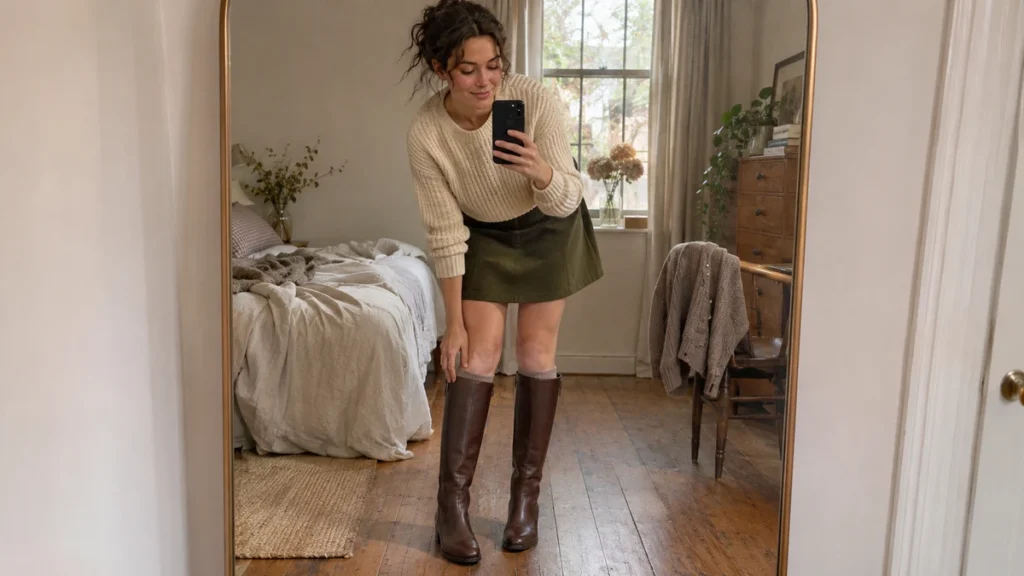
How should knee high boots fit at the calf? They should feel secure without pinching, restricting movement or requiring force to close. A fitted leather pair can follow your leg closely, while a straight shaft can leave visible space. The right fit lets you sit, walk and wear your intended socks comfortably.
The confusing part is separating deliberate shape from a sizing problem. A gap might belong to the design, but it can also make a boot catch against a skirt. A close shaft might look sleek while feeling uncomfortable after ten minutes in a chair.
Before choosing, compare the same outfit with two shaft shapes: one that follows the calf and one that stands away. Seeing both on yourself helps you choose the silhouette you enjoy. You still need a physical fitting to check pressure, fastening and movement, which a generated try-on image cannot establish.
Check calf fit with your actual winter layers
Start with the socks or tights you plan to wear. Bare-leg fitting gives you little information about how boots will feel over wool socks or tucked trousers. Fasten both boots fully, then stand naturally rather than stretching your leg to help the zip close.
There is no universal finger-width rule for calf clearance. Stretch fabric, rigid leather, lining and shaft shape behave differently. Look for comfortable contact in a fitted design, or stable space in a straight design, rather than forcing every boot to meet the same measurement.
- A zip should move without trapping skin or needing you to squeeze the shaft together forcefully.
- The upper edge should not dig in when you sit with your feet resting on the floor.
- You should be able to walk and bend your knee without the shaft pressing painfully behind it.
- Your heel and forefoot need their own fit check, even when the calf feels right.
Read the retailer’s measuring instructions before ordering. Check where its stated shaft circumference is measured, whether that number changes with shoe size, and whether it describes the boot relaxed or stretched. A calf measurement alone does not tell you where the boot’s widest section will land.
Choose the shaft shape before changing the size
A close shaft for skirts that move
A close-fitting shaft works neatly beneath an A-line midi because the skirt can move around it without meeting a broad upper edge. Try black stretch boots, a charcoal wool skirt and a raspberry fine-knit jumper. Keep the skirt long enough to overlap the boot when standing if you want continuous coverage.
Check that overlap while sitting and taking a long step. A skirt lining can catch against a zip pull or textured upper, even when the lengths look right in a mirror. Our guide to boots overlapping a midi skirt explores the hem arrangement separately from calf fit.
A straight shaft for a visible gap
A straight shaft can stand away from the calf intentionally. Wear chocolate leather boots with a stone corduroy skirt ending above the knee, opaque brown tights and an oatmeal crew-neck jumper. The gap makes the boot’s structure visible; it is not something you need to disguise.
Choose leather with enough structure to hold the shape you want. Softer leather may fold at the ankle, which is acceptable if you enjoy that effect. If the boot rotates, slips excessively or feels unstable, investigate the foot and ankle fit rather than assuming the calf gap is responsible.
Three more outfits with different fitting needs
Tucked trousers for a cold commute
Pair dark olive slim trousers with black riding-style boots, a cream thermal top and a quilted jacket. The trousers need to lie comfortably inside the shaft, without a thick fold behind the knee. Smooth the fabric down before fastening, then sit to check the combined layers.
A boot that fits over tights may not accommodate trousers. Look for a different shaft width rather than automatically increasing the shoe size, which may leave too much room in the foot. If tucking feels fussy, switch to a skirt and warm tights instead of repeatedly forcing the zip.
A knitted dress for an indoor dinner
Try a burgundy ribbed midi dress with dark brown boots and a softly tailored coat. A straight shaft gives a visible outline beneath a side slit, while a closer shaft creates less interruption as the dress moves. Compare those effects without treating either as a correction to your body.
For a heated restaurant, fine tights may feel more comfortable than thick socks inside an already close boot. Choose the dress length and slit placement while seated as well as standing. For separate questions about the knit itself, see our guide to what virtual try-on can show about knit dresses.
A short skirt with weather-ready layers
Wear navy flat boots with a grey wool mini, navy opaque tights and a pale blue shirt beneath a substantial jumper. A lightly structured shaft suits this outfit without needing to grip the calf. Add a rain-resistant coat when showers are forecast, and check the boots’ stated weather protection.
For wet pavements, prioritise a suitable outsole and manageable heel over an exact colour match. Do not assume a leather upper or chunky sole makes a boot waterproof or slip-resistant. In severe weather, wear appropriate practical footwear for the journey and change indoors.
Separate a styling preference from a fit problem
GetWardrobe’s proportion and composition guide notes that an outfit can feel wrong because of fit rather than proportion. Apply that idea here: first establish that the boots are comfortable, then adjust the skirt length or shaft shape. A different hem cannot solve a painful upper edge.
Change one element at a time when comparing looks. Keep the dress and tights, then compare a close shaft with a straight one. Next, test the preferred boot with another hem length. This makes it easier to identify what you like instead of replacing the whole outfit.
Do not rely on a tight boot stretching into comfort. Materials soften differently, and substantial extra calf room is not guaranteed. Ask a qualified shoe repairer whether a particular pair can be adjusted, or choose another cut while a return remains possible.
Common questions
Should knee high boots have a gap at the top?
They can. A straight shaft often leaves a visible gap, while a stretch shaft usually sits closer. Judge the gap alongside comfort and stability. You do not need to fill intentional space with thicker socks, especially if the foot already fits well.
Should I size up if boots are tight around my calves?
Not automatically. A larger shoe size may add unwanted length without enough extra calf room. Check the brand’s shaft measurements and look for alternative widths, adjustable panels or another cut. Choose a pair that accommodates both your foot and your calf comfortably.
How high should knee high boots come up?
The upper edge should allow your knee to bend without painful pressure behind it. Shaft height varies, so a pair described as knee high may land differently on you. Sit in both boots before removing the tags, and try a shorter shaft if the edge catches.