

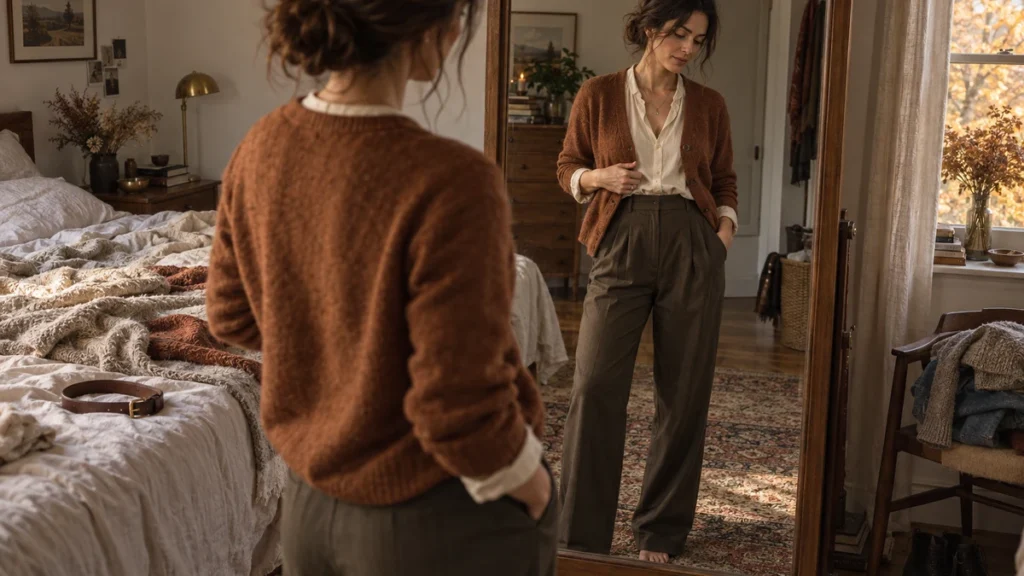
A defined waist can change the shape of an outfit without changing the clothes in it. Start with one simple move: tuck a shirt into trousers, fasten a cardigan at the middle, or belt a relaxed jacket. Keep the rest of the outfit familiar so you can see whether that new line feels like you.
The tricky part is placement. A belt that looks right over a thin shirt may bunch a chunky knit; a full tuck can make a soft blouse balloon above the waistband. Before buying anything, compare the same outfit with the waist left loose, lightly tucked, and belted. The most useful version is the one you can sit, walk, and layer in comfortably.
Vogue identifies waist-focused styling in its Fall 2026 fashion trend coverage and discusses runway styling tricks that reshape familiar pieces. You do not need a runway silhouette to try it. For everyday clothes, the question is how much definition you want, where you want it, and whether the fabric will hold that shape through a normal day.
Start with the waistline your outfit already has
For how to style a defined waist in fall 2026, first look at your bottom half. High-rise trousers or jeans give a tucked top a clear stopping point. Mid-rise bottoms can work just as well with a shorter top or a small front tuck; forcing a long shirt into them may create bulk. Wear the rise that feels comfortable, then build the line around it.
A crisp cotton poplin shirt tucked into high-rise, straight-leg trousers makes an easy work outfit. Leave the top two buttons open if you like a relaxed neckline, and add loafers or ankle boots. If the shirt feels too full, tuck only the front and let the back fall naturally. A thin ribbed top offers a smoother option under a blazer.
Look at the outfit from the side as well as the front. If fabric is gathering at your lower back, loosen the tuck and spread the excess evenly around the waistband. When comparing versions on yourself, change only one thing at a time: full tuck versus front tuck, for example. That makes the choice clearer than changing the shoes and jacket at the same time. For a closer look at that process, see our guide to comparing outfit proportions.
Define a cardigan without making it stiff
A cardigan is one of the easiest pieces to reshape because you can change its fastening. Button a fine-gauge cardigan at the waist over a fitted tee, leaving one or two lower buttons open. Pair it with straight jeans and low-profile trainers for a casual look. The small opening allows the knit to fall over the hips rather than pull across them.
For a thicker cardigan, skip the full tuck. Put a narrow leather belt over it instead, close enough to the body to stay in place but loose enough to slip a finger underneath. A softly knitted cardigan may fold around the belt; arrange those folds before adding a coat. With dark denim, a cream or oatmeal knit and a brown belt give each part of the outfit a distinct outline.
If you prefer no belt, wear a cropped cardigan over a longer, untucked base layer. The cardigan hem creates a waist-level break while the shirt underneath stays loose. Choose a base layer with a flat hem and light fabric, such as cotton jersey, so it does not bunch beneath the knit. This is also a useful approach when you expect to take layers on and off indoors.
Choose the right belt and placement for a jacket
Before belting a jacket, check what happens when you close it. A softly structured blazer or light utility jacket usually gathers more neatly than a rigid, heavily padded style. Fasten the jacket first, then place the belt where the fabric naturally narrows. If that sits above or below your trouser waistband, that is fine; the two lines do not have to match.
Try a slim belt over a single-breasted blazer with a fine knit and wide-leg trousers. A dark belt on a dark blazer gives a quiet change of shape, while a contrasting belt makes the waist the focus. Avoid pulling it so tight that the lapels twist or the hem kicks outward. If the jacket already has a tie belt, start there rather than adding extra hardware.
A coat presents a different choice because it must still fit over warm layers. Tie its existing belt at the front or slightly to one side, leaving enough room for a sweater beneath. For a coat without a belt, try a scarf loosely knotted at the waist only if it stays secure as you move; do not cinch a slippery scarf around heavy outerwear. In wet or windy weather, a coat’s own fastening will be more dependable.
Build outfits for the weather you actually have
On a mild fall day, wear a tucked long-sleeved tee, pleated wool-blend trousers, and a lightweight jacket left open. The trouser waistband gives the outfit its shape without another layer pressing against it. When temperatures drop, switch to a fine merino sweater tucked just at the front and add an open coat. Fine knits layer more smoothly than bulky cable knits under a fitted waistband.
For rain, a belted water-resistant trench over a jersey top and straight jeans is more practical than a wool blazer that may need drying afterward. Keep the trench belt loose enough for a warm layer underneath, and choose boots with a sole suited to wet pavements. Once indoors, the jeans and top still make a complete outfit if you remove the trench.
If you want to wear a thick sweater, let it stay untucked and define the waist through the layer above it. A tie-belt coat can do that without compressing the knit. Alternatively, pair the sweater with a skirt that has a visible waistband and fold just a small section of the sweater hem under itself at the front. Test that fold while sitting; if it slips immediately, wear the hem loose. Our advice on layering fall outfits without looking bulky offers more ways to manage thicker fabrics.
Use the silhouette to guide any purchase
If you are considering a new belt, jacket, or cardigan, style the closest piece you already own first. A belt needs to reach the spot where you plan to wear it, which may be over a jacket rather than through trouser loops. Check its length against that layer, not just your usual trouser size. For a cardigan, look at whether its buttons lie flat when you move.
A visual try-on can help you compare a belted jacket with an open one or judge where a cardigan hem falls alongside your trousers. Treat the image as a styling preview, not a measurement of fabric stretch or physical fit. Check garment dimensions and return terms before buying, especially when you intend to wear a piece over winter layers.
Common questions
Can you define a waist without wearing a belt?
Yes. Tuck a shirt into trousers, fasten a cardigan at the middle, or choose a jacket that narrows gently at the waist. A shorter outer layer over a longer, loose top can also create a visible break without cinching anything.
Where should a belt sit over a blazer?
Start at the point where the closed blazer naturally narrows, then adjust it slightly up or down until the lapels lie flat and the hem hangs evenly. It does not need to line up with your trouser waistband. Leave enough ease to sit comfortably.
How do you wear a defined waist with a chunky sweater?
Leave the sweater loose and use a tie-belt coat to create shape on the outside. If you want the waistband visible indoors, try a small front fold instead of tucking in the entire sweater. Keep it only if it stays comfortable when you sit and move.