

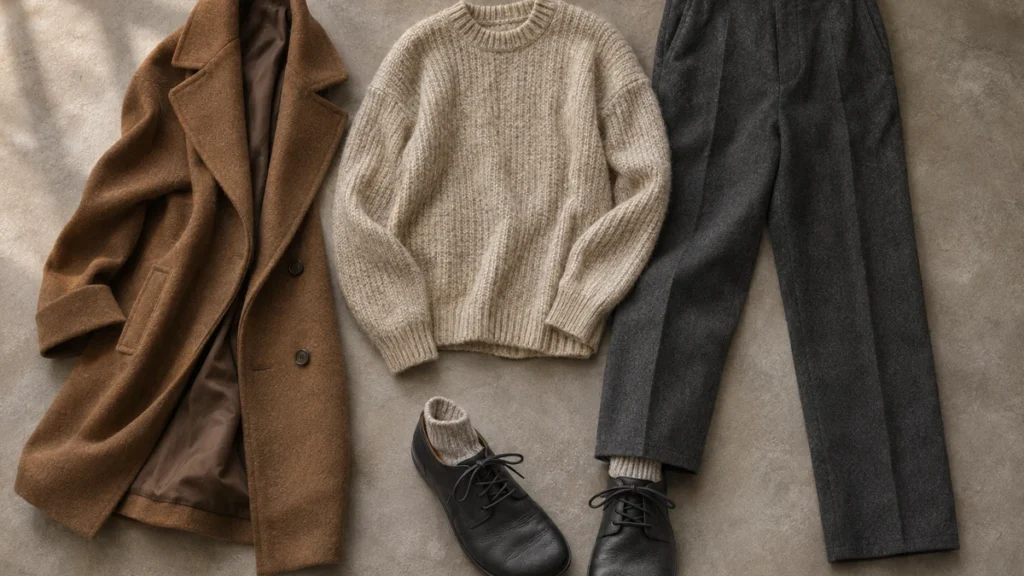
To style barefoot shoes with winter outfits, start with straight trousers, a textured knit and a coat with enough structure to balance a broad toe shape. Let the trouser hem sit close to the shoe rather than bunch over it. Choose footwear suitable for the actual weather: a minimalist sole is not automatically warm, waterproof or grippy.
There is a named trend signal behind the interest. Google’s 2026 Fashion Capitals report includes “barefoot shoes” among its fashion search findings. That supports discussing them as a current search topic, but does not establish sales, universal adoption or health benefits.
The styling question is specific: will that wider, flatter shoe work with the clothes you already wear? The same pair can look discreet beneath straight jeans and much more prominent below cropped trousers. Comparing those complete silhouettes on yourself, rather than judging the product photograph alone, helps you choose a useful starting point.
What makes barefoot shoes look different?
Barefoot footwear commonly combines a foot-shaped toe box, flexible construction and little or no height difference between heel and forefoot. Designs vary, so check the individual specification. The visible difference is often the front: it can look broader and less tapered than a conventional trainer, loafer or boot.
Work with that shape instead of trying to disguise it. Matte leather, suede and low-contrast stitching make a quiet starting point, while contrasting soles draw more attention to the outline. Black is useful with dark trousers; brown can look softer beside denim, oatmeal knitwear and a navy coat.
Choose the trouser hem before the accessories
A straight leg that falls cleanly towards the top of the shoe is the easiest first combination. It gives the footwear a clear place in the outfit without gathering fabric around a low sole. Check the back hem too: trousers cut for a chunky trainer or heel may drag when worn with a flatter shoe.
Wide trousers also work, provided the hem stays clear of the ground and does not collapse across the toes. For cropped trousers, make the sock intentional. A charcoal sock between grey trousers and black shoes gives a continuous line; a cream ribbed sock creates a visible break that feels more casual.
A narrow ankle opening makes the shoe’s width more noticeable. That is not a mistake, but it produces a different silhouette from a straight leg. If your outfit feels unexpectedly bottom-heavy, try a less tapered trouser before replacing the shoes or adding more accessories.
Four winter outfits built around barefoot shoes
Straight jeans for everyday errands
Wear dark indigo straight jeans with brown leather barefoot shoes, tobacco socks and an oatmeal crewneck. Add a navy wool coat for dry, cold days. Keep the jeans uncuffed initially, then compare one small turn-up if the hem catches the shoe; a thick roll can become the strongest detail in the outfit.
For damp conditions, choose a model explicitly described as water-resistant or waterproof, and check its care instructions. Suede needs more consideration around puddles and road salt. A darker leather upper may be easier to maintain, but appearance alone tells you nothing about water protection.
Tailored trousers for a relaxed office
Pair charcoal straight trousers with black barefoot lace-ups, dark socks and a fine burgundy jumper. A crisp shirt underneath adds definition at the neckline without needing a formal shoe. Keep the trouser crease if you like a sharper finish, and choose an upper with minimal contrast stitching.
This suits workplaces where understated casual footwear is accepted. It is not a substitute for checking a formal dress code. For another way to connect relaxed shoes with smarter clothing, the guide to mixing sporty and tailored clothes offers useful outfit principles.
A knitted skirt for a softer silhouette
Try a chocolate ribbed midi skirt, an ivory jumper and dark brown barefoot ankle boots. Opaque brown tights connect the skirt and footwear, while a coat worn open keeps the layers visible. Choose a skirt with enough walking room and check that its hem does not repeatedly catch the boot opening.
A flat shoe does not require a short skirt. With a longer hem, compare the outfit from the side as well as the front. If several layers end at nearly the same point, change the coat or skirt length so each garment has room to register.
Corduroy for a casual weekend
Combine olive straight corduroys with black barefoot boots, a grey sweatshirt and a quilted jacket. Corduroy’s visible ribs give a simple outfit texture without adding another colour. If the trousers are cropped, use socks tall enough to keep your ankles covered when you sit down.
On a milder day, swap the boots for low shoes and keep the same trousers. In genuinely cold weather, check that the footwear accommodates suitable socks without squeezing your toes. Do not assume a thicker sock will work inside a shoe that already fits closely.
Check warmth, grip and comfort separately
Winter suitability needs its own checks. Look for clear information about lining, water protection and outsole use, rather than relying on a rugged-looking upper. Thin soles can feel cold on winter ground, and a flexible sole should not be assumed to provide traction on ice.
If barefoot footwear is new to you, begin with short periods of wear rather than a full commuting day. A different sole and heel profile can feel unfamiliar. Seek qualified advice if you have pain, a foot condition or concerns about changing footwear; a fashion trend is not medical guidance.
Compare the silhouette without mistaking it for a fit test
To decide how to style barefoot shoes, compare one outfit at a time. Keep the top and coat unchanged, then try straight jeans against cropped trousers. A TryFits AI outfit preview can support that visual comparison, but a generated image cannot verify toe room, sole flexibility, warmth or walking comfort.
Use the actual footwear for the final check. Walk indoors, sit down and inspect both trouser hems. Your toes should not need to grip to retain the shoe, and your heel should feel secure. Follow the manufacturer’s measuring guidance and keep the return conditions in mind before wearing a new pair outdoors.
Common questions
Can you wear barefoot shoes with smart trousers?
Yes. Start with straight tailored trousers, dark socks and a simple leather upper. Adjust the hem for the lower sole so it does not drag. The result is smart casual rather than automatically formal, so check your workplace or event dress code.
What socks should you wear with barefoot shoes in winter?
Choose socks that provide suitable warmth without crowding the shoe. A wool blend can be useful, but thickness must suit the available space. Match socks to trousers for a quiet transition, or choose visible ribbing when you want a more casual finish.
Are barefoot shoes suitable for snow and ice?
Only consider a particular pair if its manufacturer specifies appropriate winter performance. The barefoot label does not establish insulation, waterproofing or ice grip. For hazardous conditions, prioritise footwear designed for the surface and temperature over the silhouette you planned to wear.