


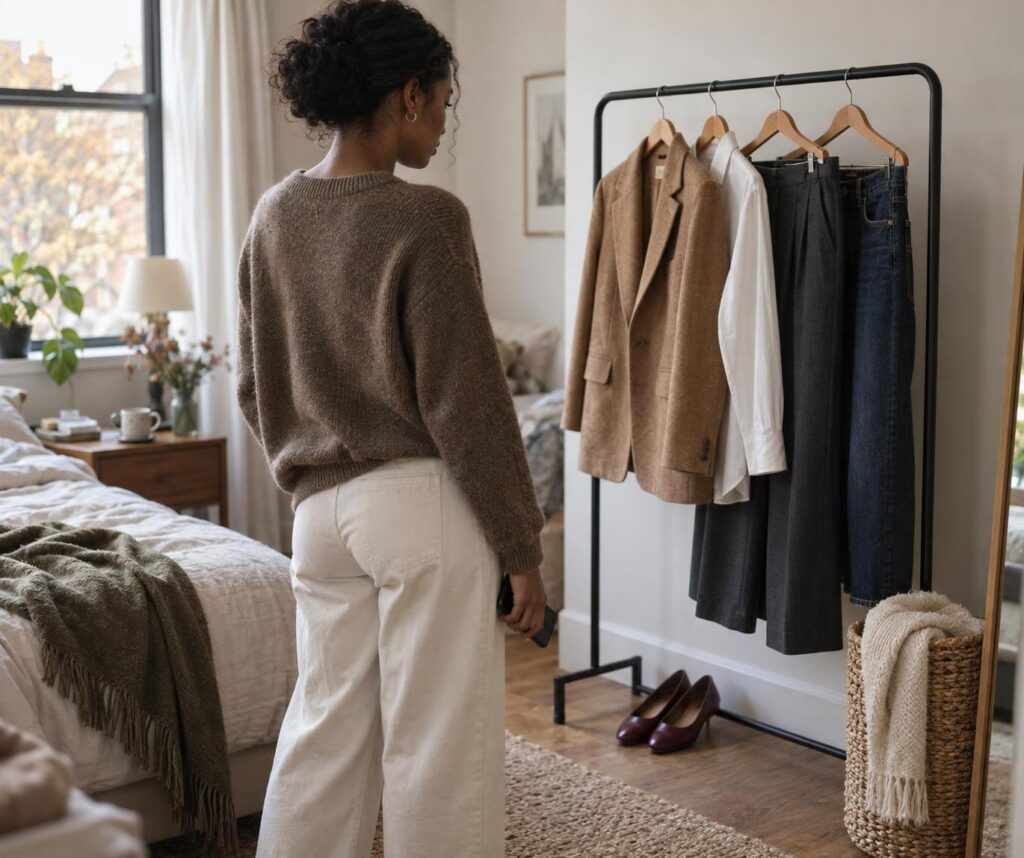
A capsule wardrobe sounds simple until you are staring at six nearly identical knitwear options and wondering why none of them works with the trousers you already own. The useful version is not a strict list of beige basics. It is a small group of clothes that can make your real week easier: the commute, the meeting, dinner after work, a rainy Saturday, and the occasional plan that needs something sharper. Knowing how to use AI virtual try on for a capsule wardrobe gives you a way to test those combinations before you keep adding pieces that only work alone.
Start by deciding what the capsule needs to do. A city workweek may call for trousers, a blazer, smart flats, and layers that travel well. A more casual week might centre on dark denim, a roomy knit, a light jacket, and two shoes that handle walking. The goal is not to copy somebody else’s 15-piece formula. It is to identify the colours, lengths, and shapes that appear in your own life often enough to deserve repeat wear.
Build the capsule around three anchors
Choose one outer layer, two bottoms, and one shoe direction before adding anything decorative. For autumn, that could be a charcoal blazer, dark straight jeans, soft wide-leg trousers, and dark brown loafers. Or it could be a trench, a denim midi skirt, black trousers, and a sleek ankle boot. These anchors create the silhouette of most outfits, so they are where fit matters most.
Next, add four to six tops that work with both bottoms. Keep the necklines varied: perhaps a white shirt, a fine knit crew neck, a ribbed tank for layering, a soft blouse, and a striped long-sleeve top. Varying necklines makes repeated trousers feel less repeated, while staying within a narrow colour family lets everything talk to each other. For a useful colour starting point, these colours that go with burgundy clothes show how one deep accent can work across everyday pieces.
Use virtual try on to test combinations, not individual hero pieces
The most common shopping mistake is judging each item in isolation. A camel knit can be lovely, but if it shortens the look of every trouser you own or clashes with your chosen coat, it is not doing capsule work. Put the new item beside two existing bottoms and your usual shoes, then compare the full outfits. You are looking for repeatable lines: does the knit tuck neatly, does the jacket layer without bunching, and does the shoe make the trouser hem land where you like it?
Use the same photo and the same base outfit when you compare options. This makes it easier to spot a real difference between two blazer lengths or two denim washes. Try one outfit for work, one for an off-duty day, and one that could handle an evening reservation. If one piece makes all three combinations feel like you, it is doing more for the wardrobe than an item that only shines in the retailer’s styling image.
Check proportion, colour, and fabric weight
First check proportion. A cropped jacket can work beautifully with high-waisted trousers but may interrupt a long knit dress. A long cardigan can lengthen a column of colour but overwhelm a wide skirt. Look at where each hem meets the next piece, especially at the waist, hip, and ankle. Small shifts in length are often what separate an outfit you reach for from one you leave unworn.
Then check colour in context. Hold a tight palette of two neutrals, one dark neutral, and one accent near the clothes you already wear. For example: cream, denim blue, charcoal, and burgundy. This does not mean every outfit must match. It means a burgundy flat should make sense with the charcoal trouser, the dark jean, and the cream knit without a special styling trick every time.
Finally, look at fabric weight. A thick brushed knit, light poplin shirt, and waxed jacket can each be great, but layered together they may feel stiff and bulky. Visualising an outfit before it arrives helps you notice when too many dense fabrics are competing. It also helps you see gaps: perhaps you have three warm jumpers but no thin layer for under a blazer, or plenty of trousers but only shoes that feel too casual for dinner.
Make a short keep list before ordering
Write down the eight to twelve combinations you want the capsule to produce. They can be plain: blazer plus tee plus jeans; knit plus trousers plus loafers; shirt plus skirt plus boots. Then test any new purchase against that list. A piece does not need to work with everything, but it should create at least three outfits you would genuinely wear in the next month. This keeps the process focused on your life rather than an abstract idea of being more minimalist.
Do not expect a capsule wardrobe to be finished in one order. Start with the pieces you wear most, note what repeatedly blocks an outfit, and fill that gap thoughtfully. A good capsule has room for a favourite print, a bright bag, or a trend you enjoy. The practical test is whether those fun pieces still have dependable companions when you get dressed on an ordinary Tuesday.
A capsule wardrobe is successful when getting dressed becomes quicker without making your clothes feel less like you.
Common questions
How many items should be in a capsule wardrobe?
There is no fixed number. Start with enough pieces to cover your typical two weeks of work, casual plans, laundry, and weather changes. Many people find 20 to 35 core pieces manageable, excluding underwear, exercise clothes, and special-occasion items.
Can AI virtual try on help me build a capsule wardrobe?
It can help you compare full outfit combinations and notice proportion, colour, and layering before you buy. It works best when you test possible purchases with clothes you already own rather than evaluating each item on its own.
What colours work best for an autumn capsule wardrobe?
Choose neutrals you already like wearing, such as charcoal, cream, navy, espresso, or dark denim, then add one or two accents. Burgundy, cool blue, olive, and deep plum can all work when they connect with your outerwear and shoes.