

Figuring out how to use AI virtual try on for work outfits is really about removing the small doubts that make a morning feel harder than it needs to. The question is rarely whether a blazer, trouser, skirt, or knit is nice on its own. The real question is whether the pieces look like you, fit the room you are walking into, and still feel comfortable after the commute.
That is why work outfits are such a strong use case for virtual try on. Office dressing sits between polish and practicality. A look can be technically smart but too stiff for your actual day, or relaxed enough for a hybrid office but not sharp enough for a client meeting. Seeing the outfit on your own body helps you judge proportion, color, and mood before you buy another black trouser that does the same job as the three already in your wardrobe.
The timing is good too. Vogue’s fall 2026 trend report calls out the return of the Updated Lady, with sharper tailoring and softer power dressing coming back into focus. Who What Wear has also been tracking minimalist shapes, neutral tones, two tone shoes, and richer color accents for fall. Those are useful ideas, but they only become wearable when you can test how they work with your height, shoulder line, coloring, and everyday shoes.
Start with the work problem, not the trend
Before opening any AI fitting room, name the situation you are dressing for. A Monday office day, a first interview, a creative team meeting, a finance presentation, and a casual Friday all need different levels of structure. If you start with a vague idea like smart casual, you will get vague outfit answers. Start with the real scene instead.
For a standard office day, try a soft blouse, tailored trousers, and flats or loafers. For a presentation, test a blazer with a clean neckline and a shoe that gives the outfit more intention. For a creative workplace, try the same base with a textured jacket, relaxed denim, or an interesting flat. The point is not to dress like someone else at work. It is to see which version of professional still looks like you.
If your office is moving back toward sharper dressing, use virtual try on to check the amount of tailoring. A slightly oversized blazer can look current when the sleeve, shoulder, and trouser break are right. On some people, the same jacket can swallow the frame or make the outfit look borrowed. TryFits AI is useful here because the result is not just a product photo. It helps you read the outfit on your own proportions.
Test the pieces that change the whole outfit
Work outfits usually turn on a few decisions: jacket length, trouser shape, shoe weight, neckline, and color contrast. Upload or choose the piece that carries the most risk first. If you are unsure about wide leg trousers, test them with the actual shoe height you wear. If you are considering a cropped jacket, check where it hits against your waist and whether it works with your usual bags.
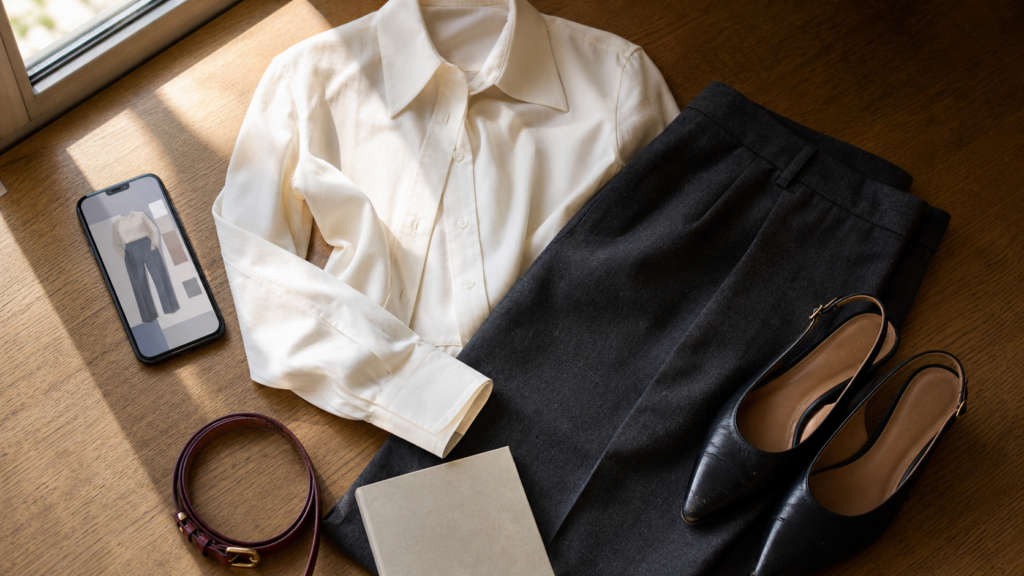
Color is another place where AI virtual try on can save money. Charcoal, navy, espresso brown, burgundy, cream, and black can all read professional, but they do different things near the face and against your existing clothes. A cream blouse with charcoal trousers may feel crisp and bright. The same blouse with warm brown trousers may feel softer and more seasonal. Seeing both options on yourself is faster than ordering three sizes and hoping one combination clicks.
Use the same mindset for shoes. A slingback flat makes tailored trousers feel lighter. A loafer adds weight and authority. A ballet flat softens the whole look. A boot can make the same outfit feel more autumnal. If you are building a work capsule, test the outfit with the shoes you actually commute in, not the shoes that only look good standing still.
Build a small rotation you can repeat
The best work wardrobe is not a pile of single outfits. It is a rotation of formulas you can repeat without feeling like you wore the exact same thing twice. Start with three bases: tailored trouser plus soft top, straight skirt plus knit, and dark denim plus blazer if your office allows it. Then test two shoe options and two outer layers for each base.
This gives you enough variation without creating more decisions. If a charcoal trouser works with a cream shirt, grey knit, and burgundy belt, save that combination. If the same trouser looks flat with a black top, skip it or change the shoe. You are looking for quiet proof, not perfection.
For more seasonal outfit logic, the same principle applies to occasion dressing. Our outdoor fall wedding guest guide breaks down fabric, footwear, and weather in a similar way. The setting changes, but the method stays the same: test the outfit against the real conditions before committing.
What to check before you buy
Once you have tried the outfit virtually, look at five things. First, does the shoulder or waist sit where you expected? Second, does the trouser length work with your shoe? Third, does the color make the outfit look fresher or heavier? Fourth, can you move through your day in it? Fifth, does it match the formality of the room?
Do not ignore the boring details. A blazer that looks good open but awkward closed may still work if you never button it. A trouser that looks perfect with heels but puddles over flats is not a good work purchase if you walk to the train. A knit that looks beautiful with denim may feel too casual with the trousers you need for the office. Virtual try on is most useful when you ask practical questions.
If one outfit keeps almost working, change only one thing at a time. Swap the shoe, then the jacket, then the color of the top. That is how you find the version that feels polished without losing yourself in options. It also helps you avoid buying a whole new work wardrobe when the missing piece is one better shoe or a jacket with the right length.
Common questions
Can AI virtual try on help with office dress codes?
Yes. It helps you compare levels of polish before you buy or plan the outfit. Try a relaxed version, a sharper version, and a meeting ready version, then choose the one that fits your office culture.
What work pieces should I test first?
Start with the pieces that affect proportion most: blazers, trousers, skirts, dresses, and shoes. Tops and accessories matter too, but shape usually decides whether a work outfit feels right.
How many work outfits should I plan at once?
Plan three to five formulas first. That is enough for a weekly rotation without making the process overwhelming, and it shows which pieces deserve a place in your wardrobe.