


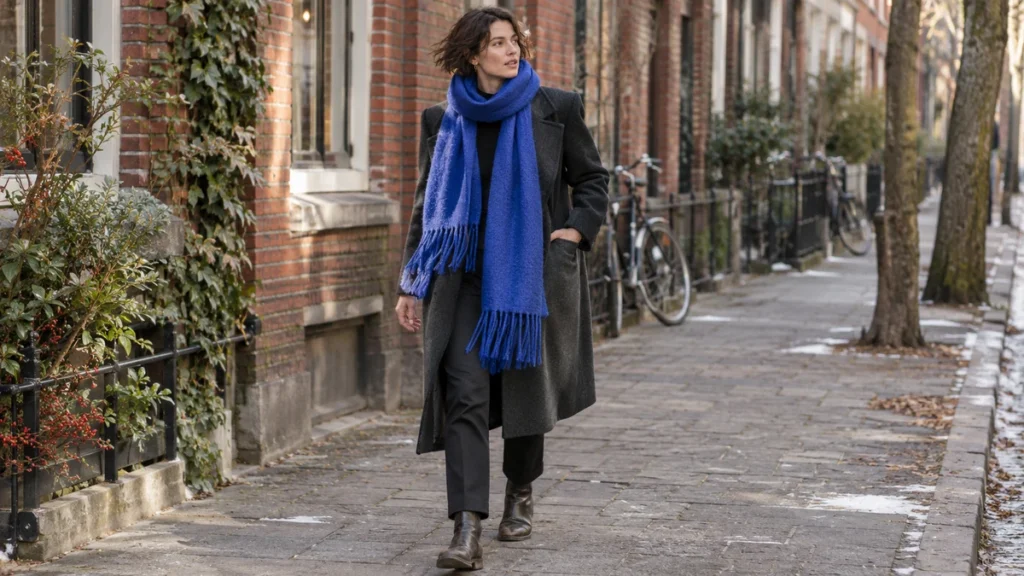
To wear a statement scarf with a winter coat, choose one bold feature, such as generous width, saturated colour or long fringe, then arrange it so the coat still has a visible outline. Start with a single loose wrap and unequal ends. You get warmth and an intentional shape without building a bulky knot under your chin.
The current signal comes from Elle, which identifies the statement scarf as a defining Fall 2026 accessory trend, drawing on Fall/Winter 2026 to 2027 runway looks. That is an editorial runway signal, not evidence that everyone is wearing one. The useful takeaway is that a separate scarf can become the main feature of an otherwise familiar winter outfit.
The practical question is how much scarf your particular coat needs. A broad brushed rectangle can look generous over a narrow wool coat but crowd a padded collar. Before buying, compare the whole outfit with the scarf loose and wrapped: its colour near your face, where its ends finish, and whether your bag strap pulls it out of place.
Choose the scarf around your coat collar
A statement scarf does not have to be enormous. A cobalt wool rectangle against charcoal can make as much impact as a blanket-sized neutral scarf. Decide whether you want colour, texture or volume to lead, rather than automatically choosing the longest, thickest option.
With a tailored wool coat
A coat with flat lapels gives a wide scarf somewhere to rest. Fold the scarf lengthways if necessary, place it around your neck and bring one end across the opposite shoulder. Leave part of each lapel visible so the scarf reads as a separate layer rather than a replacement front panel.
For a concrete outfit, try a charcoal single-breasted coat, an ivory crew-neck jumper, dark straight jeans and black ankle boots with a rust scarf. The warm colour becomes the focal point; the quiet layers underneath mean you can remove the scarf indoors without losing the outfit.
With a puffer or high collar
Choose a supple, less bulky weave when the coat already has padding around the neck. Fold the scarf into a narrower band and tuck the ends inside the open front before fastening the coat comfortably. Skip a thick loop threaded through itself if it pushes the collar against your jaw or restricts head movement.
Use three arrangements instead of complicated knots
The easiest way to learn how to wear a statement scarf is to keep the same outfit and change only its placement. Try these arrangements with a scarf you already own before buying another. Each creates a different amount of coverage without requiring a special fastening.
The loose shoulder throw
Let one end hang around waist level, then take the longer end across your chest and over the opposite shoulder. This works especially well with a smooth coat and a scarf that has enough texture to stay put. Wear your shoulder bag underneath the scarf so the strap does not flatten the drape.
The single wrap
Wrap once around your neck, leaving enough room to turn your head comfortably. Adjust the ends so one finishes slightly higher than the other. With a short coat, try ends around hip level first; if they overwhelm the jacket, fold the scarf narrower or tuck one end inside.
The open front drape
Place the scarf behind your neck and let both ends fall down the front of an open coat. A broad colour block or oversized check shows clearly this way. Reserve it for calmer, milder weather, since it offers less protection at the throat and is more likely to shift in wind.
Build outfits around colour and texture
For work, combine a navy wool coat with charcoal trousers, a pale blue shirt and a burnt-orange scarf in a fine wool weave. Keep the scarf loosely wrapped for the commute, then remove it indoors. Smooth leather shoes and a structured bag give the soft accessory a crisp setting without requiring a matching orange detail elsewhere.
For a weekend walk, try an olive parka, an oatmeal jumper, dark jeans and weather-appropriate boots with a raspberry scarf. Choose a compact weave rather than very long, loose fringe if you will carry a backpack. Pull the hood up during your outfit check: the scarf should not bunch beneath it or stop it sitting properly.
For dinner, wear a black wool coat over a simple knitted dress with opaque tights and boots, then add a cream scarf with a pronounced brushed surface. The texture supplies the statement without jewellery competing at the neckline. For related evening outfit planning, see what to wear to a holiday drinks party.
If your coat is patterned, borrow one colour from it and choose a plain scarf in that shade. With a plain coat, a large check or irregular stripe has more room to show. You do not need to repeat the scarf colour in your shoes or bag; a single concentrated patch can be enough.
Check fabric, weather and everyday movement
A loosely brushed scarf can feel light and look substantial, but inspect shedding against your actual coat. A dense wool weave may sit more neatly under lapels, while a fine knit packs more easily into a bag. Fibre content alone does not establish softness, so check the care label and test the fabric against your neck when possible.
In wet weather, keep long ends inside your coat or above the hem rather than letting them brush a damp bench. Follow the care instructions if the scarf becomes wet, and let it dry before storing it. Keep loose ends secured away from bicycle wheels, escalators and anything else that could catch them.
A virtual outfit preview can help you compare a bright scarf with a muted alternative, but it cannot establish itchiness, warmth or whether a wrap stays secure. Treat the image as a colour and proportion check, then physically test turning your head, lifting your arms and carrying your usual bag before removing the tags.
Common questions
Can you wear a statement scarf with a short coat?
Yes. Start with a single wrap and ends around hip level so the scarf does not completely cover the jacket. If you prefer a longer drape, keep the scarf relatively narrow and check that the ends stay clear of your hands and bag.
Should a statement scarf match your winter coat?
No. Contrast works well when the rest of the outfit is quiet, such as cobalt against charcoal or raspberry against olive. For a gentler combination, choose neighbouring tones like camel and rust. Compare both in daylight because indoor lighting can change how colours appear together.
How do you stop an oversized scarf looking bulky?
Reduce the fabric gathered directly beneath your chin. Fold the scarf lengthways, wrap only once and spread the ends across the coat rather than stacking them into a knot. If the collar still feels crowded, use a thinner weave or switch to an open drape.