


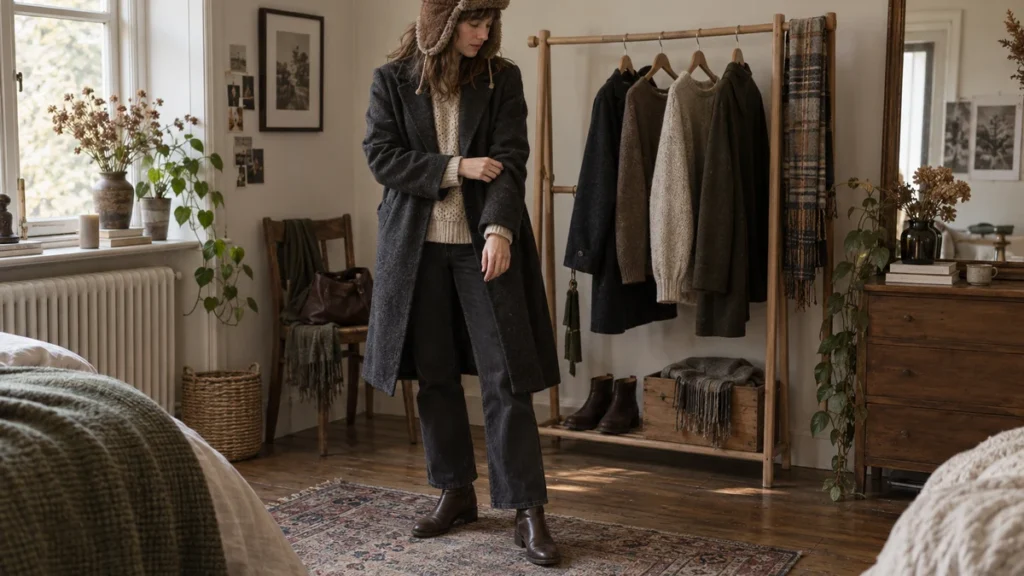
If you are wondering how to wear a trapper hat with everyday clothes, start with a simple wool coat, straight trousers and practical boots. Let the hat supply the texture rather than adding a padded jacket, snow boots and several other outdoor references. The earflaps can sit down for warmth or fasten up when you want less coverage around your face.
There is a named signal behind this autumn styling question: Who What Wear includes trapper hats in its 2026 report, “Bodycon, Sequinned Trainers and Trapper Hats: 6 Autumn/Winter Trends I Didn’t See Coming.” That establishes current editorial interest in the shape, not evidence that everyone is wearing it. This accessory changes an outfit mainly around the face, so your coat collar is a useful starting point for styling.
The difficult part is judging that change. A hat that looks compact in a product photograph can feel much fuller beside your coat collar, glasses or hair. Before choosing one, compare the whole outfit on yourself: the same coat with a close-fitting hat, then a deeper, fluffier version. You are choosing the amount of volume you enjoy, not following a rule about which faces can wear it.
Choose the hat by its construction
A trapper hat generally combines a crown with earflaps and a fastening that allows different positions. Retailers also use overlapping names such as aviator hat, so inspect the actual shape rather than relying on the label. Crown depth, flap length and lining thickness tell you more about how it will look and feel.
For a first everyday version, choose a matte woven outer fabric with a short-pile lining. Charcoal, dark brown or navy will work with plenty of autumn coats. A long-pile faux-fur version creates a much fuller outline, while a quilted nylon shell introduces a stronger outdoor reference.
Check whether the fastening works with the flaps both raised and lowered. Some styles secure above the crown; others close beneath the chin. Do not assume decorative straps are adjustable. If you wear glasses, try the hat with them and check that the flaps do not push against the arms or move the frames.
Balance the hat with your coat collar
The easiest pairing is a single-breasted wool coat with a modest lapel and enough shoulder room for your usual layers. A charcoal coat, brown trapper hat and cream crewneck create a clear outline without needing matching textures. Leave the upper coat button open if conditions allow, giving the hat some space.
A high collar can work, but it needs a physical comfort check. Lowered earflaps, a funnel collar and a thick scarf may crowd the same area, making it awkward to turn your head. Raise the flaps or replace the bulky scarf with a thinner wool one tucked inside the coat.
With a puffer, keep the other choices restrained: a plain hat, straight trousers and unembellished boots. The outfit already has substantial volume. With a hooded raincoat, test whether the hood can actually fit over the hat without pulling it forward or limiting your view.
Four outfits that make the trend wearable
A wool coat and jeans for ordinary errands
Wear a dark brown, short-pile trapper hat with a grey wool coat, an oatmeal knit and dark straight-leg jeans. Black leather ankle boots with a treaded sole give the outfit a practical finish. Choose jeans that clear wet pavement rather than leaving a folded hem to collect water.
Keep the knit relatively smooth so the hat remains the main soft texture. A compact shoulder bag is easier here than another fluffy accessory. If your coat is oversized, try the earflaps raised first, then lowered, and compare how much fabric gathers around your shoulders.
Tailored trousers for a work commute
Pair a charcoal hat with a navy overcoat, a fine black merino sweater and navy tailored trousers. Black lace-up boots suit a walking commute better than thin-soled shoes in cold weather. Our guide to wearing navy and black together offers more ways to coordinate those pieces.
Choose a hat that comes off easily without catching earrings or glasses. For a workplace with a formal dress code, treat it as commuting outerwear and remove it indoors. A smooth lining may feel less grabby against hair, although you should still check the fit rather than expecting any hat to leave a hairstyle untouched.
A skirt outfit for a dry afternoon
Try a black woven trapper hat with a camel coat, a black ribbed sweater and a knee-length denim A-line skirt. Opaque tights and flat knee-high leather boots provide coverage below the hem. The denim makes this a relaxed daytime combination without requiring trainers or sportswear.
If you prefer a longer skirt, choose one with enough sweep or a vent for walking. Check the outfit seated as well as standing, especially when the coat overlaps the skirt. The guide to jacket and skirt lengths can help you compare those layers.
A raincoat for a damp weekend
Combine an olive raincoat with a black trapper hat, an ecru sweatshirt and dark tapered trousers. Wear waterproof ankle boots and socks appropriate to the temperature. A matte nylon hat looks natural here, but nylon alone does not establish that a product is waterproof.
For persistent rain, prioritise a working hood over exposed faux fur. Check the manufacturer’s weather claims and care instructions before taking the hat out in wet conditions. A removable lining can be useful, but only if the product actually offers one and explains how to clean it.
Adjust for temperature and indoor plans
In mild autumn weather, a heavily insulated trapper hat may be uncomfortable even when the outfit looks right. Choose a lighter lining, raise the earflaps or carry the hat until the temperature drops. For colder conditions, coverage over the ears is useful, but warmth depends on the actual materials and construction.
Plan where the hat will go once you enter a café, train or office. A soft version that fits inside your bag is more convenient than a rigid shape you must hold. Keep it away from damp umbrellas, and follow the care label when drying it.
Compare the shape before committing
For a useful visual comparison, keep your coat, trousers and shoes unchanged while switching between two hats. TryFits AI’s virtual try-on approach can support outfit exploration, but a generated image is not proof of pressure, insulation or fastening comfort. If a preview is available for your chosen accessory, use it to consider scale and colour, then verify the physical details separately.
In person, lower the flaps, turn your head and look down as though checking your phone. The hat should stay secure without slipping over your eyes. Check that you can hear comfortably, fasten it without strain and wear your usual collar underneath.
Common questions
Can you wear a trapper hat without looking like you are skiing?
Yes. Pair a plain woven version with a wool coat, straight jeans or tailored trousers, and leather boots. Leave goggles and technical snow accessories out of the outfit unless you need them. The hat already supplies enough outdoor character.
Should you wear a trapper hat with the earflaps up or down?
Lower them when you need ear coverage; raise them when you want more space beside your face and collar. Use the fastening position designed for that particular hat. Check that raised flaps stay secure rather than folding them into an unsupported position.
What colour trapper hat is easiest to style?
Charcoal is a straightforward starting point with black, navy, grey and camel outerwear. Dark brown works well with cream knits and blue denim. Compare the colour beside your actual coat in daylight, especially when ordering a hat with mixed-tone faux-fur trim.