


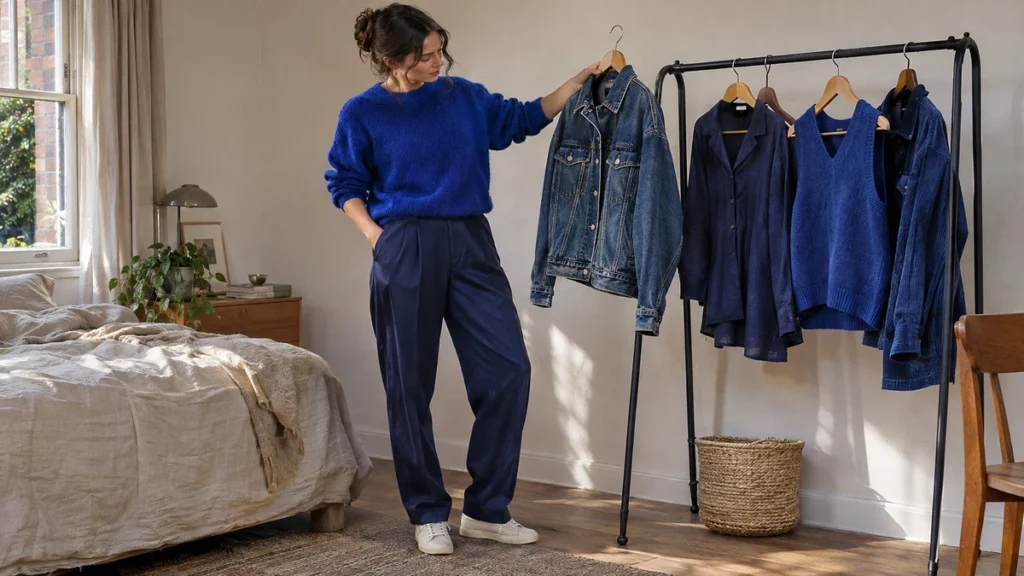
To wear bright monochrome, start with a top and bottom from the same colour family, then vary their texture or depth. A cobalt jumper with slightly darker blue trousers looks deliberate without an exact match. Keep the shapes familiar, and let the colour be the new part of the outfit.
Vogue’s Fall/Winter 2026 Fashion Trends report, published November 9, identifies head-to-toe colour as a runway trend across knits, denim, dresses and outerwear. Its practical suggestion is to build around a colour you like using pieces you already own. That makes this a useful trend to approach through your wardrobe rather than a matching-set purchase.
The challenge is judging the whole outfit: two reds can look harmonious on hangers but compete when worn together, while a long bright coat changes how much colour you see. Before buying another piece, compare your existing combinations on yourself. You are looking for a colour relationship and silhouette you enjoy, not a perfect paint-chart match.
Choose the colour you already wear most
If you are wondering how to wear bright monochrome, begin with the strongest colour already repeated in your wardrobe. Pull out solid-colour pieces and group them in daylight. A pink shirt, raspberry cardigan and rose trousers offer a more useful starting point than an orange coat with nothing to wear underneath.
Choose your largest garment first, usually trousers, a skirt or a dress. Build around its undertone: tomato red works readily with other orange-leaning reds, while cherry red sits more easily beside cooler crimson. These are starting points, not restrictions. Put the fabrics next to each other and check whether you like the combination.
For the clearest monochrome effect, keep the main garments recognisably within one colour family. Pink with red can make an excellent outfit, but it reads more as colour blocking. You do not need to add a second vivid hue to make one bright colour interesting.
Make unmatched pieces look intentional
Use texture instead of chasing identical shades
A brushed wool jumper and smooth cotton trousers reflect light differently, giving similar colours some separation. Try a raspberry knit with raspberry corduroy, or a cobalt cotton shirt with blue wool trousers. Texture makes the outfit feel assembled rather than accidentally mismatched.
Be more cautious with two smooth tailoring fabrics that almost match. Their small colour difference can resemble an incomplete suit, especially under office lighting. Add a visibly textured knit between them, or choose a more obvious light-to-dark difference so the combination looks purposeful.
Keep one familiar shape
Use a silhouette you already enjoy: straight trousers with a relaxed jumper, or an A-line skirt with a close-fitting top. You can experiment with volume too, but changing colour, shape and fabric simultaneously makes it harder to identify what is not working. Start with your usual outfit proportions.
A defined waist is optional. If you prefer an untucked knit, choose a hem that sits cleanly rather than gathering against the waistband. With a skirt, our guide to what length top works with a pencil skirt offers useful ways to compare shorter and longer proportions.
Four bright monochrome outfits to build from basics
Cobalt knitwear and trousers for work
Combine a cobalt crew-neck jumper with straight blue tailored trousers and navy loafers. The trousers can be a little deeper than the knit; keeping both clearly blue maintains the connection. Add a charcoal coat if that is what you own, leaving it open when conditions allow.
Choose fine-gauge wool or a smooth cotton blend for an office with strong heating. A bulky jumper may bunch beneath a blazer, so check the sleeves and upper back together. If your workplace is formal, blue tailoring with a tonal blouse gives the same colour-led effect.
Raspberry corduroy for a casual day
Wear raspberry straight-leg cords with a pink-red jumper and burgundy walking shoes or trainers. Corduroy’s ridges add depth without introducing a print. A hip-length insulated jacket keeps the outfit practical for errands, while socks in the trouser colour connect the hem to the shoes.
For wet weather, prioritise footwear with suitable grip and weather protection over an exact colour match. Black boots are a sensible substitute. Keep corduroy hems clear of puddles, and choose a washable knit if the day includes children, pets or outdoor stops.
Vivid green layers for a weekend lunch
Pair an emerald ribbed midi dress with a green cardigan that is slightly lighter or darker. Leave the cardigan open to show the dress’s uninterrupted line, or fasten a few central buttons for more structure. Dark green boots are useful, but brown leather works when matching footwear is unavailable.
In cold weather, add opaque tights and a coat roomy enough for both knitted layers. Check that the cardigan sleeves do not feel tight beneath the coat. For a less saturated alternative, the examples in how to wear matcha green with winter clothes explore a softer green starting point.
Orange separates for an evening indoors
Try a burnt-orange satin skirt with a brighter orange fine-knit top and dark brown ankle boots. The skirt’s sheen supplies an evening element without sequins. A matching orange bag is optional; a simple brown bag repeats the footwear and keeps the outfit usable beyond one occasion.
For a draughty venue, choose a lined skirt and add a thin thermal layer beneath the knit. Satin can cling to tights, so walk and sit in the full combination before leaving. A suitable slip may help, but check that its hem stays concealed.
Decide how far the colour needs to go
Your coat, shoes and bag do not all have to match. A bright top and bottom establish the outfit, while neutral accessories give you a practical way to wear it immediately. If you already own a coat in the same family, try it over the combination before shopping for smaller extras.
Vogue also suggests colour-drenched shoes or a bag as a lower-key entry point. That is an alternative to head-to-toe dressing, rather than the same effect. Choose it when you want a bright detail but would rather keep your main clothes neutral.
A virtual preview can help you compare the amount of colour and the overall proportions. Use it to assess whether you prefer a shorter jacket or a longer coat, not to certify an exact dye match. Check real fabrics together in daylight, then test warmth, movement and comfort in person.
Common questions
Do monochrome outfits have to match exactly?
No. Similar shades within one colour family work well, especially across different textures. Keep the shades close for a unified effect, or make the light-to-dark difference clear. Nearly matching smooth suit fabrics need more careful checking.
What shoes should you wear with bright monochrome?
Start with shoes in the same colour family if you own them. Otherwise, use a familiar neutral such as navy, brown or black. Choose footwear for the weather and walking involved before considering its colour.
Can you wear bright monochrome to the office?
Yes, where the dress code allows vivid colour. Try straight tailored trousers with a fine-gauge knit in related shades, plus simple loafers. For a stricter workplace, check its clothing policy before choosing a saturated suit.