


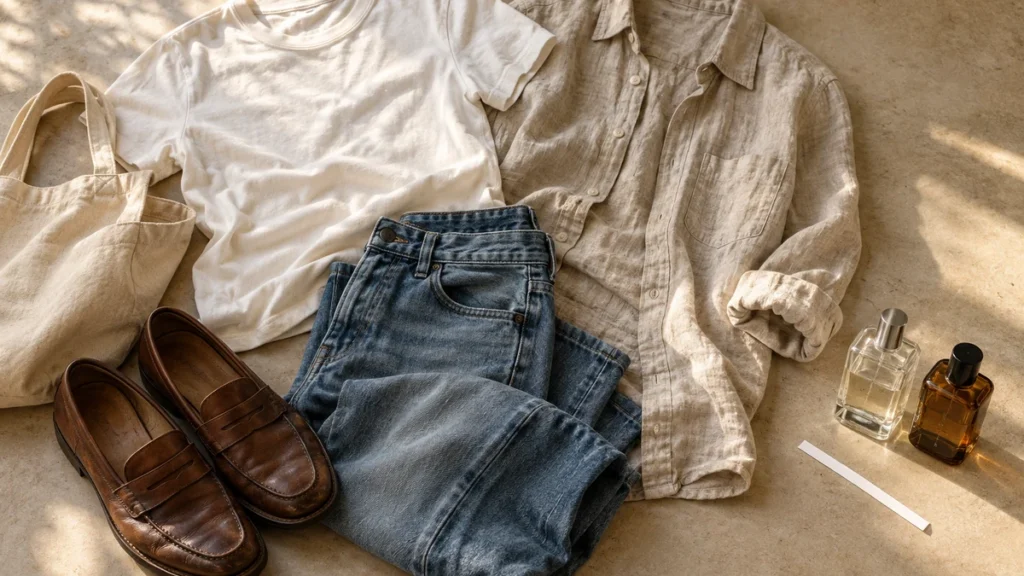
If you are wondering how to wear scent stacking, start with two fragrances you already enjoy, test a small amount together, and keep the result subtle enough for your destination. Scent stacking means wearing fragrances together to create a personal combination. Treat it as an optional finishing detail, not a reason to buy several new bottles.
The named signal comes from Zalando’s Summer 2026 trend report, which identifies scent stacking within a broader shift towards expressive, customisable style. That is a specific 2026 reference, not evidence that every fragrance combination works or that the trend has accelerated this autumn. Its useful idea is personalisation: changing one element of a familiar look.
The outfit problem is familiar: the same jumper and trousers can feel right for work but unfinished for dinner. Before replacing anything, compare the outfit with a different shoe, neckline or jacket on yourself. A virtual try-on can help with those visible choices; fragrance needs a separate, real-world test because a screen cannot show scent, strength or skin tolerance.
Start with two scents and a clear purpose
Choose one fragrance as the main scent and another as a small adjustment. You might want to soften a sharp citrus, add freshness to a sweet vanilla, or give a floral a woodier finish. These are starting points for testing, not formulas guaranteed by the names on the bottles.
Fragrances often contain many overlapping notes, so two products labelled rose can behave quite differently. Smell each separately before combining them. If either already feels overpowering, complicated or unpleasant to you, adding another fragrance is unlikely to solve the problem.
For a first experiment, try a familiar woody fragrance with a citrus scent, or a soft floral with a restrained musk. Use what you own before shopping. An unscented moisturiser can provide a neutral preparation step without introducing a third fragrance into the experiment.
Test the combination before getting dressed
Try the fragrances together on a paper blotter first, keeping track of what you applied. Smell the combination immediately and again after it has settled. Paper offers a useful first impression, but it cannot predict exactly how the same products will smell on your skin.
If both products are intended for skin use and you tolerate them individually, test a small amount on intact skin according to their directions. Do not mix them inside their bottles or decant them into a homemade blend. Stop using the combination if irritation occurs, and avoid layering on sensitive or broken skin.
Keep the total application modest rather than doubling your normal amount simply because there are two bottles. Atomisers and concentrations vary, so a universal spray count would be misleading. Wear the test at home first and assess it after settling, rather than adding more because the opening seems faint.
Write a short note: which products, approximately how much, where you applied them, and whether you still liked the combination later. Change only one variable on the next attempt. That makes an unsuccessful experiment useful instead of leaving you unsure which fragrance overwhelmed the other.
Build the outfit first, then choose the scent
There is no factual rule that a cream outfit needs vanilla or a black dress needs an amber fragrance. Colour and scent associations are personal styling prompts. Start with the clothes, weather and destination, then decide whether fragrance adds anything you actually want.
For work: fine knitwear and tailored trousers
Try a charcoal merino crew neck, navy straight-leg trousers and black loafers, with a lightweight raincoat for the commute. Fine knitwear fits comfortably beneath outerwear and is easier to manage in a heated office than a very heavy jumper. A pale blue shirt collar can add definition without changing the whole outfit.
If your workplace permits fragrance, test a subtle citrus and soft woody pairing. Keep it close rather than aiming for a noticeable trail across a meeting room. In a fragrance-free workplace, skip scent entirely; the outfit still works, and respecting the shared space takes priority over trying a trend.
For a weekend café: denim and a cotton shirt
Wear straight indigo jeans with an ecru cotton shirt, comfortable trainers and a washable quilted jacket. For a milder afternoon, replace the jacket with a cotton cardigan. The shirt’s crisp surface gives the casual denim a little structure without requiring formal shoes.
A fresh floral with a small amount of a soft musk could suit the mood if you enjoy both separately. You do not need matching perfume and clothing colours. If you prefer a pale outfit, these cream and white outfit examples offer combinations you can build before considering fragrance.
For dinner: a knitted dress and practical boots
Choose a deep green ribbed midi dress, opaque tights and ankle boots with a sole suitable for wet pavements. Add a wool coat for cold weather, checking that the dress feels comfortable when seated. Small silver earrings give the neckline a finish without competing with the ribbed texture.
If sweetness is your preference, test a vanilla-led scent with a dry woody fragrance. Assess the result before leaving, not at the restaurant table. Avoid refreshing it during the meal, where fragrance can intrude on other people’s experience of food.
Keep fragrance away from vulnerable fabrics
Apply fragrance before dressing and let the application dry before fabric touches it. Do not assume perfume is safe to spray on clothes: alcohol, oils and colouring can leave marks or affect finishes. Silk, suede, leather and pale garments deserve particular caution; follow both the product instructions and garment care guidance.
Scarves, coat collars and knitwear sit near application points and may retain scent between wears. Yesterday’s perfume can therefore complicate today’s experiment. Check those pieces before adding another combination, and clean or air them only as their care instructions allow.
For autumn dressing, solve warmth separately from fragrance. A breathable base layer and removable outer layer help when moving between cold streets and heated rooms. This guide to layering autumn outfits without bulk covers the clothing decisions; extra perfume will not make an uncomfortable outfit more wearable.
Common questions
What is the difference between scent stacking and fragrance layering?
Both terms commonly describe wearing scented products together to create a combined effect. Layering can also include scented body products beneath perfume. For a beginner, two familiar fragrances are easier to assess than a scented shower gel, lotion and several perfumes used at once.
Can you stack any two perfumes?
You can experiment with products intended for the same use, following their directions, but not every pairing will smell pleasant or suit your skin. Test separately first, then together in a small amount. Avoid combining products you already find irritating, and do not assume layering reduces sensitivity.
Should your perfume match your outfit?
No. Use the outfit as inspiration if that makes choosing enjoyable, but prioritise your preferences and the setting. A familiar single fragrance is a practical alternative when a combination feels too strong. For shared transport, close seating or fragrance-sensitive company, wearing no perfume is also a complete choice.