


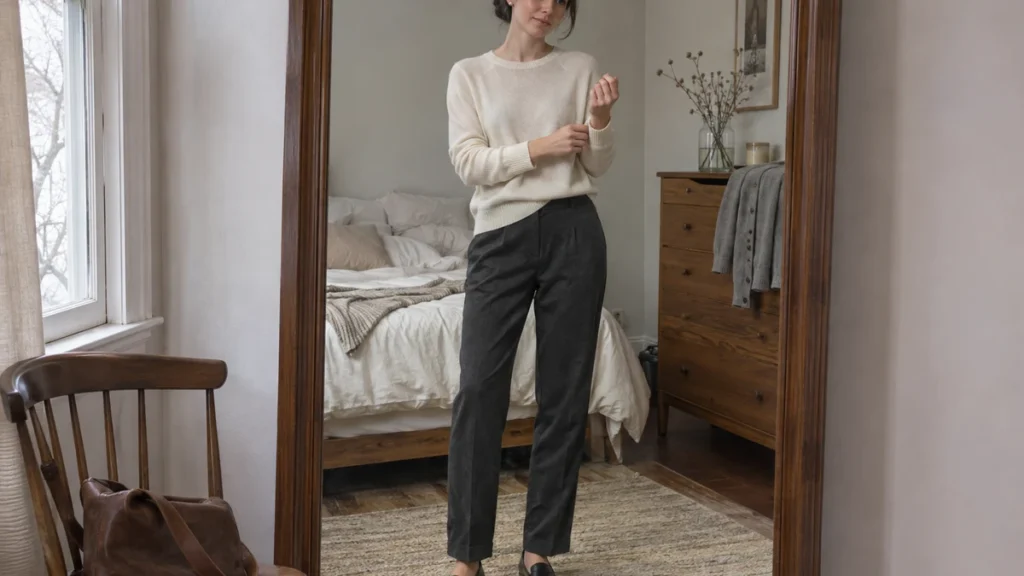
Here is how to wear the neat woman aesthetic with everyday clothes: start with a smooth shirt or fine knit, add trousers or a skirt with a clearly defined hem, and keep accessories deliberate. You do not need a matching suit or an expensive handbag. Begin by making the clothes you already own sit comfortably together, without competing collars, bunched sleeves or dragging hems.
Who What Wear’s current winter feature, “Move Over, Messy Girl: The Neat Woman Is Having Her Moment This Winter,” identifies this polished direction and highlights hair tucked into a blouse collar at Milan Fashion Week. That is a concrete editorial signal, not proof that everyone is dressing this way. Treat the styling detail as something to borrow rather than a complete shopping list.
The challenge is deciding when simple looks intentional and when it feels unfinished. A shirt might look crisp with straight trousers but bunch beneath a narrow waistband; a coat can cover the neckline that made the outfit work. Comparing those combinations on yourself, including the outerwear, is more useful than buying individual pieces from a trend photograph.
Make the neckline your starting point
For an accessible interpretation, begin around the face. Choose a pale blue cotton shirt, an ivory blouse with a soft collar or a fine merino crew neck. Let one neckline lead: if your shirt collar is visible, keep the layer beneath it discreet instead of adding another contrasting neckband.
Try the hair tuck only if it feels comfortable. With shoulder-length or longer hair, place the ends inside the back of an open blouse collar, leaving enough slack to turn your head. A soft cotton or silk collar is a gentler starting point than stiff fabric fastened tightly around the neck.
Short hair, curls, braids and protective styles need no alteration to participate. An unobstructed collar, small earrings or a neatly arranged scarf can give the upper outfit a similarly considered finish. The trend’s name should not become a rule about grooming, femininity or which hair textures look polished.
Choose fabrics that stay composed without constant attention
Cotton poplin gives a shirt definition, but lightweight versions crease quickly beneath coats and seat belts. Cotton twill feels softer and often makes an easier everyday option. For trousers, look for a medium-weight wool blend or substantial woven fabric that falls freely rather than catching on your base layer.
Fine merino and smooth cotton knits work well beneath tailored outerwear because their sleeves occupy less space than chunky cables. If wool irritates your skin, use a cotton knit over a thin thermal. Check pale tops against daylight before leaving home, particularly when their intended simplicity relies on an uninterrupted surface.
Preparation can do more than another accessory. Steam the shirt placket, brush visible lint from dark trousers and check that the collar has not folded beneath your coat. Allow natural creases to happen. Clothes that need rearranging every time you sit down are poor candidates for a repeatable weekday outfit.
Three outfits built around clothes you may already own
A blue shirt with charcoal trousers for work
Pair a pale blue shirt with charcoal straight-leg trousers and black leather loafers. Choose a shirt with enough room across the back to reach forward comfortably, then tuck it evenly rather than pulling it tight. A narrow black belt works if the waistband needs definition, but leave it off when the buckle creates a distracting bump.
Add a navy wool coat and a bag large enough for your actual work essentials. If the shirt gathers heavily beneath the trousers, try a shorter shirt or a less voluminous cut. Our guide to how a button-up shirt should fit explains the shoulder, chest and movement checks to make before choosing a size.
A fine knit with dark denim for the weekend
Wear an oatmeal crew neck with dark indigo straight jeans and chocolate leather ankle boots. Denim keeps this interpretation relaxed; a consistent dark wash gives the outfit a quieter surface than pronounced whiskering or distressed patches. Let the jumper finish near the waistband, or tuck just enough fabric to keep the front from folding over itself.
Finish with an olive raincoat when the forecast is wet. Choose boots with tread and jeans that clear the pavement, rather than preserving a long hem for the sake of the photograph. A compact umbrella is more practical than expecting a wool coat to handle persistent rain.
A soft blouse with a midi skirt for dinner
Combine an ivory crepe blouse with a black A-line midi skirt and low block-heeled boots. The skirt provides movement while the blouse keeps the upper half simple. Choose a hem that does not catch on the boot shaft, and test the combination while walking rather than judging it only from the front.
For a warmer restaurant, wear a removable wool coat instead of layering a heavy jumper over the blouse. Small silver earrings are enough if the collar already frames your face. Prefer colour? Substitute a burgundy blouse or deep green skirt, keeping the remaining pieces restrained so the colour remains easy to read.
Adjust the proportions before adding accessories
If the outfit feels too severe, change one shape first. Open the top shirt button, swap rigid trousers for a softly draped pair, or choose round-toed shoes instead of pointed ones. These adjustments preserve the considered finish without requiring every garment to be sharply tailored.
If it feels indistinct, check where the top ends and whether the shoes disappear beneath the hem. A shorter knit can make a wide trouser shape more visible. With a longer blouse, try straight trousers and leave the blouse untucked, provided its hem hangs freely rather than gripping at the hips.
A virtual try-on can help you compare the visual effect of a blue shirt versus an ivory knit, or straight trousers versus a wider leg, before buying. Use the preview to assess the combination, not to certify size, fabric feel or warmth. Confirm those details through garment measurements, fabric information and a physical movement check.
Common questions
What is the neat woman aesthetic?
It is a fashion label for a polished, composed approach to dressing, currently highlighted by Who What Wear. An everyday interpretation uses clear necklines, smooth layers and considered finishing details. It does not require formal clothing, neutral colours exclusively or a particular body shape.
Can you wear the neat woman aesthetic with trainers?
Yes. Try plain leather trainers with straight trousers, a cotton shirt and a simple coat. Keep the trouser hem clear of the ground and brush dirt from the soles. Supportive walking trainers also work when comfort is the priority; repeat one of their colours elsewhere in the outfit.
Do you need to tuck your hair into your collar?
No. The hair tuck is one styling detail associated with the coverage, not a requirement. Leave your hair as you prefer and focus on a comfortable neckline. If you try the tuck, check that your collar does not pull and that you can turn your head freely.