


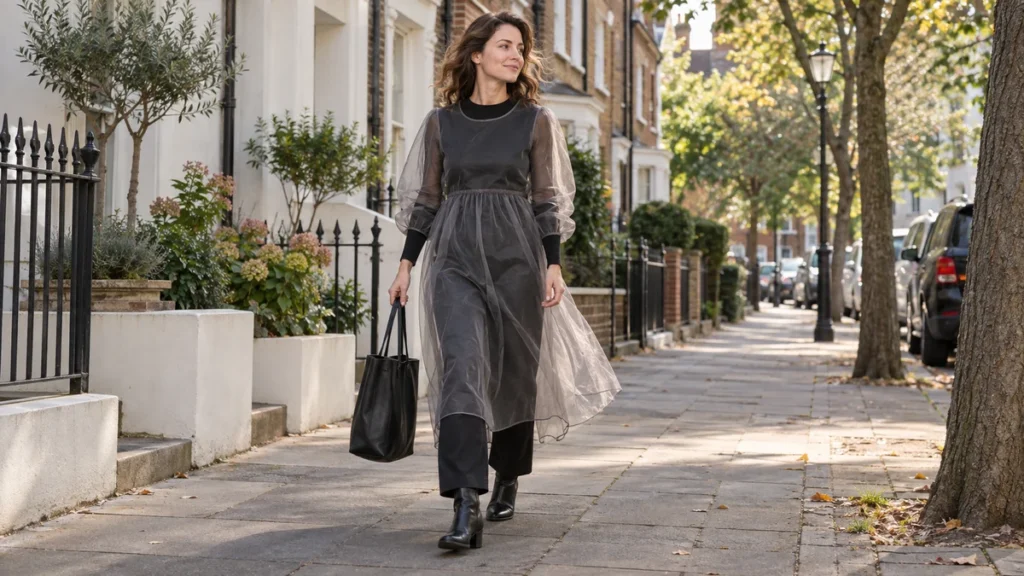
Here is how to wear the window dressing trend without showing more skin: put a transparent layer over an outfit that already provides your preferred coverage. A smoke-grey organza dress over a black top and trousers is a practical starting point. The sheer fabric reveals the clothes underneath, making their colour and shape part of the finished look.
The named signal comes from Who What Wear’s Fall/Winter 2026 trend report, which identifies “window dressing” and points to examples at Calvin Klein, Erdem, Miu Miu, Prada, The Row, Tom Ford and Victoria Beckham. That is an editorial runway signal, not proof that everyone is wearing it. It offers a specific idea to borrow: deliberately visible layers.
The challenge is choosing what should remain visible. A waistband, sleeve edge or contrasting neckline can look considered, but several competing outlines can make an outfit feel busy. Before buying a transparent piece, compare it over clothes you already own, checking where each layer begins and ends on you.
Build the opaque outfit first
Start with clothes you would happily wear without the transparent addition. Try a fitted cotton crew-neck top with straight trousers, or an opaque sleeveless midi dress. This removes the pressure to solve coverage and styling simultaneously, and gives you something wearable if you remove the outer layer.
Keep the first version close in colour: charcoal over black, chocolate over espresso, or ivory over cream. Similar shades make the overlapping fabrics easier to read. If you prefer a lighter base, the guide to wearing cream and white together explains how texture can separate neighbouring tones.
Choose one transparent garment initially. A sheer dress over trousers already creates several visible lines, so it rarely needs a mesh top underneath as well. Leave statement belts and layered necklaces aside until you have decided whether the silhouette works without them.
Choose the fabric for the shape you want
Organza holds a little space around the body, making it useful when you want the outer silhouette to stay distinct from the clothes beneath. Look for uncomplicated seams and enough room through the shoulders and hips. A stiff, narrow organza dress can catch on trouser pockets instead of falling cleanly.
Chiffon produces a softer outline and moves more readily, although lightweight versions may cling or develop static. Fine mesh generally follows the base outfit more closely, particularly when it contains stretch. Handle the actual fabric where possible: garments described as sheer can differ substantially in openness, weight and scratchiness.
For a quieter interpretation, choose a piece with an opaque body and transparent sleeves or a sheer lower panel. You still get visible layering without adding an entire second silhouette. Avoid assuming that a product photograph establishes coverage, since lighting and background colour affect how transparent fabric appears.
Three outfits that make the layers readable
A transparent dress over straight trousers
For a gallery visit or relaxed dinner, combine a black cotton long-sleeved top, black straight trousers and a smoke-grey organza sleeveless midi dress. Add black leather ankle boots with a low block heel. The continuous dark base lets the outer dress show its shape without introducing a separate colour at every edge.
Choose trousers with flat pockets and a smooth waistband, especially if the dress sits close through the hips. The dress should allow a normal stride without pulling against your knees. If the combination feels crowded near the ankles, try a knee-length sheer dress before changing the trousers.
A sheer overskirt over a simple dress
For an evening meal, wear a chocolate chiffon wrap overskirt over an opaque, similarly coloured jersey midi dress. Start with both hems close in length for a restrained effect. Alternatively, let the chiffon extend a few centimetres below the base dress so the transparent edge is clearly visible.
Keep the overskirt fastening flat and secure, then add closed-toe pumps or streamlined boots. A wrap layer should overlap comfortably when you sit, even when the base dress supplies full coverage. If it twists or bunches, choose an elasticated pull-on version rather than repeatedly tightening the tie.
A transparent tunic over weekend basics
Try an ink-blue sheer tunic over a navy cotton T-shirt and dark straight jeans, finished with burgundy loafers. A tunic ending around mid-thigh creates a clear outer edge without bringing delicate fabric close to the pavement. Avoid bulky cargo pockets underneath, which can interrupt its fall.
If the tunic is buttoned, leave enough ease across the chest and hips that the placket stays relaxed. For help choosing the underlayer’s length, use the guide to wearing a loose top without tucking it in. A smooth, untucked T-shirt can work better here than a thick fold at the waistband.
Adapt the look for autumn weather
Transparent fabric is not a reliable source of warmth. Build insulation into the opaque clothes: a fine merino top, wool-blend trousers or tights beneath a lined dress. Keep bulky knitwear outside the sheer layer so it does not stretch or distort a delicate armhole.
In cool, dry weather, add a wool coat that comfortably accommodates the finished outfit. For rain, use proper weatherproof outerwear and keep trailing chiffon at home. Avoid sheer hems that brush wet steps or catch under your shoes; a shorter transparent layer is the more practical choice for commuting.
Check the result before committing
Use a visual preview to compare the overall outline, colour relationship and placement of hems. TryFits AI can help you see outfit combinations on your digital twin, but a generated image cannot establish exact transparency, fabric friction or whether a seam will scratch. Treat it as a styling comparison rather than a coverage guarantee.
With the real clothes on, check the front, side and back in daylight, then sit and walk. Look for pocket outlines you dislike, fabric gathering between your legs and fastenings that shift. Check your bag against the outer fabric too: rough straps, exposed zips and decorative hardware can snag delicate mesh or chiffon.
Read the care label before buying. A delicate outer layer that needs specialist cleaning may not suit your everyday routine, particularly if you plan to wear it on public transport or pack it regularly.
Common questions
Can you wear the window dressing trend without showing skin?
Yes. Wear the transparent garment over a fully opaque outfit, such as a long-sleeved top and trousers or a lined midi dress. Choose the base for your preferred coverage first. The visible detail can be the clothes beneath rather than your skin.
Is window dressing suitable for work?
A restrained version can suit some workplaces, but follow your dress code. Try a transparent outer tunic over an opaque top and tailored trousers, with no exposed underwear. For conservative offices, choose a garment with small sheer panels rather than a fully transparent dress.
What should you buy first to try window dressing?
Look for one simple sheer layer that works with at least two existing outfits. A sleeveless organza dress suits structured combinations; a soft mesh tunic works over casual basics. Check the return policy and test it with your actual clothes before removing the tags.