


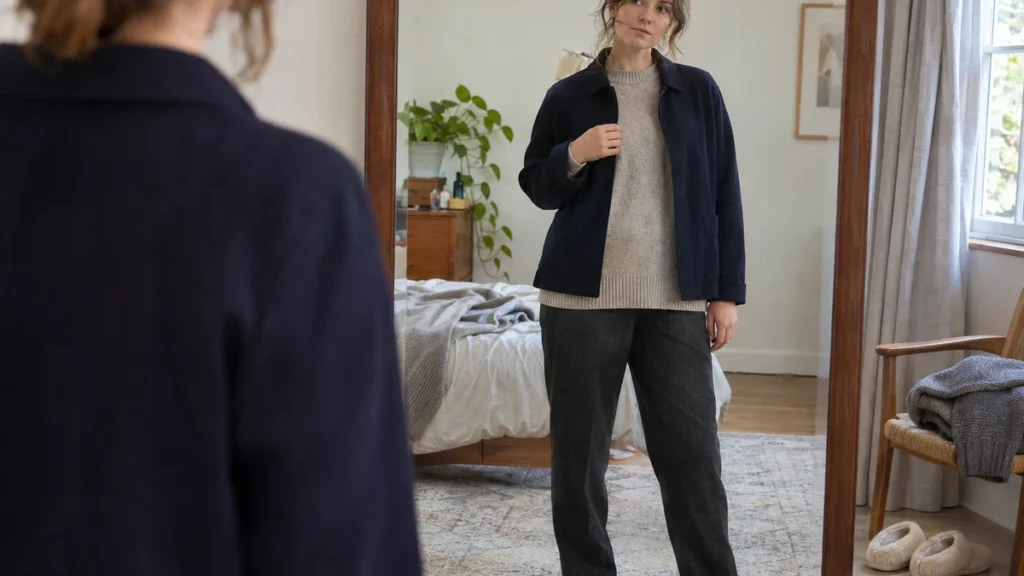
Should a jumper hem show below a jacket? Yes, it can. A visible band of knitwear creates a deliberate layered effect, while a jumper that ends inside the jacket gives a cleaner finish. Choose between them by looking at the hems, fabric weight and movement, not by applying rules to your body.
The easiest starting point is a jumper that extends a few centimetres below a straight jacket hem. That gives each garment a readable edge. A longer jumper also works, but its fabric needs room to fall without bunching beneath the jacket.
The tricky combination is often two pieces you like separately: a soft knit and a shorter jacket whose edges almost meet. Before replacing either, compare the jumper fully visible, lightly tucked and folded under. Keep the trousers and shoes unchanged so you can see which hem arrangement you actually prefer.
Look at the two hems together
Start with the jacket open and your arms relaxed. Does the jumper form an even band, a curved hem or an uneven ridge? Each creates a different effect. A straight band looks graphic; a curved hem makes the layers feel more relaxed.
For a first comparison, try roughly three to six centimetres of visible knitwear. This is a styling experiment, not a correct measurement. If only a tiny sliver appears, it may disappear whenever you move; a clearer band can make the layering easier to read.
A longer extension changes the outfit more noticeably. A tunic knit beneath a cropped jacket makes the jumper the main garment and the jacket a framing layer. Keep that length if you enjoy it, rather than shortening it simply to follow a proportion formula.
GetWardrobe’s guide to proportion and composition recommends comparing cuts on yourself rather than treating proportion advice as universal rules. Here, the useful question is specific: do you like where these two fabric edges land together?
Take comparison photos from the same distance, with the camera level and the whole outfit visible. A close mirror view can make you concentrate on a small fold that barely registers overall. Compare the front and side, then sit down before deciding whether anything needs changing.
Match the fabric weights before adjusting the length
A fine merino jumper usually sits more easily beneath a close jacket than a thick cable knit. Dense ribbing, chunky seams and folded hems need extra space. If the jacket catches on those details, changing the jumper’s length will not solve the underlying fit problem.
Check the back as well as the front. Friction between the jacket and knitwear can pull the jumper upwards, leaving an unexpected fold above its hem. Smooth both garments down, walk across the room and see whether the fold returns.
For cold weather, leave enough room for your intended knit when fastening the jacket. You should be able to reach forward without uncomfortable pressure across your shoulders or upper arms. Our guide to whether a blazer should button without pulling covers useful closure checks.
Four outfits with the jumper hem showing
A navy knit under a cropped work jacket
Wear a navy fine-gauge crew neck beneath a waist-length olive cotton jacket, with stone straight-leg trousers and dark brown lace-up shoes. Let a clear band of navy show beneath the jacket. The smooth knit separates the olive and stone without adding another bulky layer.
This suits a mild, dry day. For colder conditions, choose a lined jacket with enough sleeve room, or add an overcoat for the journey. If the jumper’s ribbed hem pulls upwards, try a straight, less elastic hem before changing the whole outfit.
An oatmeal jumper under a charcoal blazer
Pair a relaxed oatmeal jumper with a short charcoal blazer, black fluid trousers and burgundy loafers. Let the jumper extend below the blazer and leave the jacket open. The pale knit remains visible through the centre and beneath the jacket, connecting those areas.
Choose a soft wool blend rather than a stiff, thick knit if you want gentle folds. In wet weather, substitute leather ankle boots with suitable traction and keep the trouser hems clear of the pavement. A longer blazer is an alternative if you prefer less knit showing.
A burgundy knit under a denim jacket
Try a burgundy roll neck beneath a dark denim jacket, with chocolate corduroy trousers and brown boots. A few centimetres of burgundy below the denim repeat the colour visible at the neck. The corduroy adds texture without requiring another contrasting colour.
A medium-weight knit works when the denim jacket has comfortable room through the sleeves. If the layers resist bending at the elbows, swap to a thinner jumper or roomier jacket. For more cold-weather flexibility, wear a thermal base layer rather than forcing a heavier knit underneath.
A long grey jumper under a short black jacket
Combine a straight, upper-thigh grey jumper with a short black jacket, charcoal ankle-length trousers and black trainers. Leave the jumper fully untucked. This deliberately longer arrangement works through the contrast between the jacket’s firm edge and the knit’s softer fall.
Choose trousers that move freely beneath the jumper rather than catching its hem. If you add a bag, check where it rests against the layers; our guide to crossbody bag strap length can help you adjust a strap that keeps gathering the knit.
When a hidden jumper hem is more practical
Keep the jumper inside the jacket when you want an uninterrupted outer edge, particularly with a zip-front jacket you intend to wear closed. A shorter knit is often easier than repeatedly folding a long one. Choose enough overlap with your waistband for comfortable reaching and sitting.
A partial tuck works best with a supple, relatively thin jumper and a waistband that has room for it. Tuck a small front section, then release some fabric so it does not pull. Avoid packing a thick ribbed hem into trousers that already fit closely.
You can also fold a jumper hem inward for a quick comparison, but check whether it stays there during normal movement. If it repeatedly drops or forms a thick ridge, use a different knit rather than spending the day readjusting it.
Common questions
How much jumper should show below a jacket?
Start with a visible band of about three to six centimetres, then compare a shorter and longer arrangement. There is no required amount. Check the side and back views, and make sure the jacket does not push the jumper into an uncomfortable fold.
Can a jumper be longer than a blazer?
Yes. A fine or softly draping jumper can extend below a shorter blazer, especially when the blazer is worn open. Check that the knit falls freely beneath the lining. If the blazer catches it, try a smoother knit or a jacket with more room.
Should the visible jumper hem match the trousers?
No. Similar colours create a quieter transition, while contrasting colours make the layered edge more noticeable. Try charcoal knitwear with black trousers for a subtle version, or oatmeal knitwear with navy trousers for a clear band. Compare them in daylight before choosing.