


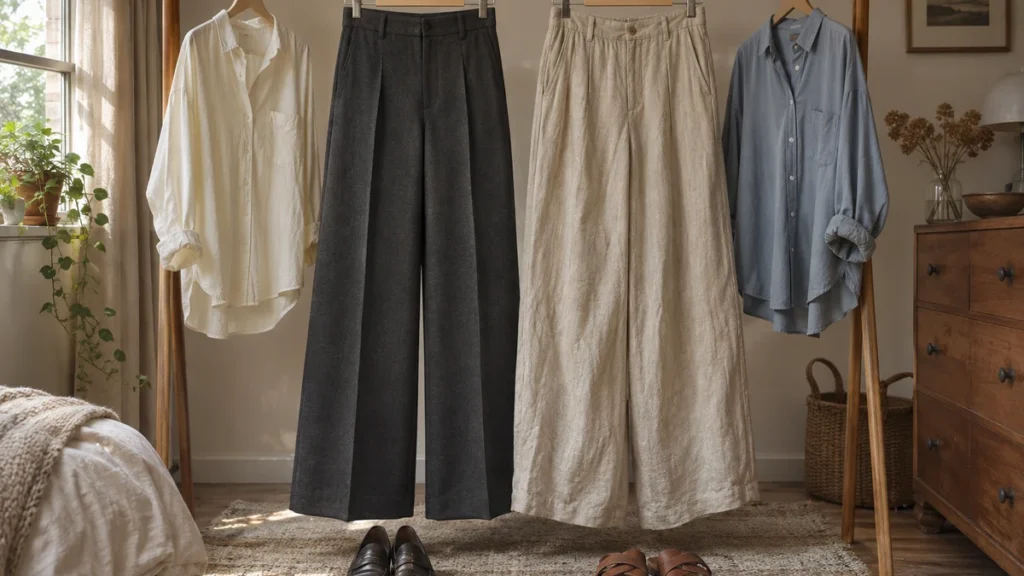
Should wide leg trousers have a crease? Choose a front crease when you want a more defined line through a roomy leg, particularly in tailored wool or structured blends. Choose an uncreased finish for softer movement in linen, washed cotton or fluid fabrics. Neither finish requires a particular body shape or a fitted top.
If your outfit feels more oversized than you intended, check the trousers before replacing everything above the waistband. A pressed line can give generous fabric a clearer direction without reducing its width. It will not, however, correct an uncomfortable waistband or a hem that catches beneath your shoes.
The useful comparison is the same outfit with two different trouser finishes: crisp and creased, then soft and uncreased. Keep the top, shoes and camera position unchanged. Seeing those versions on yourself makes it easier to decide whether you want more structure, rather than assuming you need less volume.
What a front crease changes
A front crease runs vertically down the trouser leg, creating a visible line within a broad area of fabric. On plain charcoal or navy trousers, it gives the eye a route to follow. The leg remains wide, but its surface looks more ordered.
GetWardrobe’s outfit proportion guide presents fitted tops and shorter relaxed tops as alternative partners for wide trousers. A crease offers another styling variable: structure within the trousers themselves. That is useful when you enjoy loose shirts or roomy knitwear and do not want to change their silhouette.
A crease and a pleat are different features. A pleat is folded fabric built into the garment, usually near the waistband; a pressed crease is a line down the leg. Flat-front trousers can have creases, and pleated trousers do not always need a sharply pressed finish.
Choose the finish by fabric
Tailored wool and structured blends
Start with the finish the garment already has. Wool twill, wool blends and some polyester blends often suit a defined crease because their construction supports a tailored appearance. Follow the care label: fibre content alone does not tell you the safe ironing temperature.
For work, try charcoal creased trousers with an ivory fine-knit crew neck and black leather loafers. Leave the knit untucked if its hem finishes where you like it. The trouser line provides definition without making a visible waistband essential.
Linen and washed cotton
Uncreased linen and washed cotton suit a more relaxed result. Their wrinkles and softer edges are part of the fabric’s appearance, so avoid treating every fold as a styling failure. Pressing may tidy them temporarily, but sitting and walking will introduce creases again.
Pair tobacco linen trousers with an ecru cotton shirt and dark brown sandals in warm weather. If the combination feels too expansive, first try a shirt with a shorter hem or narrower sleeves. You can keep both pieces loose without adding a formal trouser crease.
Fluid crepe and satin
Fluid crepe and satin often work best with uninterrupted drape, unless the trousers were designed with a crease. Their shine and movement already describe the leg. Avoid experimenting with a hot iron: some finishes mark easily, and an unwanted pressed line may be difficult to remove.
Four outfits that keep volume deliberate
Office trousers with a relaxed shirt
Wear navy creased trousers with a pale blue poplin shirt and burgundy loafers. Try a small front tuck if you want the waistband visible, leaving the back loose. The shirt can stay relaxed while the trouser crease gives the lower half a crisp finish.
For cool commutes, add a straight wool coat with room for the shirt sleeves. Indoors, reassess the outfit without the coat. If a blazer is required, check its comfort separately using this guide to whether a blazer should button without pulling.
A winter knit without a bulky tuck
Combine camel creased wool trousers with a forest green jumper and dark brown ankle boots. Choose a jumper whose hem falls freely rather than gripping and bunching above the waistband. A substantial knit does not need to be squeezed inside tailored trousers.
For colder days, wear a thin thermal layer underneath rather than adding another heavy knit. Check that the trouser hem clears the pavement in your actual boots. Wet wool dragging along the ground is a practical problem that pressing cannot solve.
Weekend cotton with a clean outline
Try uncreased olive cotton trousers, a white heavyweight T-shirt and navy canvas trainers. A substantial jersey holds its outline more clearly than a very thin, drapey tee. This gives the outfit some structure while keeping the trousers soft.
If you prefer an untucked finish, compare two T-shirt lengths rather than immediately sizing down. The better option is the one that hangs comfortably and creates the outline you want. Our guide to wearing a loose top without tucking it in offers further alternatives.
Evening drape with a defined neckline
Wear black uncreased crepe trousers with a deep red square-neck top and black closed-toe flats. The neckline provides a clear edge while the trousers move softly. A matte top also separates the textures if the trousers have a slight sheen.
For extra coverage, substitute a long-sleeved boat-neck top or a softly tailored blouse. Keep the fluid trousers if you enjoy their movement. You do not need a tight upper half to make a wide lower half look intentional.
Check the fit before reaching for the iron
A crease works best when the trousers already hang comfortably. Try these checks in the shoes you plan to wear, then sit down and walk across the room. Judge comfort and fabric behaviour, not whether your body matches a styling formula.
- Check whether the waistband stays comfortable when seated.
- Let pockets lie naturally rather than forcing them flat for a photograph.
- Notice whether the legs fall freely or catch at the knees and calves.
- Check that the hem does not slip beneath your heel.
When comparing in a mirror, photograph the whole outfit from the front and side. A virtual try-on can help you explore a structured versus fluid silhouette, but a generated crease is not evidence that the real fabric will hold one. Confirm comfort, pressing suitability and hem clearance with the garment itself.
Common questions
Do creases make wide leg trousers look less oversized?
They can make the fabric look more defined by adding a vertical line. They do not change the trousers’ actual width. Choose a crease for a sharper finish, then check hem length and fit separately if the outfit still feels more expansive than you want.
Can you wear creased wide leg trousers with trainers?
Yes. Try grey creased trousers with a cotton sweatshirt and leather trainers for a casual combination. Check the hem in those trainers, since a length that works with boots may drag with flatter shoes. Keep any existing crease rather than pressing a new one unnecessarily.
How do you refresh an existing trouser crease?
Follow the care label and align the existing fold carefully before pressing. Use a pressing cloth where appropriate, and test an inconspicuous area first. Avoid creating a second line beside the original. For dry-clean-only trousers or an uncertain fabric finish, ask a professional cleaner to restore the crease.