


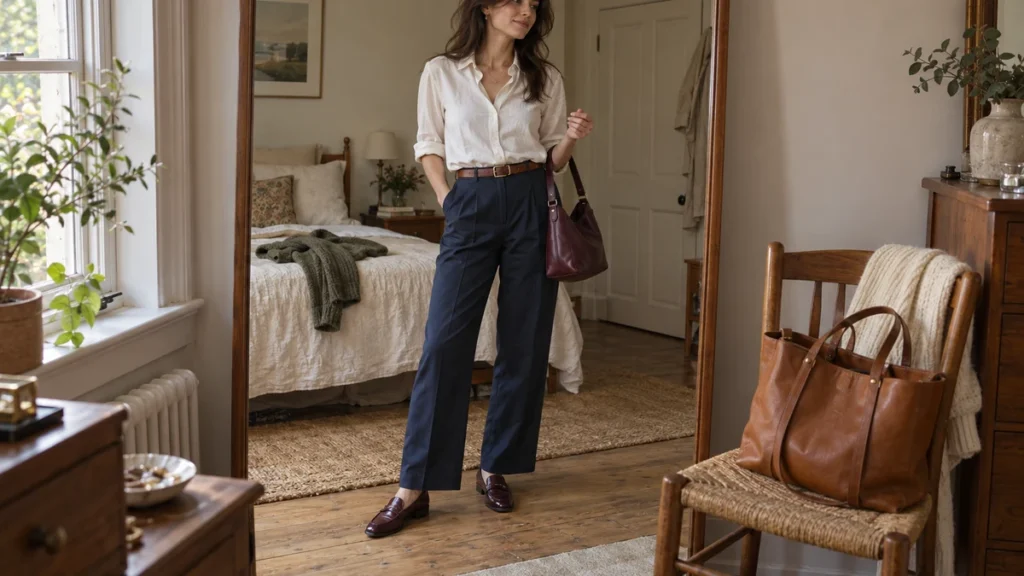
No, your belt does not need to match your bag. Matching them creates a repeated colour detail, which can suit tailored outfits, but different colours work just as well when each connects with something else you are wearing. Start with the clothes, then decide whether you want the accessories to blend in or stand out.
The more useful question is how much attention each accessory attracts. A narrow brown belt and a large brown tote share a colour but make very different impressions. A broad belt with a polished buckle can be more noticeable than a small bag, even when both are black.
If you keep swapping accessories without feeling sure, compare the same outfit with a matching pair, a tonal pair and a contrasting pair. Keep the clothes and shoes unchanged. Seeing those versions on yourself makes it easier to choose between a repeated colour and a more varied combination.
Choose matching, tonal or contrasting accessories
Matching means repeating approximately the same colour, such as a black belt with a black shoulder bag. You do not need identical leather grain or hardware. This is useful when your clothes already contain a print, several layers or an unusual silhouette and you want the accessories to feel consistent.
Tonal means choosing related shades rather than an exact match. A tan belt with a chocolate bag gives a cream shirt and indigo jeans some variation without a sharp colour change. Compare the undertones in daylight: reddish cognac and yellowish camel can work together, but they will look more deliberately mixed than two similar browns.
Contrasting means allowing the accessories to do separate jobs. A black belt can connect with black trousers while a burgundy bag adds colour elsewhere. Neither accessory needs to justify itself by matching the other, provided you like the overall distribution of colour.
Let the belt connect with the clothes first
A belt sits directly against your outfit, so assess that relationship before comparing it with your bag. A navy belt on navy trousers creates a quiet waistband detail. A cream belt on the same trousers creates a clear horizontal break. Neither effect is better for a particular body shape; choose the line you want to see.
Consider how much belt is actually visible. With a fully tucked shirt, its colour and buckle become part of the outfit’s centre. Under an untucked knit, only a small section might appear when you move. There is little reason to rebuild your bag choice around a mostly concealed accessory.
For more on placing those colour breaks, the guide to wearing a dark top with light trousers offers useful outfit examples. Try your belt against both garments before assuming it needs to echo an accessory.
Five outfits with different belt and bag combinations
Black belt and burgundy bag for the office
Wear charcoal wool trousers, a pale blue cotton shirt, a narrow black leather belt and black loafers. Add a burgundy shoulder bag. The belt connects with the shoes, while the bag introduces a richer colour without changing the restrained feel of the clothes.
For cold weather, add a charcoal coat and fine wool socks. If you prefer less contrast, swap the burgundy bag for dark brown rather than changing everything to black. Choose a shoulder strap that sits comfortably over the coat.
Tan belt and chocolate tote with weekend denim
Combine straight indigo jeans with an ecru cotton sweatshirt, a tan belt and a chocolate leather tote. A small front tuck reveals enough belt to make its lighter colour visible. Cream trainers keep the outfit casual; brown ankle boots make it more suitable for a chilly, dry day.
The two browns do not need to match because they serve different purposes: tan marks the waistband, while chocolate gives the larger bag a quieter presence. For rain, choose a bag material you can wipe clean and footwear with a suitable sole.
Matching black accessories with a printed dress
Try a navy and ivory printed midi dress with a black belt, black crossbody bag and flat black boots. Repeating black lets the print remain prominent. Choose a belt that rests comfortably rather than pulling the dress fabric into tight gathers.
A soft fabric belt gives a gentler fold than stiff leather. If the dress already has an elasticated waist or decorative seam, try it without a belt first. Matching accessories are an option, not a requirement to add another piece.
Brown belt and black bag with cream trousers
Wear cream cotton twill trousers, a chocolate merino jumper, a medium brown belt and a black leather tote. Black loafers give the bag a second connection. The belt belongs with the warm knit, so the accessories can differ without either looking isolated.
Keep the jumper tuck shallow if the waistband feels crowded. You can also leave it untucked and let the belt remain functional. The related guide to wearing navy and black together shows another way to combine dark neutrals without exact matching.
Quiet belt and colourful bag for dinner
Pair black tailored trousers with a fluid ivory blouse, a slim black belt and a cobalt blue bag. Add black ankle boots or closed-toe flats. Keeping the belt close to the trouser colour gives the bag a clear role as the strongest colour accent.
For a softer version, choose a dusty blue bag instead. A wool coat adds warmth without requiring a different accessory formula. Check that the blouse still falls comfortably over the belt after sitting down.
Check texture, hardware and practical fit
When colours seem compatible but the pairing feels busier than you want, compare the surfaces. A glossy patent belt and a heavily textured woven bag both draw attention. Keep either one and try a smoother, matte alternative for the other before buying anything new.
Buckles and bag hardware can differ, too. A small silver buckle does not require a silver bag clasp. If both pieces have large, bright fittings, matching the metal is one way to simplify the combination, but a mixed-metal pairing remains a valid choice.
Finally, separate appearance from comfort. Sit, bend and reach while wearing the belt, then carry the filled bag over your usual outerwear. A visual try-on can help compare colour placement, but it cannot confirm belt pressure, strap comfort or how a bag feels when loaded.
Common questions
Should your belt match your bag or your shoes?
Neither match is compulsory. Matching the belt to your shoes creates repetition across the outfit, while matching it to your trousers makes the waistband detail quieter. Choose that relationship first, then select a bag that supports the amount of contrast you want.
Can you wear a brown belt with a black bag?
Yes. Try a brown belt with blue jeans, a cream shirt and a black bag, then add black shoes if you want another repeated detail. Choose the brown against the denim and shirt rather than searching for a shade that somehow matches black.
Do belt and bag materials need to match?
No. Leather belts work with canvas totes, suede shoulder bags and woven bags. Consider the weather and the outfit’s formality instead. For a wet commute, prioritise a practical bag material; for a dressier outfit, compare cleaner shapes and less prominent stitching.