

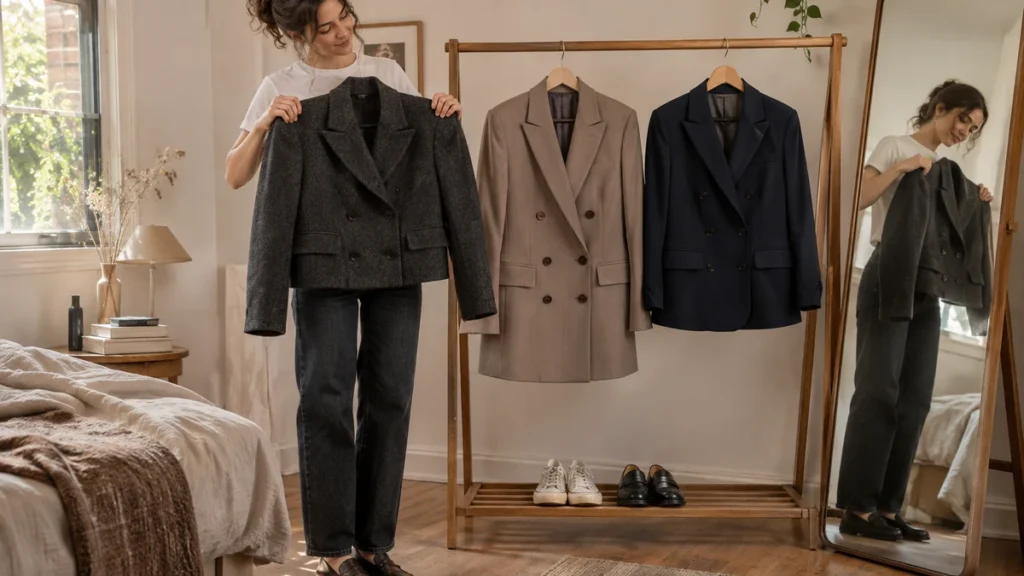
A double breasted jacket can look beautifully relaxed on a shop model and unexpectedly formal when you imagine it with your own clothes. Virtual try on for double breasted jackets can help you explore that styling question before buying: do you prefer a short, square cut, a longer tailored shape, or a softly structured version?
TryFits AI describes creating a moving digital twin from a selfie and previewing store finds or clothes from your own closet. That makes it useful for exploring a jacket’s overall appearance on you. The result is an AI-generated visualization, not proof that the real jacket will button comfortably or sit correctly across your shoulders.
The most useful question is therefore specific: which double breasted cut works with the trousers, skirts and layers you actually wear? Keep those familiar pieces in the comparison rather than judging an isolated jacket. A navy blazer that looks convincing with matching trousers may feel quite different over your usual faded jeans and oatmeal jumper.
What TryFits AI can help you preview
According to the supplied Google Play listing, TryFits AI lets users preview items from more than 30 stores or their own closet and turn looks into short videos. Its FAQ describes generative AI visualizations. Use those previews to explore styling possibilities, while checking the actual garment separately for construction and fit.
With a double breasted jacket, focus on the broad outline first. Look at how much space the jacket occupies above your trousers, where the hem appears to finish, and whether the front reads as sharply tailored or relaxed. Treat exact button spacing, lapel shape and small seam details cautiously if the generated result differs from the product photograph.
A moving preview offers another view of the proposed outfit, but generated movement is not a physical fabric test. It cannot establish whether a stiff wool front will lift when you sit, whether a lining will catch on your jumper, or whether the overlapping panels will pull across your chest.
Compare three cuts with one familiar outfit
A short, square jacket with straight jeans
Start with mid blue straight jeans, a plain ivory T-shirt and dark brown ankle boots. Preview a hip length double breasted jacket with a relatively straight side seam. This gives you a clear view of the jacket’s width without adding another strong silhouette underneath.
Try navy wool twill for a crisp everyday look or chocolate corduroy for a softer impression. The short cut leaves more of the jeans visible, which can suit an outfit built around a substantial boot. If the jacket feels too formal visually, compare darker buttons with bright metal ones in the retailer’s photographs before choosing.
A longer tailored jacket with narrow trousers
Next, consider a jacket that reaches below the hip, worn with charcoal cigarette trousers and a fine black roll neck. A longer front creates a larger uninterrupted area of fabric. Preview whether you enjoy that coverage or would rather see more of the trouser waist and upper leg.
For cold weather, look for a wool blend with enough room for your intended knit, then verify that room through measurements and a physical fitting. For a warm office, an unlined or partially lined jacket may be a practical alternative, depending on its fabric and construction. The preview cannot tell you how warm either version will feel.
A softly structured jacket with a fluid skirt
Try a less rigid double breasted jacket over a fine knit and a dark crepe midi skirt. A muted olive jacket with a black skirt creates a quieter combination than a high contrast cream jacket. Keep the footwear simple, such as black leather boots, so you can assess the jacket and skirt together.
Check the product description for shoulder padding and fabric composition. A softly rendered preview does not prove that the garment itself is soft. If skirt length is the sticking point, the guide to whether a jacket should be longer than your skirt offers useful outfit comparisons.
Judge the front without mistaking it for a fit check
The overlapping front is the defining feature of double breasted tailoring. A broad lapel, prominent buttons and a long hem can make even a plain jacket visually substantial. Decide which feature you want to lead: a strong shoulder, a defined waist or a relaxed rectangular outline.
Compare an open and fastened appearance where the available garment imagery supports it. Open fronts reveal more of the layer underneath, while fastening creates a more continuous jacket shape. If the visualization invents a closure or changes the button arrangement, return to the original product images rather than judging that altered detail.
When the real jacket arrives, fasten its intended working closure and let your arms rest naturally. Look for persistent diagonal pulling around the fastening, a collar that stands away from your neck, or fronts that twist. Sit down and reach forward gently; a smooth generated image cannot confirm that these movements will be comfortable.
Make the comparison useful for your weather and wardrobe
For a damp commute, preview the jacket with the shoes and outer layer you will actually need. A tailored blazer worn beneath a raincoat has to accommodate your body and knitwear while also fitting inside another garment. Check that combination physically, especially around padded shoulders and upper sleeves.
For a mild day, compare a cotton rich jacket with a lightweight merino top and straight chinos. For a cold evening, consider wool tailoring, a fine roll neck and heavier trousers. These are different clothing systems, so avoid choosing a jacket solely from a preview showing a bare neck and thin top.
Keep each comparison controlled. Use the same jeans, top and footwear while changing the jacket cut, then compare colours within your preferred shape. Changing every garment at once makes it harder to identify why one look appeals to you.
Before ordering, write down the preferred hem position, shoulder treatment and intended layer. Check those against the retailer’s garment measurements, fabric description and return policy. If the jacket only appeals when the generated image changes its real details, choose a different item rather than buying the imagined version.
Common questions
Can virtual try on show whether a double breasted jacket will button?
It may visualize a fastened appearance, but that does not establish comfortable closure. Compare your measurements with the retailer’s size guidance and any garment measurements provided. During a physical fitting, check for pulling around the fastening and enough room to sit and reach without strain.
Should I preview a double breasted jacket open or closed?
Consider both if you expect to wear it both ways and suitable reference imagery is available. The closed front emphasizes the jacket’s shape; the open front reveals more of your top and waistband. Confirm the actual button arrangement in the product photographs if the AI preview changes it.
Which top should I use when comparing double breasted jackets?
Start with a plain, relatively fine top you already wear, such as a cotton T-shirt or merino roll neck. This keeps attention on the jacket. Then assess your intended thicker layer separately, checking the real jacket’s sleeve room and shoulder comfort before keeping it.