


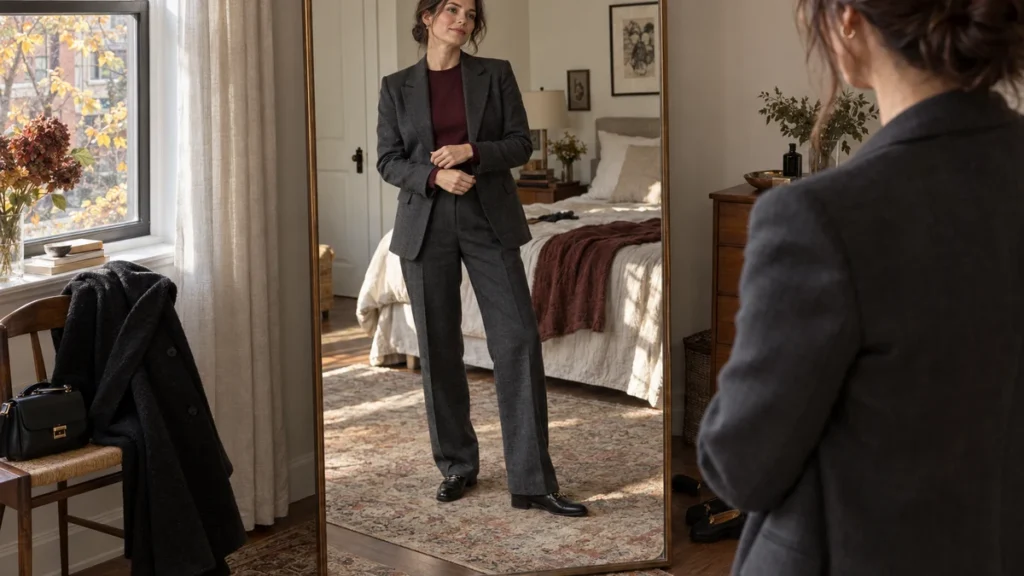
For an autumn restaurant opening, wear polished separates or a long-sleeved midi dress with a proper coat and shoes you can comfortably stand in. A charcoal trouser suit with a burgundy knit and leather loafers is a reliable starting point. For a dressier invitation, choose a dark crepe dress, a tailored wool coat and closed-toe kitten heels.
The useful question is not simply how formal the restaurant looks. An opening reception might involve drinks at the bar, standing with small plates and moving between crowded tables. Your outfit needs to work without a dining chair, somewhere to leave a large bag or an immediate opportunity to remove your coat.
When deciding what to wear to a restaurant opening night, compare the complete outfit rather than the dress alone. A beautiful midi can look quite different with ankle boots instead of delicate heels, or a hip-length jacket instead of a long coat. Previewing those combinations on yourself helps narrow the visual choice before you check comfort and fit in person.
Read the invitation before choosing your outfit
Look for wording such as opening reception, preview dinner, launch party or soft opening. A reception suggests dressing for standing and mingling; a booked preview dinner calls for something comfortable while seated. If the invitation specifies cocktail attire or another dress code, follow that rather than assuming every new restaurant wants relaxed tailoring.
Check the restaurant’s own photographs for practical clues: a pavement terrace, high stools or a formal dining room. These details help you choose shoes and layers, but they do not establish a dress code. Ask the organiser whether the event is seated if the invitation leaves that unclear.
The supplied October research offers a useful starting point. SOERA’s The October Evening Edit: From Dinner to Dancing suggests a long-sleeved dress with a tailored coat and kitten heels, alongside a more casual slip dress with flannel. Adapt those evening formulas to the actual invitation rather than treating them as rules for every opening.
Five outfit combinations for different openings
A neighbourhood bistro reception
Wear dark indigo straight-leg jeans, an ivory cotton shirt, a chocolate wool blazer and burgundy leather loafers. Choose denim without rips and a shirt that stays comfortable when you reach forward. The blazer supplies enough structure for introductions, while the jeans suit an informal neighbourhood venue.
Add a small shoulder bag that sits close to your body rather than swinging into other guests. If jeans feel too casual for the invitation, replace them with tobacco twill trousers. Keep the same shirt and shoes; you do not need to rebuild the entire outfit.
A dressier city restaurant launch
Choose a navy long-sleeved crepe midi dress, a black tailored coat and black closed-toe kitten heels. Look for a skirt with enough ease to take a full stride, especially if you will travel by public transport. A simple silver earring gives the outfit a finished feel without catching on your scarf.
Navy and black work comfortably together here because the crepe and coat have distinct textures. For more combinations, see our guide to wearing navy and black together. Substitute low block heels if the route includes uneven paving.
A standing drinks and tasting event
Pair charcoal straight-leg trousers with a fine burgundy merino crewneck, a matching charcoal blazer and black leather loafers. Choose trousers that finish clear of the floor in those shoes. Fine knit sleeves are easier to manage around tasting plates than wide cuffs or loose ties.
A compact crossbody bag leaves both hands available, although you can shorten the strap if you prefer it at your side. Skip a jacket that only feels comfortable worn open: you may need to button it outside. Try the blazer over the actual knit before deciding on its size.
A relaxed opening with a late bar atmosphere
Try an olive satin midi slip dress with a charcoal brushed-cotton flannel shirt, black ankle boots and a dark raincoat. Wear the shirt open or fasten two middle buttons to create a light outer layer. Keep the checks small and muted so the combination feels intentional rather than like outdoor workwear over eveningwear.
This is the casual option, not the answer to a cocktail dress code. If you want more structure, swap the flannel for a cropped cardigan or a softly tailored jacket. Choose a lined slip dress, and check how the fabric behaves when you sit before wearing it out.
A preview dinner straight after work
Start with black tapered trousers, a pale blue cotton-poplin shirt and black ankle boots, then add a camel coat. Replace your work tote with a small zip-top shoulder bag if you can leave the larger bag somewhere secure. Undoing one collar button and adding earrings is enough; a complete change is unnecessary.
If your shirt pulls when seated, choose a roomier cut rather than relying on the jacket to cover it. Our button-up shirt fit checks explain what to look for at the shoulders, chest and sleeves.
Choose fabrics for the journey and the room
For cool, dry weather, a wool-blend coat over crepe, fine merino or cotton twill gives you removable warmth. A heavy jumper under a fitted blazer can become uncomfortable in a busy dining room. Use a thinner indoor layer and let your coat handle the colder part of the evening.
For rain, prioritise a genuinely water-resistant outer layer and footwear with suitable grip. Do not assume a wool coat or leather boot is waterproof. Keep long hems away from wet pavements, and save delicate suede for a dry forecast or a journey with very little walking.
In a milder climate, replace the wool coat with a lined trench or lightweight jacket. A sleeveless dress can work indoors, but bring a layer you can actually wear on the journey home. Check the local forecast close to the event instead of dressing for an imagined autumn temperature.
Make a quick standing and seated check
Before leaving, wear the full combination for several minutes. Sit down, cross your legs if that is comfortable, reach forward and walk up a step. Check that the waistband does not press, the neckline stays where you want it and your sleeves clear your hands.
Then stand holding a glass and a small plate. If your bag slips, your cuff drags or your shoes already pinch, change that item now. A virtual preview can help compare colour and proportions, but it cannot establish shoe grip, waistband pressure or whether a fabric will feel warm enough outdoors.
Common questions
Can you wear jeans to a restaurant opening night?
Yes, for a casual opening without a stricter dress code. Choose clean, dark denim with a shirt, tailored jacket and polished shoes. For cocktail attire or a formal preview dinner, wear tailored trousers or a dress instead.
Do you need heels for a restaurant opening?
No. Leather loafers, smart ankle boots and secure closed-toe flats can all work. For a standing reception, choose shoes you have already worn comfortably. If you prefer heels, a low block heel is a practical option for walking between venues.
What should you avoid wearing to a restaurant launch?
Avoid trailing hems, cuffs that dip into food and bags that require constant adjustment. Follow any stated dress code, and check comfort while seated as well as standing. Leave unfamiliar shoes at home if you have not had time to test them.