


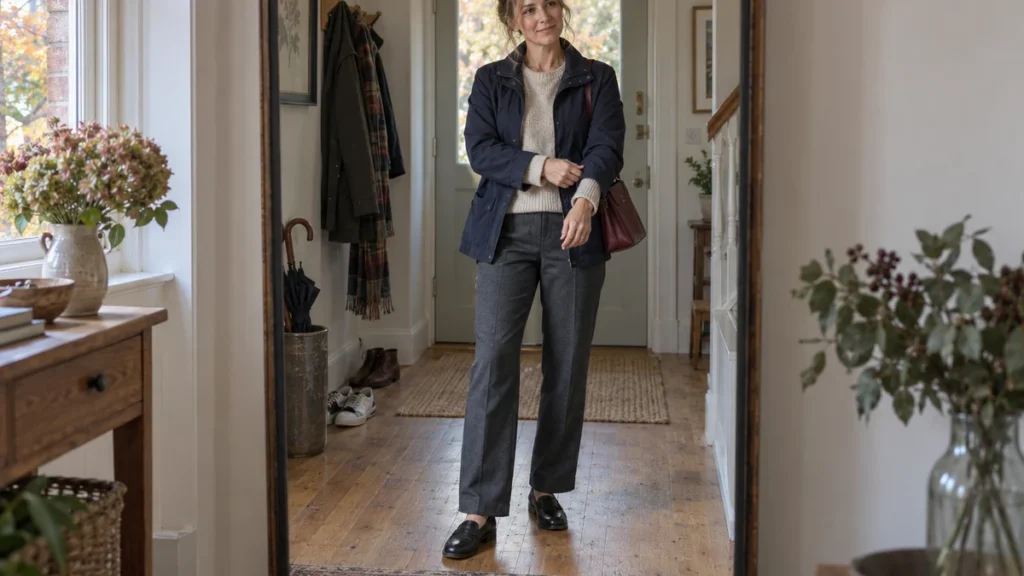
For a school open evening, wear straight-leg trousers or dark jeans, a comfortable knit or shirt, and shoes you can walk in confidently. Add a removable jacket and a small shoulder bag. You want an outfit that works for classroom tours, conversations with teachers and a potentially chilly journey home, without dressing as though you are attending an interview.
October and early November visits can involve several settings in one evening: a warm assembly hall, draughty corridors and outdoor paths between buildings. Check your invitation for the actual schedule and any clothing guidance. A sixth-form visit with your teenager may feel different from a primary-school tour, but both favour practical, approachable clothes.
The tricky part is judging the complete outfit. A long shirt can obscure the shape of wide trousers; a substantial coat can overwhelm a slim dress; cropped jeans can leave an uncomfortable gap above your shoes. Comparing the full combination on yourself before choosing another purchase helps you resolve those proportions, rather than buying a separate item that still leaves the outfit unfinished.
Start with the visit, not an imagined dress code
If you are deciding what to wear to a school open evening this autumn, start with the walking involved. Unless the school specifies otherwise, smart casual is a useful starting point. There is no need to buy a suit, and you do not need to dress more formally to demonstrate that you take the visit seriously.
The supplied October 1, 2026 research from Who What Wear’s fall outfit coverage identifies flannel over a slip dress and a denim shirt with matching jeans as current outfit combinations. For a school visit, these are starting points rather than dress-code recommendations. Softer tailoring and restrained accessories can adapt those ideas to an evening spent moving between classrooms.
Choose a bag that leaves one hand free for a prospectus or phone. A zipped shoulder bag works better than an open tote if you expect stairs or crowded corridors. Keep your coat easy to carry, and avoid jewellery that repeatedly catches on a scarf or bag strap.
Four complete outfits for an autumn open evening
Charcoal trousers, a fine knit and loafers
Combine charcoal straight-leg trousers with a burgundy fine-gauge crewneck, black leather loafers and a navy raincoat. The trousers supply a tidy outline while the knit feels less formal than a blazer-and-shirt combination. Choose a trouser hem that clears the ground in your actual shoes, not just when you stand barefoot at home.
Merino or a breathable cotton blend suits an evening that alternates between cool outdoor air and heated rooms. Wear thin dark socks rather than bare ankles if the forecast is cold. If loafers rub your heels, substitute familiar leather trainers in black or cream; comfort is more useful than maintaining a particular shoe category.
A denim shirt, matching jeans and practical flats
Wear a mid-blue denim shirt with straight jeans in a similar wash, burgundy leather flats and a camel coat. Keep the denim clean and free of heavy distressing for a more composed finish. A narrow brown belt gives the shirt and jeans a clear meeting point without making the outfit feel overly styled.
Choose a supple shirt rather than rigid denim that restricts your shoulders. Tuck it fully if you like a defined waist, or leave it untucked when the hem sits around the upper hip. Our guide to how a button-up shirt should fit explains the shoulder, button and sleeve checks to make before leaving.
A checked shirt over a midi dress
Layer a lightweight forest-green checked flannel shirt over a black midi slip dress, then add opaque tights and flat ankle boots. Leave the shirt open for an easy vertical line, or button it and tuck a small section at the front if the fabric allows. Choose a dress with enough room to climb stairs and sit without constant adjustment.
This version works best with a relatively straight dress and a shirt that finishes above its widest skirt section. If you prefer more neckline coverage, substitute a short-sleeved jersey midi dress. For a warmer climate, omit the tights and choose closed-toe flats, keeping the flannel available for air-conditioned rooms rather than wearing it throughout.
Navy trousers, a cotton shirt and a cardigan
Pair navy tapered trousers with a pale-blue cotton shirt, an oatmeal cardigan and brown lace-up shoes. This is a useful option if you want layers you can remove independently. A hip-length cardigan keeps the outfit manageable when carrying a coat, and patch pockets provide somewhere for a small tissue packet or folded notes.
Choose trousers with enough ease through the seat to sit comfortably through a presentation. If you already own black shoes and a black coat, use them instead of buying brown accessories. The examples in our navy and black outfit guide show how to make that combination look deliberate.
Adjust the fabrics and footwear to the forecast
For a rainy evening, prioritise a genuinely rain-resistant outer layer and footwear with a textured sole. Suede flats and trailing trouser hems are poor choices for wet paths. Replace them with leather ankle boots and ankle-length trousers, and carry a compact umbrella if the visit includes movement between separate buildings.
In colder weather, add a thin base layer beneath your shirt or knit rather than relying entirely on a bulky coat. You can then remove the coat indoors without suddenly feeling underdressed for the temperature. In mild weather, a cotton cardigan or unlined jacket is easier to carry than a heavy wool coat.
Test footwear on the surface you expect to encounter, where possible. Smooth soles can be slippery on wet paving, while brand-new shoes may become uncomfortable halfway through a tour. Wear a familiar pair, and check that socks or tights do not make an already snug shoe too tight.
Check the outfit before you leave
A visual preview in TryFits AI can help you compare a longer cardigan with a shorter jacket, or matching denim with contrasting trousers, on your own body. Treat it as a styling aid, not proof of garment fit or weather protection. Keep the base outfit unchanged while comparing one layer so the difference is easier to judge.
Finish with a physical check: sit down, reach forward and walk up a few steps. Make sure your bag stays on your shoulder and your outer layer fits over the sleeves beneath it. Put your invitation, any requested documents and a pen in the bag beforehand, so getting dressed does not compete with last-minute preparation.
Common questions
Can you wear jeans to a school open evening?
Yes, unless the invitation gives different guidance. Dark or evenly washed straight-leg jeans work well with a cotton shirt, fine knit or cardigan. Choose a comfortable pair without extensive distressing, and add clean shoes that can handle the tour. There is no need to replace jeans with formal trousers simply because you will meet teachers.
Should parents dress formally for a school open evening?
Smart casual is usually a practical starting point when no dress code is supplied. A suit is unnecessary for a routine visit. Trousers with a knit, or a midi dress with a removable layer, look composed while allowing you to walk and sit comfortably. Follow any specific instructions from the school rather than assumptions about its reputation.
What should a teenager wear to a sixth-form open evening?
A teenager can wear their usual tidy casual clothes unless the school requests uniform or another dress code. Straight jeans, a plain T-shirt or knit, a jacket and comfortable trainers are practical. If they are attending directly after school, check whether changing is necessary before packing extra clothes; the invitation or admissions office can clarify.