


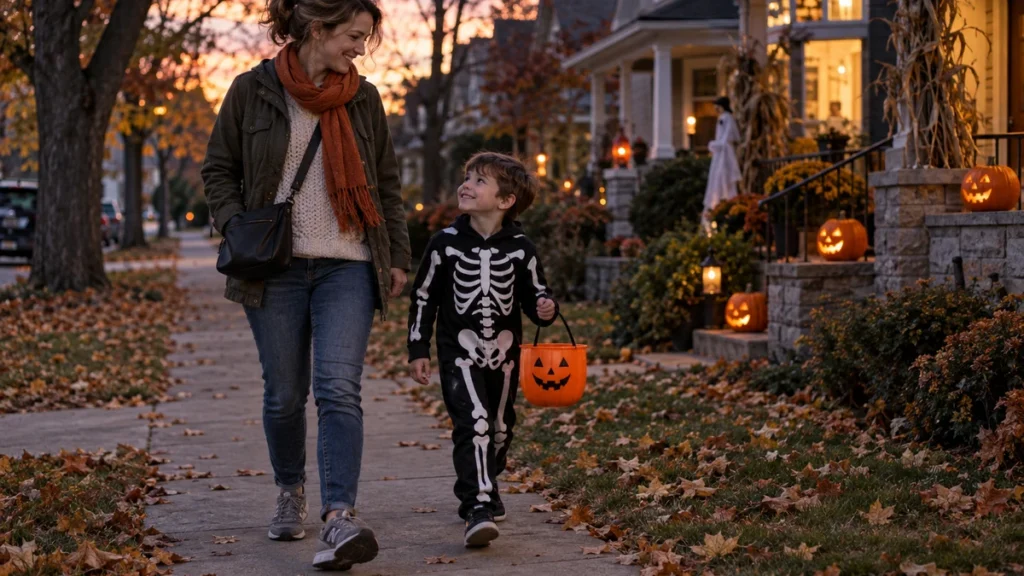
If you are wondering what to wear trick or treating with kids in 2026, start with shoes you can walk in, a layer that handles the forecast, and a hands-free way to carry your essentials. You can still look festive. A small Halloween detail, such as an orange scarf or a playful pin, is enough when your evening involves sidewalks, stairs, and frequent stops.
Halloween falls on Saturday, October 31, 2026. That gives you time to plan for the part of the night a costume photo does not show: standing outside while children decide which house to visit next. Check the local forecast and your neighborhood’s trick-or-treating hours before you dress. A dry suburban route, a rainy city block, and a chilly school event each call for a different outer layer.
The awkward outfit decisions tend to happen at the edges. A long coat can cover a costume; a cute bag can slide off your shoulder every time you help with a treat bucket; and shoes that feel fine indoors may not survive an hour on wet pavement. Build the outfit for the route first, then add the Halloween character you want people to see.
Build a comfortable base for the walk
For a typical neighborhood route, try straight-leg jeans, a fine-knit sweater, and weather-resistant ankle boots with a low heel or flat sole. Dark denim hides small splashes, while a sweater that fits beneath a coat lets you adjust when you move between warm doorways and cool streets. If jeans feel restrictive, choose relaxed trousers in a sturdy cotton twill with a tapered or straight hem that stays clear of puddles.
Leggings can work if they are substantial enough to wear on their own and you pair them with a longer knit or shirt jacket. Another easy combination is a knee-length knit dress, opaque tights, and flat boots. Test the whole outfit with a brisk walk and a few steps up and down: the hem, tights, and boots should stay comfortable without constant adjustment.
Consider what you will carry before choosing a bag. A compact crossbody with a secure closure leaves both hands available for a flashlight, a child’s hand, or a bucket. Put your phone, keys, and any needed medication in it before leaving, rather than relying on shallow coat pockets. If you are supervising several children, a small backpack may be more useful than a bag that swings against your hip.
Choose outerwear for the forecast, not the calendar
October weather varies widely by location, so the forecast matters more than a fixed Halloween outfit formula. On a mild, dry evening, a cotton jacket or light quilted layer over a breathable knit may be enough. If temperatures are set to fall after sunset, take a warmer coat even if the afternoon feels pleasant. You can carry it at first and put it on when the group slows down.
For rain, prioritize a hooded waterproof jacket over an umbrella when you need a free hand. Look for enough room in the shoulders to layer a sweater underneath, and make sure the cuffs do not drag across wet railings or treat bags. A longer hem helps in wind-driven rain, but avoid a length that catches behind your knees when climbing steps. The related guide to checking coat fit before buying online is useful if this event prompts a new outerwear purchase.
Cold-weather routes need a different balance: a warm coat, thin thermal base layer, and gloves you can remove easily for your phone. A bulky sweater under a close-fitting coat can limit movement without adding as much useful warmth as a finer base layer. If you are choosing between two coats, compare them over the clothes you will actually wear, with the bag strap in place. Virtual try-on can help you judge the outline and proportions, but it cannot confirm warmth, waterproofing, or whether a garment feels comfortable in motion.
Pick shoes for pavement, lawns, and steps
The safest style choice is a shoe you have already worn on a similar walk. Flat ankle boots with a grippy sole suit damp sidewalks and uneven paths. Supportive sneakers are sensible on a dry route, especially if your trousers fall neatly over them. Avoid a smooth leather sole or a narrow heel if the plan includes wet leaves, lawns, or repeated trips up porch steps.
Try the shoes with the socks you intend to wear. Thick socks can change the fit of a boot, while low socks may slip inside sneakers during a long walk. If the forecast calls for sustained rain, water-resistant footwear and a spare pair of dry socks in the car or at home are more helpful than an outfit that only looks good at the front door.
For a school parade or an indoor Halloween gathering before the walk, you can dress a little more sharply without sacrificing mobility. Pair dark wide-leg trousers with a tucked knit and polished flat boots, then change into weather-ready shoes before heading outside if needed. Keep the trouser hem high enough that it does not skim wet ground. The event may begin indoors, but the walk home is part of the outfit plan.
Add Halloween character without a full costume
If you want to join in, choose one clear detail and let the everyday clothes support it. A black sweater, charcoal trousers, and an orange scarf read festive without requiring a costume change. A deep plum dress under a black coat with a small bat-shaped pin is another low-effort option. Keep accessories secure and close to the body so they do not catch on bags, gates, or little hands.
A coordinated look with a child can be subtle. If they are dressing as a witch, you could wear a black coat and a dark green scarf. If their costume is space-themed, navy clothing with a silver hair clip gives a visual connection without making your own outfit cumbersome. Skip masks or pieces that narrow your vision while supervising a group, and check that any accessories do not cover reflective details on a child’s clothing.
If you plan to wear a costume, treat it like outerwear. Make sure you can bend, reach, and walk at your normal pace, and check that hems stay off the ground. A cape looks dramatic in a photograph but can become awkward in a crowd or wind; a shorter, secured version is easier to manage. Wear your walking shoes with the complete costume at home first, not just with the base clothes.
Make the outfit visible and easy to adjust
Dark clothes are practical for Halloween, but visibility matters after sunset. A light-colored outer layer or reflective detail can help drivers notice you; carry a working flashlight where it is easy to reach. Keep your phone charged, and check that your costume or coat does not conceal the bag or pockets you need. These small decisions make the evening smoother without dictating your style.
Before leaving, do a quick doorway test: put on every layer, close the coat, wear the bag, pick up the treat bucket, and walk a few steps. If a sleeve catches, a strap slips, or the coat hides the detail you wanted to show, adjust now. For more ideas on combining practical layers without excess bulk, see how to layer fall outfits without looking bulky.
Common questions
Can I wear sneakers trick or treating with kids?
Yes, if they are comfortable for the full route and the ground is likely to be dry. Choose a pair with good tread and wear socks that stay in place. If rain or muddy lawns are expected, water-resistant flat boots are a better choice.
What should I wear if it is cold on Halloween night?
Start with a thin thermal layer, add a knit, and finish with a coat roomy enough to close comfortably. Wear gloves and socks suited to your shoes. Check the evening forecast rather than the daytime high, since much of the walk may happen after sunset.
Do parents need to wear a costume for trick or treating?
No. Comfortable walking clothes with one festive accessory are plenty. If you want a coordinated look, echo a color or motif from your child’s costume, then make sure your shoes, coat, and bag still work for the route.