


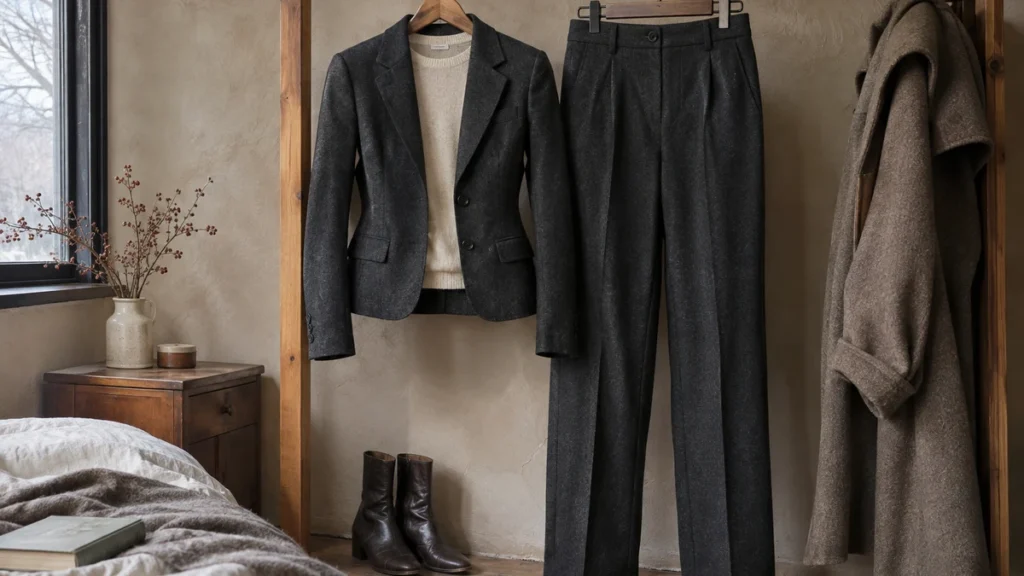
Learning how to wear a shrunken blazer in winter starts with the layers underneath: keep them fine rather than bulky, and pair the short jacket with trousers or a skirt that meet its hem. Think charcoal wool trousers, a thin cream knit and a blazer finishing around the waistband. You get the compact jacket shape without needing bare skin or an impractically thin outfit.
There is a current source behind this proportion shift: Marie Claire’s November 13, 2026 article, “The Return of the Tiny Blazer Is Fashion’s Latest Proportion Play,” identifies the return of smaller tailoring. That supports trying a shorter jacket this season, not declaring every longer blazer obsolete. The outfit advice below translates that reported trend into wearable winter combinations.
The tricky part is where everything meets. A blazer can look appealing on a hanger but land awkwardly above your trousers, bunch over a jumper or create more shirt hem than you intended. Comparing the same outfit with two jacket lengths, on yourself or through a virtual preview, helps isolate that decision before you buy.
What makes a blazer shrunken rather than simply small?
A shrunken blazer has deliberately compact proportions: a shorter body, relatively neat shoulders and less volume through the torso. Some versions finish at the waist; others reach the upper hip. Look for a cut designed around those proportions, rather than assuming a smaller size in a regular blazer will reproduce them.
Sizing down can leave the armholes restrictive and the sleeves too narrow while barely changing the hem position. Start with your usual size in a cropped or compact style, then check the garment measurements. The shoulder seam should sit comfortably, and you should be able to reach forward without the back sharply restricting movement.
For everyday wear, choose a hem that meets or slightly overlaps your preferred waistband. A much shorter jacket can work, but it requires a longer base layer if you want continuous coverage. There is no need to change your trouser rise just to accommodate one jacket.
Build the layers from the inside out
Start with a smooth base: a cotton jersey crew neck, fine merino roll neck or lightweight long-sleeved top. These give the jacket room to keep its shape. A chunky cable knit is harder to accommodate because its thickness fills the sleeves and can push the lapels away from your chest.
If you prefer a shirt, choose soft cotton poplin or a fluid woven fabric and tuck it neatly before adding the blazer. Check the side view for fabric collecting above the waistband. A shirt that fits comfortably through the body is easier to layer than an oversized one compressed beneath narrow tailoring.
You can leave a longer knit visible underneath, but make the length look chosen. A straight hem showing evenly is easier to manage than a ribbed hem caught halfway up one side. Our guide to whether a jumper hem should show below a jacket explores that specific layering decision.
Three outfits that use the shorter shape
For work: charcoal tailoring with a cream knit
Wear a charcoal shrunken blazer with full-length, straight wool trousers and a cream fine-gauge crew neck. Choose trousers whose waistband sits near the jacket hem, then add black leather loafers and warm socks. The straight leg gives you room to move without introducing another strongly sculpted shape.
Matching charcoal separates create a continuous colour line, although they do not need to be a suit. Compare the fabrics in daylight: two noticeably different greys often look more intentional than an almost-match. For a less formal office, substitute dark indigo straight jeans without heavy distressing.
For weekends: a compact jacket with relaxed denim
Try a dark brown blazer over an oatmeal long-sleeved top, with relaxed blue jeans and rubber-soled ankle boots. Let the jeans sit comfortably at your usual rise. The shorter jacket leaves more of the denim visible, so you can enjoy the relaxed leg without adding an oversized upper layer.
Keep the jeans clear of wet pavements, especially if the denim is heavy and slow to dry. If the jacket feels too businesslike, use a soft jersey top rather than a crisp shirt. A canvas tote is a practical alternative to a structured handbag.
For dinner: a short blazer with a fluid midi skirt
Combine a black compact blazer with a burgundy crepe midi skirt, a thin black top and ankle boots. A skirt with some movement makes sitting and walking easier than a very narrow cut. Look for a lined fabric with enough weight to fall smoothly over tights.
Try the blazer open first, then fasten it and compare where the hem meets the skirt. If you prefer it buttoned, check it while seated as well as standing. The fabric should not strain into sharp lines around the fastening; our blazer buttoning and fit guide explains the checks.
Choose fabric and outerwear for actual winter weather
For cold, dry days, wool flannel or a substantial wool blend gives a compact blazer useful warmth. A softer knit blazer offers flexibility if rigid tailoring feels restrictive. Check the lining too: smooth sleeve linings make it easier to pull the jacket over long sleeves without dragging them upwards.
A short blazer is usually an indoor layer in genuinely cold weather. Add a coat with enough space through the shoulders and upper arms to accommodate it. Try the complete combination with your scarf before removing any tags, because two structured collars can crowd the neck.
For rain, choose weather-appropriate outerwear and footwear rather than expecting tailoring to provide protection. In milder climates, a cotton twill blazer and lightweight base may be sufficient. If wool irritates your skin, consider lined alternatives and check the fibre composition rather than relying on a photograph.
Compare the hem before buying another jacket
Use trousers you already wear often as the starting point. Photograph one outfit with your existing blazer, then compare a shorter option while keeping the top and shoes unchanged. Look at the waistband coverage and the amount of fabric gathering underneath, rather than judging the jacket in isolation.
A virtual try-on can help you compare the visual direction of those lengths. It cannot establish sleeve comfort, fabric warmth or whether a button will pull when you sit. Confirm those details through measurements and a physical try-on, especially when the cut leaves little layering room.
Common questions
Can you wear a shrunken blazer with low-rise trousers?
Yes. Use a longer, fine base layer if you want your middle covered, and check the outfit when reaching or sitting. A compact blazer finishing at the upper hip will usually provide more overlap than a waist-length version.
Should a shrunken blazer be tight?
No. It should look deliberately compact while allowing comfortable movement. Pulling lapels, strained buttons and restrictive upper sleeves suggest you need a different size or cut. Compare shoulder, chest and sleeve measurements rather than choosing by the cropped hem alone.
What jumper works under a shrunken blazer?
A fine-gauge merino, cotton or lightweight blended knit is a useful starting point. Choose sleeves that slide comfortably inside the jacket and a hem that tucks without bunching. If you want a thick jumper, look for a compact blazer cut with extra room.