


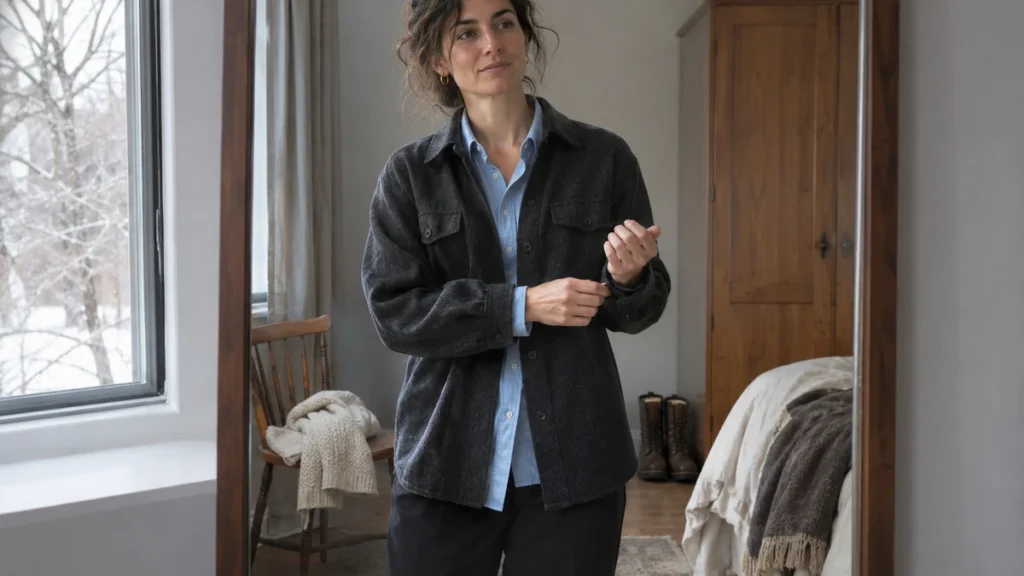
Here is how to wear two shirts together: start with a thin inner shirt and a roomier outer one, then leave the outer shirt partly open so both are visible. A pale blue cotton shirt beneath a charcoal brushed overshirt is an easy first combination. Keep your trousers uncomplicated while you decide how much colour and collar you want showing.
This is a practical way into winter 2026’s expressive layering trend. NET-A-PORTER’s Fall/Winter 2026 report highlights layered looks at Prada, Missoni, Rabanne, Bottega Veneta and Marni within a more wearable, expressive season. Vogue’s Fall/Winter 2026 trend coverage also describes how re-pairing everyday pieces can make familiar clothes feel fresh. The combinations below translate that broader direction into everyday outfits, rather than reproduce a specific runway look.
The challenge is visual: two shirts can look considered on a hanger but crowded around your neck once you put them on. Compare the same outfit with the outer shirt open, partly buttoned and closed before buying anything extra. A preview on your own body can help you judge the colour placement; a physical try-on checks whether the sleeves actually move comfortably.
Choose shirts with different jobs
The inner shirt should sit comfortably near the body without pulling across its buttons. Lightweight cotton poplin, cotton voile or a fine cotton blend works well. Avoid using your stiffest formal shirt underneath another structured shirt, because doubled plackets and collars can create a rigid panel down the chest.
The outer shirt needs room through the upper arms and back. Look for an overshirt cut, dropped shoulders or sleeves that accommodate another cuff. Brushed cotton, lightweight denim and soft twill make useful outer layers. Buying a larger size is not always the answer: an intentionally roomy cut can give you space without excessively long sleeves.
Try the shirts together before judging either size. Reach forward as though holding a steering wheel, bend your elbows and sit down. If the inner sleeve twists or the outer armhole presses into your underarm, change the pairing. A softer inner fabric often solves the problem more effectively than adding more width everywhere.
Decide where the second shirt will show
For your first outfit, make the inner shirt visible at the centre front and keep its hem tucked in. This gives the layering a clear shape without requiring several exposed edges. Leave the outer shirt open, or fasten one or two middle buttons while keeping the neckline relaxed.
At the neck, let the softer collar sit beneath the firmer one. You do not need to arrange both collars symmetrically or make both stand upright. If your inner shirt has a large pointed collar, choose a collarless outer shirt or leave the outer neckline open enough that the collars do not compete.
Keep cuffs simple while you assess the combination. Let the inner cuff show slightly beneath an unrolled outer sleeve, or turn the outer cuff back once without rolling both together. For more neckline examples, the guide to wearing a shirt collar inside or outside a jumper shows how changing collar visibility alters an outfit’s overall formality.
Four two-shirt outfits using familiar clothes
Pale blue poplin with a charcoal overshirt
Wear a pale blue shirt tucked into black straight-leg trousers, then add a charcoal brushed cotton overshirt and black ankle boots. Leave the outer shirt open so the blue forms a visible vertical panel. The smooth inner fabric and softly brushed outer surface provide enough variation without introducing a print.
This works for a relaxed office or a weekday lunch. Choose an outer hem around the upper hip if you want the trouser shape clearly visible, or a longer straight hem for a looser silhouette. Add a roomy wool coat outside, checking that the shirt sleeves do not bunch inside its lining.
A striped shirt beneath dark denim
Pair a fine blue-and-white striped shirt with an unbuttoned dark indigo denim shirt, ecru jeans and brown boots. Tuck the striped shirt and leave the denim untucked. Narrow stripes give the centre of the outfit detail while the solid denim keeps the overall combination easy to read.
Use lightweight denim rather than a rigid work shirt, particularly if you will add a coat. On wet days, replace the ecru jeans with dark brown trousers and choose boots with a suitable tread. Keep the trouser hem clear of the ground so it does not collect water.
A cream blouse with an olive utility shirt
A cream collarless blouse under an olive cotton utility shirt offers a softer version of the trend. Add charcoal wool trousers and oxblood loafers with socks for an indoor workday. Leave the utility shirt open so its chest pockets frame the cream fabric rather than cover it completely.
If your blouse has gathered sleeves, check that they fit smoothly inside the outer sleeves. A straight-sleeved blouse is the simpler alternative. Skip a large necklace here: buttons and utility pockets already provide detail, while small earrings stay clear of the layered neckline.
A burgundy shirt beneath soft checks
For a weekend outfit, combine a burgundy cotton shirt with a softly brushed check overshirt, dark straight jeans and lace-up boots. Choose a check containing burgundy so the shirts share one colour. Keep the inner shirt tucked and the outer one open to prevent the two hems becoming the main feature.
If you prefer a quieter combination, substitute a plain navy outer shirt. You can still get an expressive layered effect from burgundy appearing at the neckline and front opening. There is no need to introduce checks, jewellery and a statement belt in the same outfit.
Adjust the layers for your actual day
For heated offices, make both shirts lightweight and let your coat provide outdoor warmth. Two substantial flannel shirts may feel comfortable outside but become awkward when you cannot remove either without rearranging the outfit. Check that you like the inner shirt worn alone before leaving home.
In colder weather, a thin thermal beneath the inner shirt can add warmth without another visible neckline. Check the complete combination under your coat, not just in front of a mirror without it. Expressive layering should still allow you to close your outerwear and reach into a pocket comfortably.
If the outfit feels too busy, remove one visible detail before changing everything: tuck the inner hem, simplify the cuffs or replace the patterned shirt. The guide to virtual try-on for layered outfits offers a way to approach visual comparisons. Treat generated previews as styling references, then check friction, warmth and movement with the clothes themselves.
Common questions
Can you wear two button-up shirts together?
Yes. Choose a lightweight inner shirt and an outer shirt with enough sleeve and shoulder room. Leave some of the inner shirt visible through the front opening. Two equally stiff, close-fitting shirts are harder to wear comfortably.
Should you tuck in both shirts?
Start by tucking only the inner shirt and leaving the outer one loose. This separates their roles and avoids putting two plackets inside your waistband. Tuck both only if the fabrics are thin and you can sit comfortably without bunching.
Can both shirts have a pattern?
Yes, but start with patterns of different scales, such as a fine stripe beneath a larger check. Repeat one colour between them and keep the trousers plain. Compare that outfit with a solid outer shirt before deciding which version you prefer.