
Coats are the single most expensive item most people buy online each fall, and they are also the hardest to judge from a product photo alone. A model wearing a coat on a website is almost never your exact height, shoulder width, or arm length, so a sleeve that looks perfectly cropped on her can hit an awkward three quarter length on you. Before you commit to a coat you cannot try on in person, there is a real process for how to check if a coat fits before you buy it online that goes beyond reading the size chart and hoping for the best.
Why coat sizing is harder to get right than almost anything else
Most clothing forgives a size or two of error. A slightly loose t-shirt still looks intentional, and a pair of jeans with extra room at the waist just needs a belt. Coats do not behave the same way. Shoulder seams are the most unforgiving part of any outerwear piece. If a shoulder seam sits even half an inch too wide or too narrow, the entire coat looks off, no matter how good the fabric or the color is. Sleeve length is the second problem area, since brands vary wildly in where they cut a “long” sleeve, and a coat is usually layered over a sweater or blazer, which changes how much room you actually need through the arm and shoulder.
Then there is the layering question itself. A coat that fits perfectly over a t-shirt in the fitting room might feel tight the moment you add a chunky knit underneath in December. Most people size a coat for the outfit they are wearing when they try it on, not the outfit they will actually wear it with once the temperature drops, and that mismatch is one of the most common regret purchases of the season.
 LIVE FITTING

What to check before you buy a coat online
A few specific measurements matter more than the rest, and checking them against your own body before you order saves a return almost every time.
- Shoulder seam width, measured from seam to seam across the back of a coat that already fits you well, compared to the listed measurement on the item you’re considering.
- Sleeve length with a sweater on underneath, not bare arms, since that is closer to how you will actually wear the coat.
- Chest and bust room with at least one layer accounted for, especially if you run between two sizes.
- Hem length against your height, since a coat cut to hit mid thigh on a 5’9″ model can land closer to the knee on someone several inches shorter.
If you already own one coat that fits you well, it becomes your reference point for every future coat purchase. Lay it flat and measure the shoulder seam, chest width, and sleeve length, then compare those numbers directly against the size chart on anything new you’re considering. This single habit catches more sizing mistakes than reading customer reviews ever will.
How to actually see the fit before you buy, not just guess at it
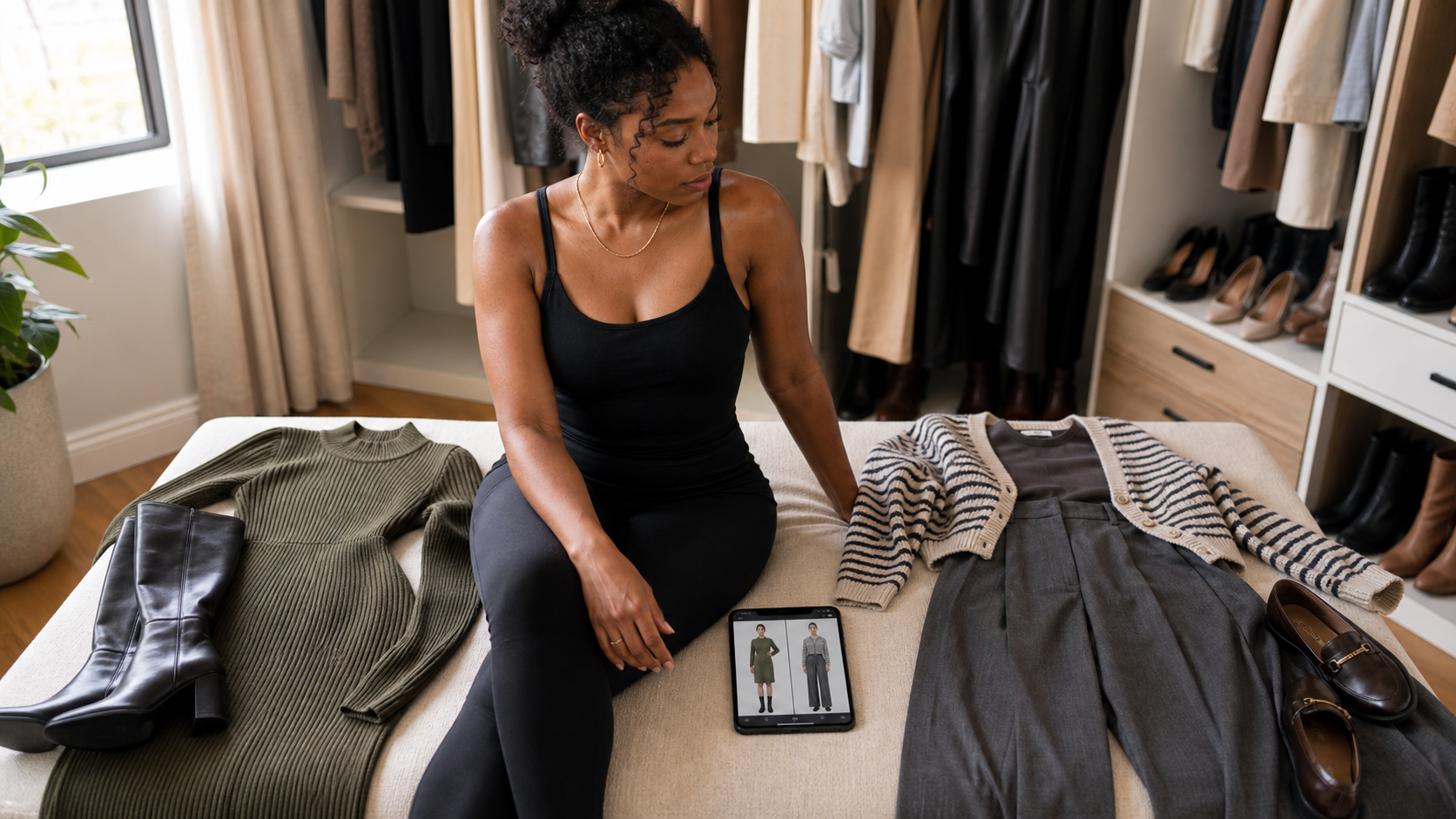
Measurements tell you a lot, but they do not tell you how a coat’s proportions sit on your specific frame, your shoulder slope, or the length of your torso relative to your legs. This is where a lot of people end up ordering two sizes and returning one, which is expensive for you and genuinely wasteful for the brand. A faster way to close that gap is to use a photo of the coat you’re considering and preview it against your own body before you check out. TryFits AI lets you do exactly that: upload the coat, and see how the cut, the shoulder line, and the hem length actually sit on you rather than on a model who may be a foot taller or several inches narrower through the shoulders.
This matters even more for structured pieces like wool coats, where the shoulder seam placement is baked into the garment and cannot be altered easily the way a hem can. A trench coat or a wool overcoat with a defined shoulder seam is one of the trickiest categories to buy sight unseen, which is exactly why it is worth the extra minute to preview before you order rather than after the return window has already started counting down.


A coat that fits at the shoulder can be adjusted almost anywhere else. A coat that fits everywhere except the shoulder usually cannot be fixed at all.
It also helps to think about the coat’s job before you shop. A coat you’ll wear over blazers to the office needs more shoulder and chest room than a coat you’ll wear over a t-shirt on weekends. Buying with the actual layering plan in mind, rather than the outfit you happened to wear to try clothes on that day, prevents the most common version of coat regret: the one that fits until winter actually arrives and you need to wear more underneath it.
If you already own a well fitted piece like a navy trench coat, use its measurements as your baseline for every coat you shop for after it. And if you are working through a bigger fall shopping list rather than a single coat, running your full haul through a preview before you buy, the same way people do with a broader fall shopping haul, keeps the whole process faster and cuts down on how many boxes you end up sending back.
Common questions
How do I know if a coat is too big without trying it on?
Compare the listed shoulder seam and chest measurements against a coat you already own and know fits well. If the new coat’s shoulder measurement is more than about an inch wider than your reference coat, it will likely look oversized in a way that is not intentional, especially through the shoulder and upper arm.
Should I size up for a coat I’ll wear over sweaters?
Usually yes, but only slightly. Check the chest measurement with roughly an extra inch and a half to two inches of room built in if you plan to layer a chunky knit underneath regularly. Sizing up a full size for layering room often ends up making the shoulders too wide, which is harder to fix than a slightly snug chest.
What is the biggest coat sizing mistake people make online?
Focusing on length and color while skipping the shoulder seam measurement entirely. Length and color are the easiest things to judge from a photo, but the shoulder seam is the one measurement that cannot be adjusted after purchase and the one most likely to make an otherwise perfect coat look wrong once it arrives.