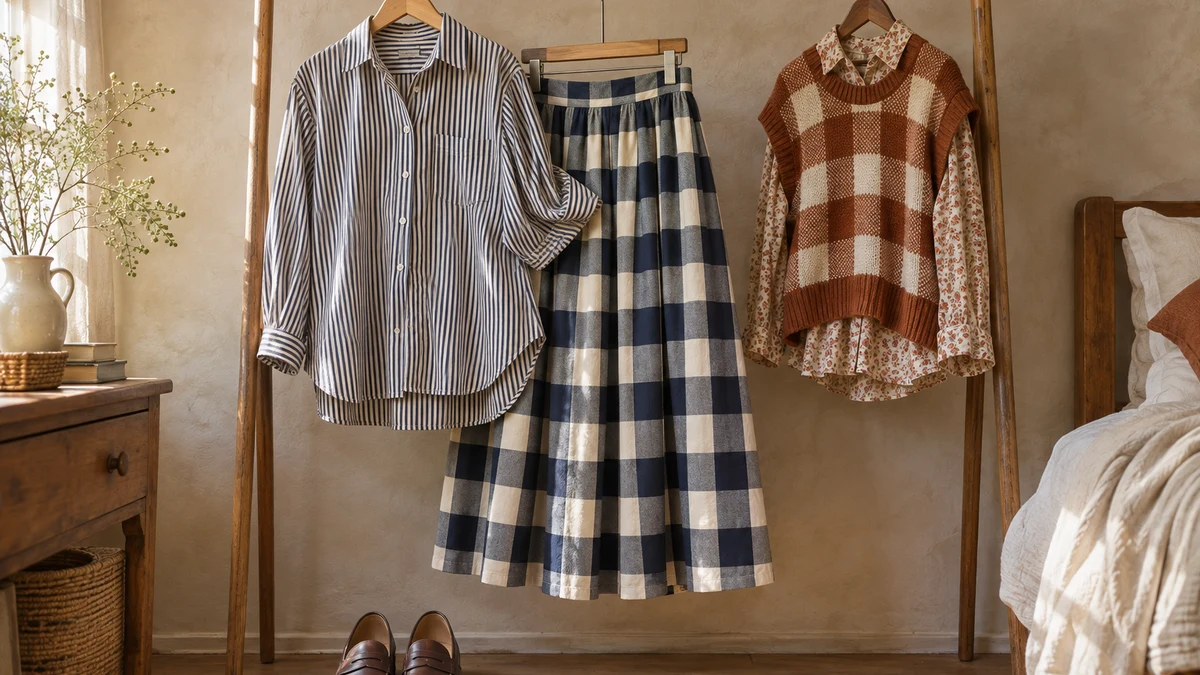
To mix small and large prints, start with one shared colour and make the difference in scale easy to see. A fine striped shirt with a broad checked skirt is a useful starting point. Neither print needs to suit a particular body shape: you are arranging patterns across clothes, not correcting the person wearing them.
The most helpful question is how much of each pattern you want visible. A small floral collar above a large checked jumper gives a different result from that same floral shirt worn open over checked trousers. The garments have not changed, but the proportions of the patterns have.
Before buying another piece, compare two versions of an outfit: one with a small patch of the second print, then one with more showing. Seeing the combination on yourself can answer what separate product photographs cannot: whether you enjoy those particular patterns together, at that size and placement.
 LIVE FITTING

Choose scale, colour and visible area separately
Print scale means the size of the individual motif and the spacing around it. Pinstripes read differently from broad rugby stripes; scattered tiny flowers read differently from large blooms. Compare garments from a few steps away, because close inspection can make a delicate pattern seem more prominent than it looks across a room.
GetWardrobe’s guide to proportion and composition treats lines and garment relationships as styling tools, alongside fit. Apply that approach here: change the clothes’ relationship before deciding a combination does not work. Start by choosing different motif sizes, then adjust how much of each garment shows.
A shared background colour is an easy connection. Navy checks and a navy floral need not contain identical blues, but repeating navy gives the combination continuity. If both prints contain several unrelated colours, introduce a plain layer rather than adding more accessories to connect everything.
There is no need for a precise ratio. Give one print a larger visible area if you want a clear focal point, or show similar amounts for a busier result. A jacket opening, sleeve turnback or scarf fold lets you change that area without altering a garment.
Five outfits that mix small and large prints
Fine stripes with a broad checked skirt
Wear a blue and white fine striped cotton shirt with a navy and cream broad checked midi skirt. Tuck the shirt if you want the two patterns to meet at a clear waistband. Leave it untucked if you prefer the checks to appear as a shorter panel beneath the shirt.
Choose brushed cotton or a wool blend skirt for cool weather, with opaque navy tights and leather ankle boots. In milder conditions, a cotton skirt and loafers keep the same pattern arrangement. A plain navy cardigan adds warmth without introducing another motif.
A small floral blouse with large windowpane trousers
Pair a black blouse scattered with small ivory flowers with charcoal trousers carrying a large ivory windowpane check. The repeated ivory connects the prints, while the open spacing of the check leaves visual room around the flowers. Try straight or gently tapered trousers according to your preferred silhouette.
For work, add black loafers and an unpatterned charcoal jacket. A fluid viscose blouse moves differently from crisp cotton, so check that it falls comfortably over or inside the waistband. In cold weather, wear a fine thermal layer underneath rather than relying on a thin blouse for warmth.
A broad striped jumper with a small leopard scarf
Start with an oatmeal and chocolate broad striped jumper, dark jeans and brown boots. Tie a small leopard scarf loosely at the neck or let it show inside an open coat. Here, the scarf limits the second print to a small area, even though its individual markings may be quite distinct.
This is a practical first experiment if patterned trousers or skirts feel like more than you want. Choose a soft wool scarf for cold days or cotton for a mild afternoon. Keep the bag plain so you can judge the two prints without a third competing element.


A large floral skirt with a narrow striped top
Try a forest green skirt with large cream flowers alongside a cream top with narrow green stripes. A jersey top gives the outfit a casual finish; a fine knitted version works for cooler rooms. The repeated green and cream allow the shapes of the patterns to differ without adding colour complexity.
Wear trainers for a dry daytime outing or boots with sufficient tread for damp pavements. If the combination feels busier than you wanted, add an open plain green cardigan. It covers part of the striped top while leaving the floral skirt visible, changing the pattern balance without replacing either piece.
A large checked coat over a microprint dress
Wear a camel and black large checked coat over a black dress with tiny cream dots. With the coat open, the dress becomes a narrow patterned panel between the checks. Fastening the coat reduces that panel, which makes this a particularly easy outfit to adjust throughout the day.
Choose a lined dress or a comfortable slip if tights catch against the fabric. Black boots and a plain bag keep the remaining pieces straightforward. For wet weather, swap the wool coat for weather protection suitable for the forecast, even if that means leaving only the dress print visible.
Adjust a combination before ruling it out
If two prints feel difficult together, identify the specific issue. Perhaps their colours pull in different directions, or both motifs are similar in size and density. Try one change at a time so you can tell whether you prefer the result.
- Reduce the second print to a collar, cuff or scarf.
- Add a plain cardigan between two patterned garments.
- Repeat a background colour in shoes or a bag.
- Compare a tightly packed motif with one that has more space around it.
Colour can do more work than exact matching. Two differently scaled prints in shades of blue can feel quieter than two equally sized prints in contrasting colours. For ideas on connecting shades without an exact match, see how to wear bright monochrome without buying a matching set.
Check the fit separately from the pattern
Pulling fabric can distort a motif, but the useful question is whether the garment feels comfortable. Sit down, reach forward and walk in the outfit. If a waistband digs in or sleeves restrict movement, compare another size or cut rather than treating the print as the problem.
A TryFits AI preview can help you compare the visual relationship between garments before buying. Treat the generated image as a styling reference, not proof of exact print placement, fabric behaviour or physical fit. Check product photographs and measurements, then assess comfort in person when possible.
Common questions
Can you wear two prints without a matching colour?
Yes. Start with neutral patterns, such as grey checks and brown leopard, and add a plain black layer between them. Keep the remaining pieces simple while you decide whether you like the contrast.
Do large prints need to go on the bottom half?
No. A large printed shirt works with finely checked trousers just as readily as the reverse. Choose the placement according to which garment you want to feature, not a rule about body size.
What is the easiest way to start mixing prints?
Combine a striped top with a small patterned scarf that repeats one of its colours. Compare the scarf tucked inside your coat and worn outside it. Keep the amount of pattern you enjoy seeing.