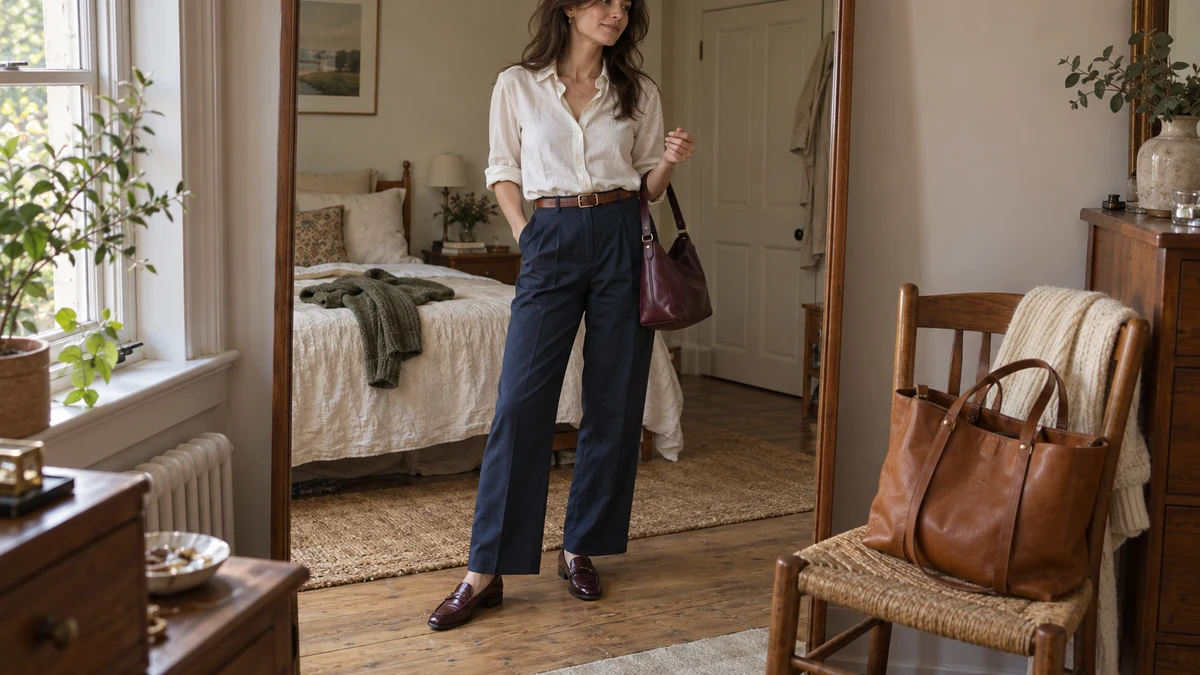
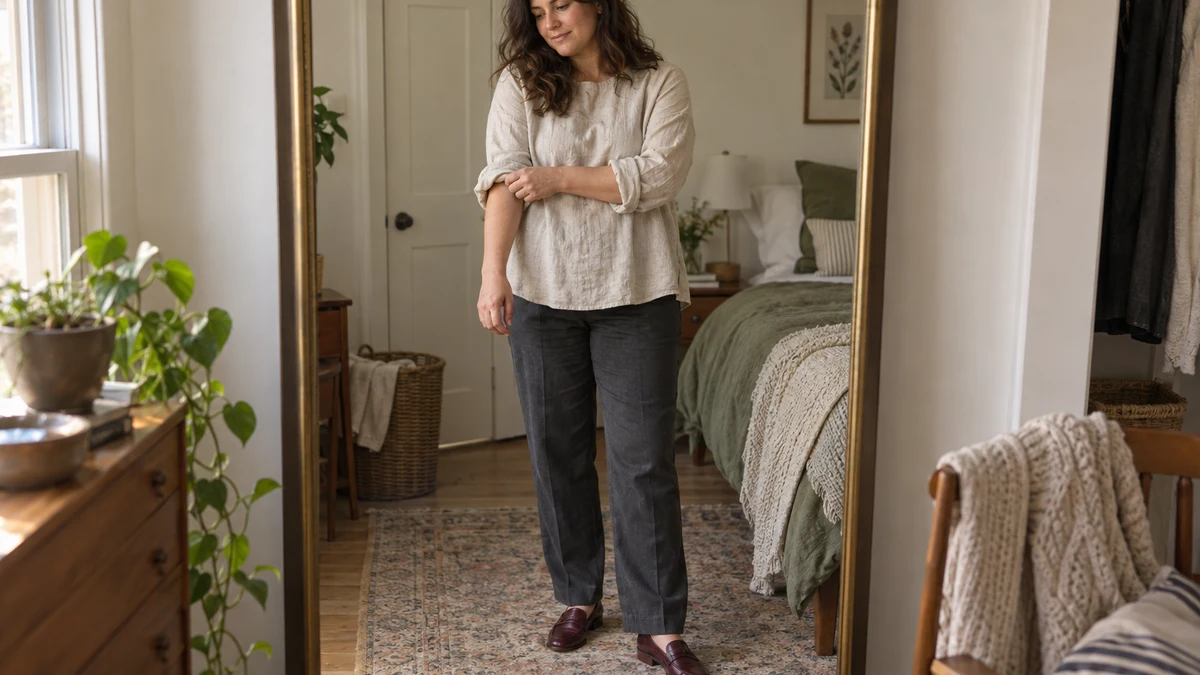
To wear a loose top without tucking it in, start with its hem: choose a length that sits comfortably over your waistband, then give the outfit a clear outline through your trousers, sleeves or shoes. Straight-leg trousers are an easy starting point, but loose bottoms can work too. You do not need a fitted lower half or a visible waist.
The useful question is not which body shape can wear oversized clothes. It is whether you like how this particular fabric falls over the pieces underneath. A crisp cotton shirt creates a different outline from a fluid blouse, even when both have the same measurements.
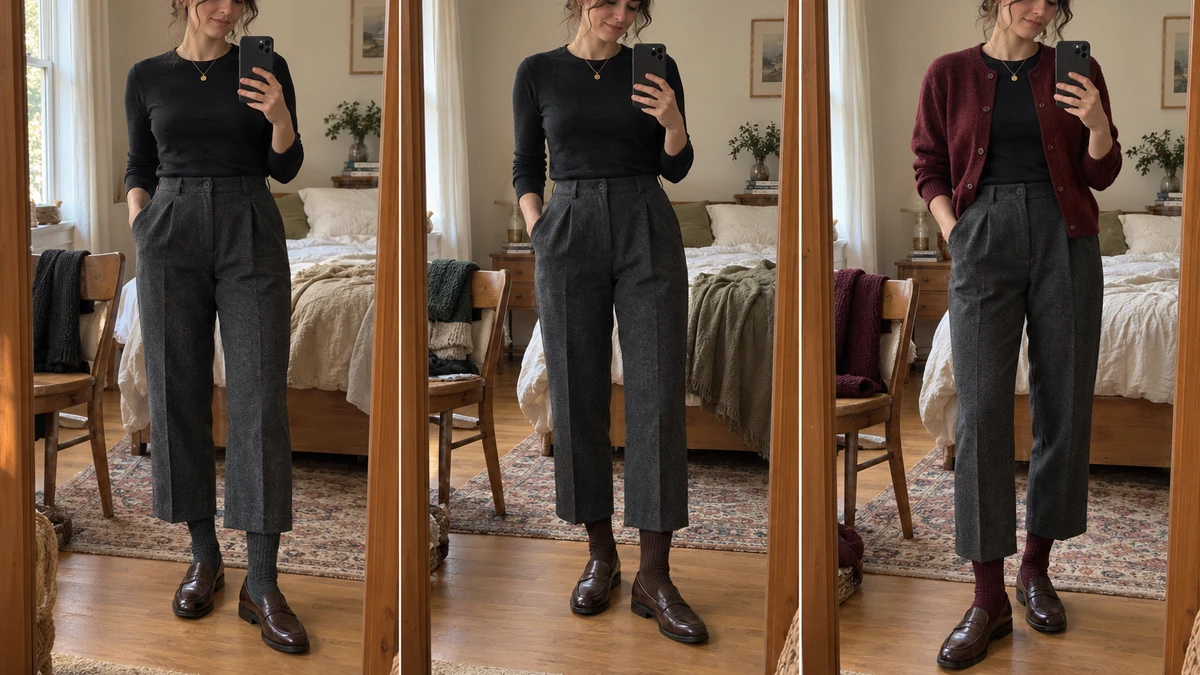
If an untucked outfit feels different from what you imagined, compare two versions with just one change: a shorter hem, straighter trousers or less substantial footwear. Seeing the alternatives on yourself makes the decision more concrete than trying to follow a universal proportion formula.
 LIVE FITTING
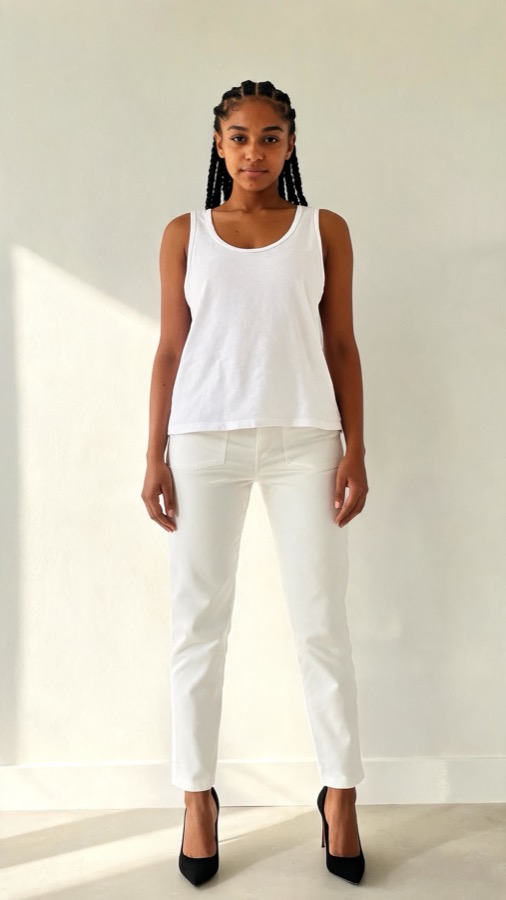

Look at the hem before changing the whole outfit
When deciding how to wear a loose top without tucking it in, check where the hem meets the garment below. A shirt ending directly over large cargo pockets may catch on them. The same shirt over smooth-front trousers can hang freely, without needing a belt or tuck.
Try a top ending near the upper hip for a compact, boxy outline. Choose a longer shirt if you enjoy a more extended silhouette. Neither length is inherently better; the practical check is whether the hem moves freely and returns to a position you like after sitting down.
Vogue India’s proportion advice describes the relationship between garments’ length, fit and shape, including balancing an oversized piece with definition elsewhere. That definition can come from a crisp cuff or a straight trouser crease. It does not have to mean tightening clothing around your waist.
Four untucked outfits with different silhouettes
A cotton shirt with straight-leg trousers for work
Pair a roomy pale-blue cotton shirt with charcoal straight-leg trousers and burgundy loafers. Look for a shirt with side vents or a gently curved hem, which gives the fabric space to move over the waistband. The trousers provide a steady vertical line beneath the shirt’s wider shape.
Fasten the cuffs neatly or fold them back once if comfortable. For a cool commute, add a coat with enough room through the upper arms to accommodate the sleeves. If the shirt catches at the hips or pulls across the back, consult these button-up shirt fit checks before changing the styling.
A boxy tee with fluid trousers for a relaxed weekend
Wear a substantial cotton jersey tee with olive drawstring trousers and low-profile trainers. A tee ending just below the waistband lets the trousers’ gathers remain visible without exposing skin. Choose a hem that overlaps the waistband when you reach forward if continuous coverage is your preference.
Both pieces can be roomy. The contrast comes from their behaviour: the tee holds a boxy shape while the trousers fall in soft folds. In warm weather, try a breathable linen blend below; for cooler days, use a heavier woven fabric and add an open overshirt.
A fluid blouse with dark jeans for dinner
Try a plum crepe blouse over dark straight-leg jeans with almond-toe ankle boots. A blouse without a tight hem band can fall softly rather than gathering at one point. Choose a length that leaves the jeans’ leg shape visible, then check the side view for unwanted catching around pockets.
If you prefer a longer blouse, keep it. A side slit can help the front and back panels move independently. Add a smooth wool coat for colder evenings, and check the care label before choosing delicate fabric for a rainy journey.
A loose tunic with a column skirt
Combine an oatmeal fine-knit tunic with a chocolate jersey column skirt and flat leather boots. This creates a deliberately long outline rather than an outfit divided at the waistband. A skirt with sufficient stretch or a walking slit makes the combination more practical.


Choose a tunic hem that hangs without gripping the skirt. If the two fabrics cling together, try a suitable slip or change one fabric instead of sizing down. For warmth, add tights and a coat that closes comfortably over the complete outfit.
Use fabric structure instead of a compulsory waistline
A loose top can supply its own shape. Cotton poplin holds folds away from the body; washed linen creates a softer, irregular outline; fine jersey follows the layers underneath more closely. When shopping, inspect the fabric description and garment photographs rather than relying only on the word oversized.
Match that behaviour to the effect you want. Pair a structured top with fluid bottoms for a visible change in texture. For a continuous, relaxed outline, combine a soft shirt with similarly fluid trousers. You can also wear structured pieces together if you enjoy a more architectural silhouette.
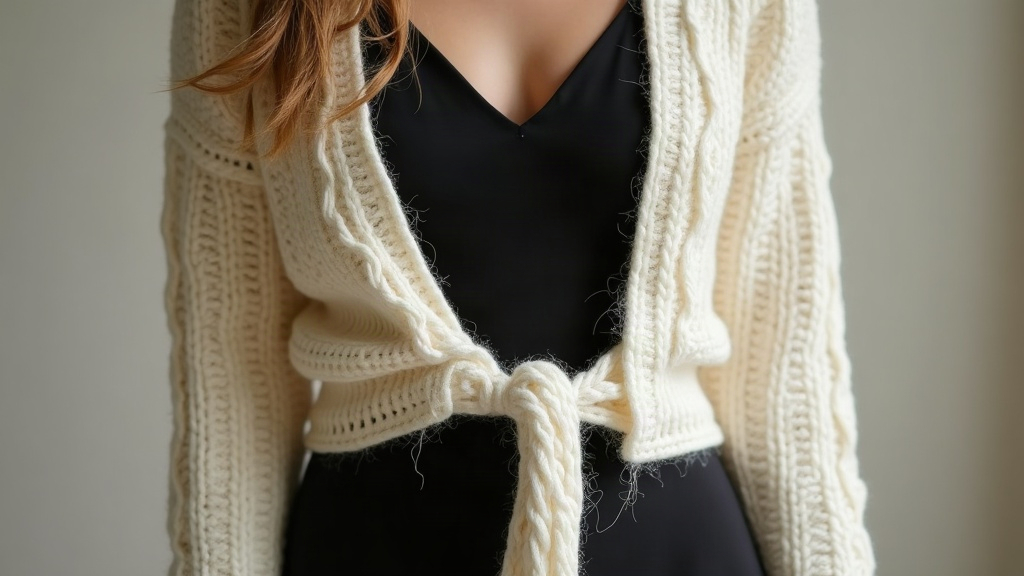
A tight ribbed hem deserves particular attention. It can pull an otherwise loose jumper inward and make fabric collect above it. If you want the top to hang straight, look for an open hem or side splits rather than repeatedly tugging a ribbed band into place.
Adjust the edges without sacrificing comfort
Before replacing anything, try folding a shirt cuff, changing the shoe or removing a crowded layer beneath the top. These small adjustments change how the garment’s edges read. Exposed wrists or ankles are optional, and cold weather is a good reason to keep both covered.
Colour offers another adjustment. A navy top over navy trousers makes the hem less visually prominent, while a pale top over dark trousers draws attention to it. Neither effect needs correcting. Choose whether you want the top to stand apart or read as part of a continuous outfit.
A virtual preview can help compare those visible choices, but treat the image as a styling aid rather than proof of fit. Check the real garment for sleeve movement, fabric feel and hem placement while seated. Before altering an expensive top, pin the proposed length temporarily and test it with your usual bottoms.
Common questions
Can you wear a loose top with loose trousers?
Yes. Try a boxy cotton top with fluid trousers, or a soft shirt with wide trousers that hold a crease. Different fabric structures can give each piece a clear outline without requiring either garment to fit closely.
How long should an untucked top be?
Choose the length for the outfit and your coverage preferences. An upper-hip hem gives a compact outline; a longer hem creates an extended one. Sit, reach and walk to check that it stays comfortable and does not catch on pockets.
How can you style a loose top without a belt?
Use the garment’s existing details: a collar, side vents, shaped hem or neatly fastened cuffs. Pair it with bottoms that let the fabric hang freely. If you want a straighter fall, choose an open hem rather than a gripping ribbed band.