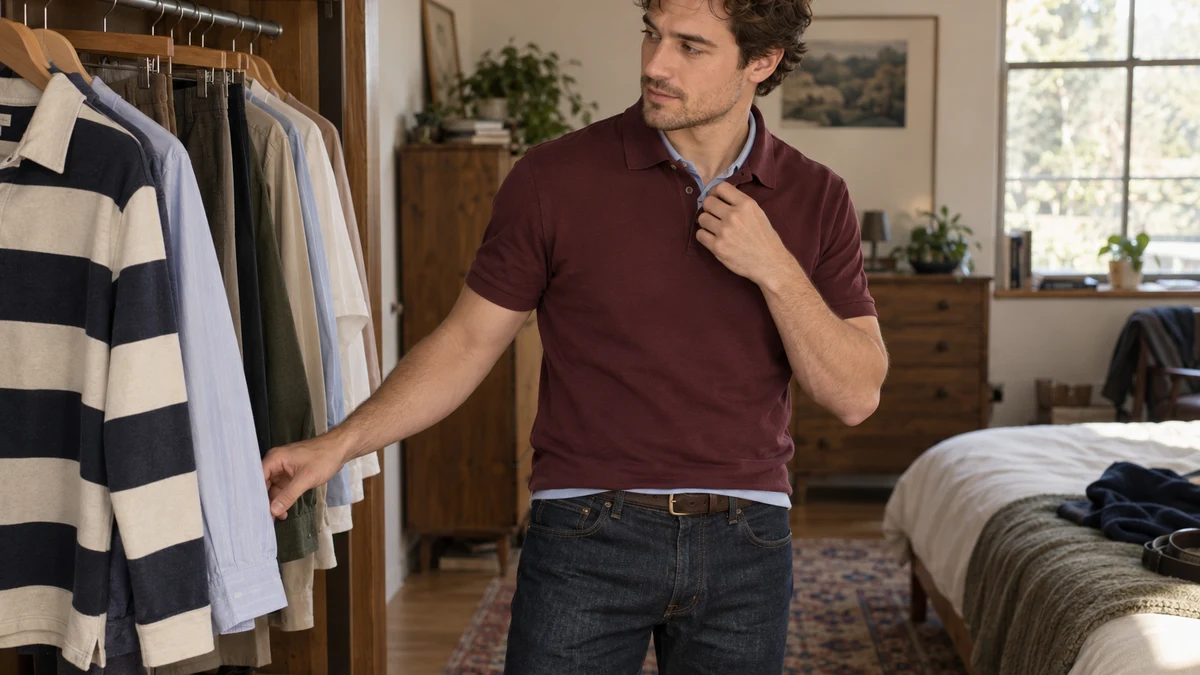
If you are deciding how to wear layered polo shirts without extra bulk, choose two lightweight tops, keep the lower collar mostly inside the upper one, and let only a narrow strip of the underlayer show. Straight jeans or simple trousers give the doubled neckline room to stand out. You do not need two thick rugby shirts or a completely new outfit.
The named trend signal comes from Who What Wear’s 2026 coverage of the layered polo shirt trend, which credits Gucci with bringing the look back into focus. That is an editorial signal, not proof that everyone is wearing it. The practical idea is specific: overlapping collars and contrasting edges give a familiar casual top a different finish.
The question is whether those overlapping edges look intentional on you. A collar that sits neatly in a product photograph can crowd your neckline once another shirt goes underneath, while two similar lengths can create an awkward doubled hem. Compare the same outfit with one polo and then two before deciding whether the extra layer earns its place.
 LIVE FITTING

Choose polos that can actually sit together
Start with the thinner shirt underneath. Fine cotton jersey works well because it bends easily at the shoulder and produces less ridge beneath the upper sleeve. A lightweight cotton piqué polo can go on top, but two substantial piqué shirts usually create more stiffness than this look needs.
The outer polo needs enough room for the underlayer without pulling across your upper arms. Look for shoulder seams that sit comfortably and sleeves that do not grip once both shirts are on. Sizing up is not automatically the answer: a much larger outer shirt can leave the collar loose and the body unnecessarily wide.
For a first attempt, combine an ivory jersey polo with a navy short-sleeved polo. Keep the ivory collar tucked inside the navy neckline, allowing its edge to show near the open placket. The pale border makes the layering visible without requiring several colours or competing logos.
- Choose soft collars that fold rather than stand rigidly.
- Check that both plackets lie flat when worn together.
- Avoid bulky embroidery directly beneath the outer shirt.
- Use an existing thin polo before buying a matching pair.
Control the collar, sleeves and hem separately
At the neckline, leave the outer polo’s top button open and adjust the inner collar before arranging the outer one. Begin with both collars folded down. If the lower collar keeps escaping, choose a softer underlayer rather than repeatedly forcing a stiff collar into position.
At the sleeves, either hide the underlayer completely or make the difference clear. A short sleeve underneath a slightly longer short sleeve gives a clean outline. For cooler weather, a close-fitting long-sleeved polo under a short-sleeved version creates a deliberate layered effect without fabric bunching at the elbow.
At the hem, avoid having both shirts finish at almost the same point. Tuck the underlayer and leave the outer polo loose, or show a small, even band of the lower shirt. If you want both tucked, test the waistband while seated: doubled fabric can feel comfortable standing but become restrictive in a chair.
A virtual preview can help you compare the visible collar and hem placement on your own body. TryFits AI can show outfit combinations, but a generated image cannot establish collar stiffness, fabric thickness or pressure at the waistband. Use the preview to shortlist a look, then check those details with the actual clothes.
Three layered polo outfits to try
Navy and ivory with straight jeans
Wear an ivory lightweight polo beneath a navy cotton polo, with medium-blue straight jeans and plain white leather trainers. Tuck only the ivory shirt so the navy hem falls cleanly over the waistband. Keep the jeans free of heavy distressing if you want the neckline to be the outfit’s main detail.
This is the easiest weekend version because the colours are familiar and the footwear stays uncomplicated. A small tan crossbody bag adds a warm tone without repeating the collar contrast everywhere. If the outer polo is long, shorten its visible line with a loose front tuck rather than folding a thick band around your waist.
Grey and burgundy with tailored trousers
Layer a thin grey long-sleeved polo beneath a burgundy short-sleeved version, then add charcoal straight trousers and black loafers. Let the grey sleeves show fully and keep both collars down. The grey links the neckline to the trousers, so the burgundy remains the strongest colour.


Choose trousers with enough waistband room for one tucked layer. For an office that permits casual knitwear, add an unstructured jacket with comfortable armholes; for a stricter dress code, keep this combination for after work. The double polo is still casual, even when the trousers are tailored.
Pale blue and chocolate with ecru denim
Try a pale-blue jersey polo under a chocolate fine-knit polo, paired with ecru straight jeans and brown ankle boots. Keep the blue visible only at the neckline and tuck the underlayer. The lighter denim gives the darker top a clear boundary without adding another saturated colour.
Choose smooth boots with a practical sole for dry autumn days, and switch to darker jeans when pavements are wet. If brown near your face feels too heavy, reverse the shirts, provided the pale-blue polo has enough room. Compare both arrangements rather than assuming the darker colour must always sit outside.
Adapt the layers to your weather and wardrobe
For mild weather, use two short-sleeved cotton shirts and skip a jacket until needed. In colder conditions, make the lower polo long-sleeved and add a coat roomy enough to accommodate both tops. Two lightweight layers are easier to manage indoors than a thick shirt beneath another thick shirt.
For rain, protect the outfit with your usual weatherproof outerwear and shoes with reliable grip. Avoid adding a tightly wrapped scarf over the doubled collar, which can push both necklines upward. An open coat or loosely arranged scarf leaves more space for the collars to settle.
If you own only one polo, wear it over a fine crew-neck T-shirt to test whether you enjoy a contrasting neckline. It is not the same double-collar effect, but it answers the bulk question before you buy anything. Keep the T-shirt sleeves hidden and choose a neckline that sits close enough to remain visible.
Before purchasing a second polo, compare it with the jeans, trousers and outerwear already in your wardrobe. The guide to comparing two outfits before buying online offers a useful framework for that decision. Judge the complete outfit, not just an appealing collar combination.
Common questions
Can you wear two polo shirts together?
Yes. Put a lightweight polo underneath a slightly roomier one, then arrange the collars so both lie comfortably. Keep the lower hem tucked for the simplest finish. Check that you can raise your arms and sit without pulling at the shoulders or waistband.
Should both polo collars be popped?
No. Start with both collars folded down, with the lower collar mostly inside the upper one. Raising both adds height and can interfere with jackets or scarves. If you prefer an upright collar, try only the outer one and check that it stays comfortable beneath your coat.
How do you stop layered polo shirts looking bulky?
Use thin fabrics, avoid tight outer sleeves, and tuck only the underlayer when possible. Check the outfit from the side for bunched fabric at the waist. If it still feels crowded, replace the lower polo with a fine T-shirt rather than forcing two unsuitable shirts together.