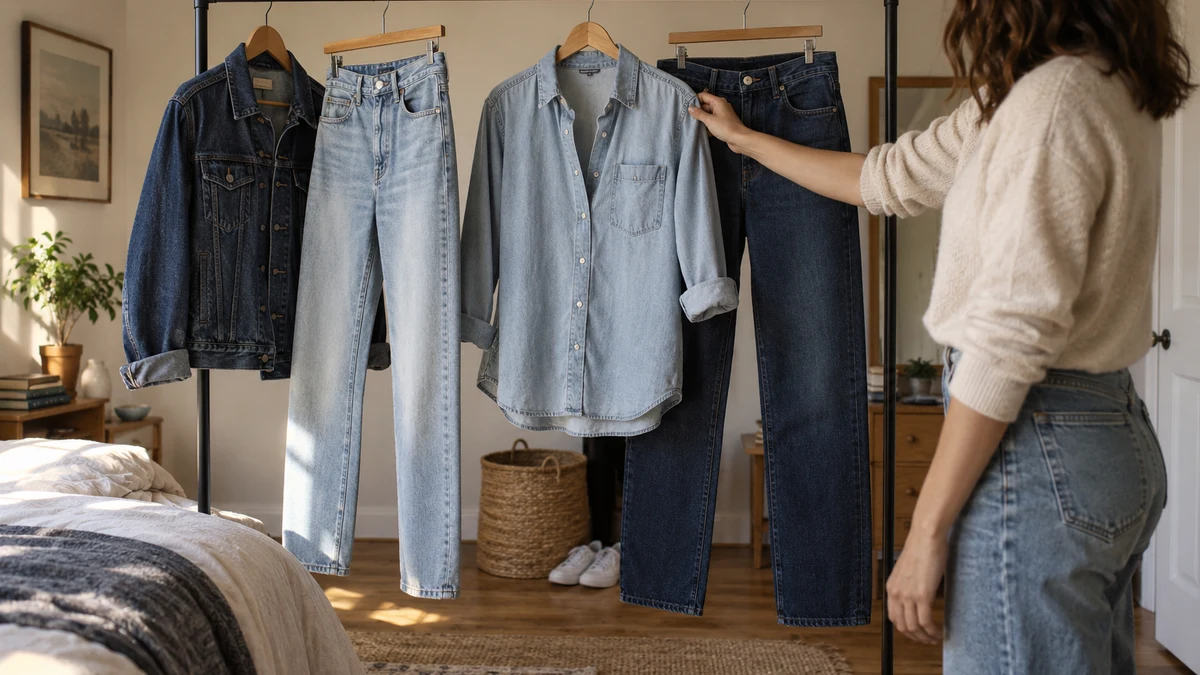
Yes, you can wear different shades of denim together. A pale blue shirt with indigo jeans is an easy starting point because the colour difference makes each garment readable. Matching blues also work, but they create a more uniform look. Choose the effect you want rather than searching for a supposedly correct pairing.
The useful question is where you want the contrast to sit. A light jacket over dark jeans puts the brighter colour at the shoulders; reversing those shades brings attention to the trousers. Neither arrangement needs to make your body appear smaller, taller or anything other than itself.
Two pieces can look almost identical on separate shopping pages and surprisingly different together. Before buying another denim layer, compare complete outfits on yourself: pale over dark, dark over pale, then similar washes with a contrasting T-shirt. A TryFits AI preview can help you explore the colour arrangement, while an actual try-on remains necessary for comfort and fit.
 LIVE FITTING

Choose the colour difference before the silhouette
For a clearly separated combination, start with light blue and deep indigo. You do not need a precise number of shades between them. You simply want enough difference that the shirt or jacket does not seem to merge accidentally into the jeans.
Pay attention to the colour beneath the blue, too. Some washes look greyish, others have a green cast, and some appear bright blue. A grey-blue shirt with faded charcoal jeans creates a quieter combination than the same shirt with vivid blue jeans. Neither is wrong; they have different moods.
The supplied GetWardrobe outfit-principles guide groups styling around colour, proportion and real-life context. Apply that approach here: first choose your denim colours, then consider the garment shapes, and finally check whether the outfit suits your plans and the weather. There is no need to assign yourself a body-type category.
Four outfits using different denim shades
A pale denim shirt with indigo straight-leg jeans
For an everyday outfit, combine a soft, pale blue denim shirt with dark indigo straight-leg jeans, a cream cotton T-shirt and tan loafers. Wear the shirt open so the T-shirt creates a visible break between the two blues. A shirt that finishes around the upper hip keeps the jeans pockets visible.
Lightweight denim or chambray is useful for the shirt when a rigid denim jacket feels too warm. Chambray is a different weave from denim, although it can give a similar blue-shirt effect. In cooler weather, add a wool coat with enough sleeve room for both layers.
A dark denim jacket with faded blue relaxed jeans
Reverse the colour placement with a dark, clean-finish denim jacket and faded blue relaxed jeans. Add a grey crew-neck knit and burgundy trainers. The dark jacket gives the upper half a defined outline, while the faded trousers keep the combination casual.
Choose a jacket length you enjoy rather than automatically reaching for a cropped cut. A waist-length jacket exposes more of the jeans; a hip-length version creates a longer upper layer. For rain, swap suede trainers for leather footwear with suitable grip and add a weatherproof outer layer.
A blue denim shirt with ecru jeans
Ecru jeans count as denim even though they are not blue. Pair them with a medium-blue shirt, a chocolate-brown belt and brown ankle boots for a combination with strong colour separation. A full tuck gives the shirt a compact outline; wearing it loose produces a more relaxed shape.
Look for ecru denim with enough substance and opacity for your preferences, then check it in daylight. On wet days, keep hems above the ground and choose boots rather than open shoes. If pale trousers are impractical for your commute, substitute medium-grey jeans without changing the rest.
A faded black denim shirt with deep indigo jeans
For dinner or a casual evening event, try a faded black denim shirt with deep indigo jeans and black leather boots. Leave the shirt untucked if its hem is designed to be worn that way. A plain white undershirt visible at the neck can separate the dark colours without adding another substantial layer.


Keep the denim finishes relatively simple if you want a quieter result. Extensive distressing, contrasting embroidery and large shiny buttons each introduce another detail. You can still wear them, but start with one prominent feature so it is easier to judge the colour pairing.
Use fabric and fit to control how the outfit feels
Colour is only part of double denim. A rigid jacket over heavyweight jeans feels different from a fluid shirt over the same trousers. If both pieces are stiff, check whether their hems collide or stand away from each other when you sit.
A softer upper layer is a practical alternative when you like the colours but dislike the structure. Look for a lightweight denim shirt, washed cotton chambray or a denim overshirt with room through the sleeves. Do not assume that sizing up will soften a rigid fabric; it changes the dimensions, not the weave.
Make these checks with the outfit fastened as you intend to wear it:
- Reach forward to check movement across the jacket back and sleeves.
- Sit down to check the jeans waistband and the shirt hem.
- Walk in your chosen shoes to check that the trouser hems clear the ground.
- Check whether the shirt or jacket catches on belt hardware.
Loose pieces can work together, and fitted pieces can work together. If you want more separation without changing either silhouette, leave the upper layer open over a contrasting top. The visible strip of cream, grey or another chosen colour interrupts the denim without requiring a tuck.
Compare one change at a time
Start with jeans you already like wearing and compare two upper layers. Keep the shoes and base top unchanged, so you can see what the denim shade alone contributes. Then compare the preferred shirt tucked, untucked or open, rather than changing every part of the outfit at once.
Use virtual previews to shortlist combinations, not to confirm exact dye colour, fabric weight or sizing. Screen settings and lighting can change how blue appears. If a preview makes two washes look identical, check the original garment photographs and, when possible, view the clothes together in daylight.
You do not need matching accessories or a new set of basics for each pairing. Repeat a familiar T-shirt and comfortable shoes while you experiment. For choosing details that feel like your own style, the guide to personality dressing with clothes you own offers a useful next step.
Common questions
Does double denim have to match?
No. Different washes create visible separation, while matching denim creates a more continuous outfit. For an easy first combination, choose a pale blue shirt and dark indigo jeans. If similar blues look unintentionally mismatched to you, wear the shirt open over a contrasting T-shirt.
Can you wear black denim with blue denim?
Yes. Black denim works with pale, medium-blue and indigo washes. Try a black denim jacket with faded blue jeans for strong contrast, or a faded black shirt with indigo jeans for a quieter combination. Check the pieces together because washed black can have a noticeable grey or brown cast.
What shoes should you wear with double denim?
Choose shoes for the setting and trouser length. Trainers suit relaxed weekend combinations, loafers work with straight-leg jeans, and leather ankle boots are useful in cooler weather. Put the shoes on before judging the outfit, then check that your hems stay clear of the floor as you walk.