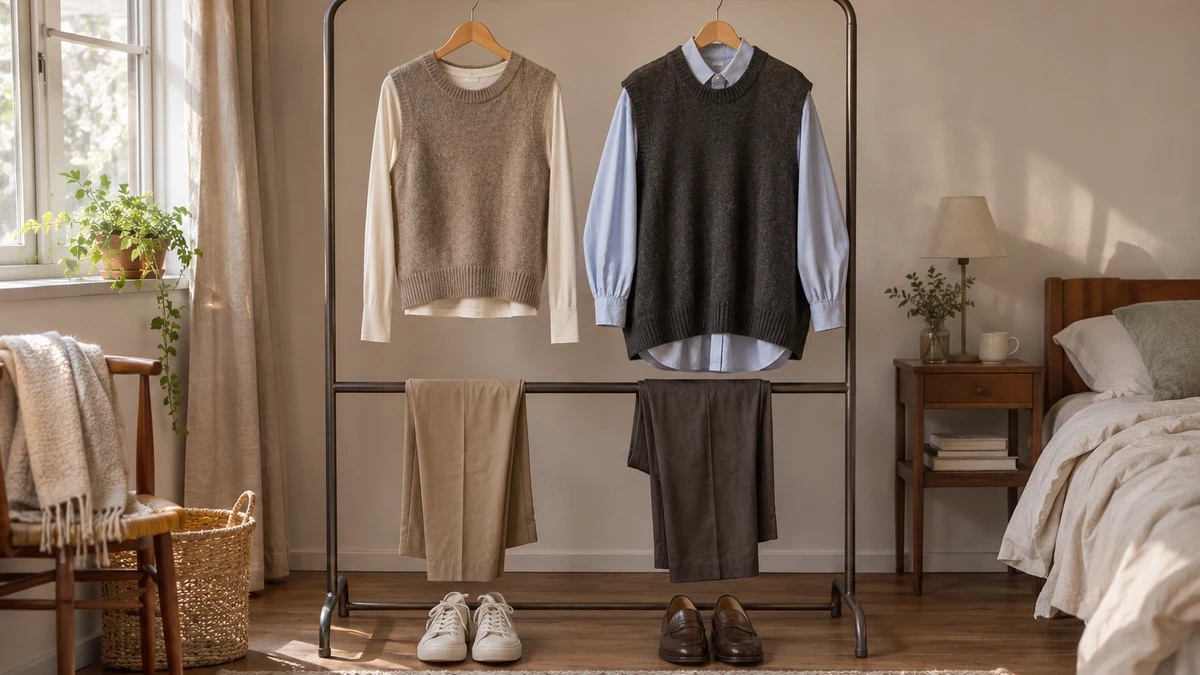
Should a sweater vest be loose or fitted? Choose a closer fit over a thin base layer, or a looser fit over a shirt with fuller sleeves. Either way, it needs enough room underneath without pulling at the neckline or trapping fabric around the armholes. Neither shape needs to change how your body looks to work.
The useful question is not simply which size to buy. A vest can fit comfortably across the chest but have armholes that catch your shirt, or sit neatly when standing and bunch when you sit. Its knit, length and openings all affect the finished outfit.
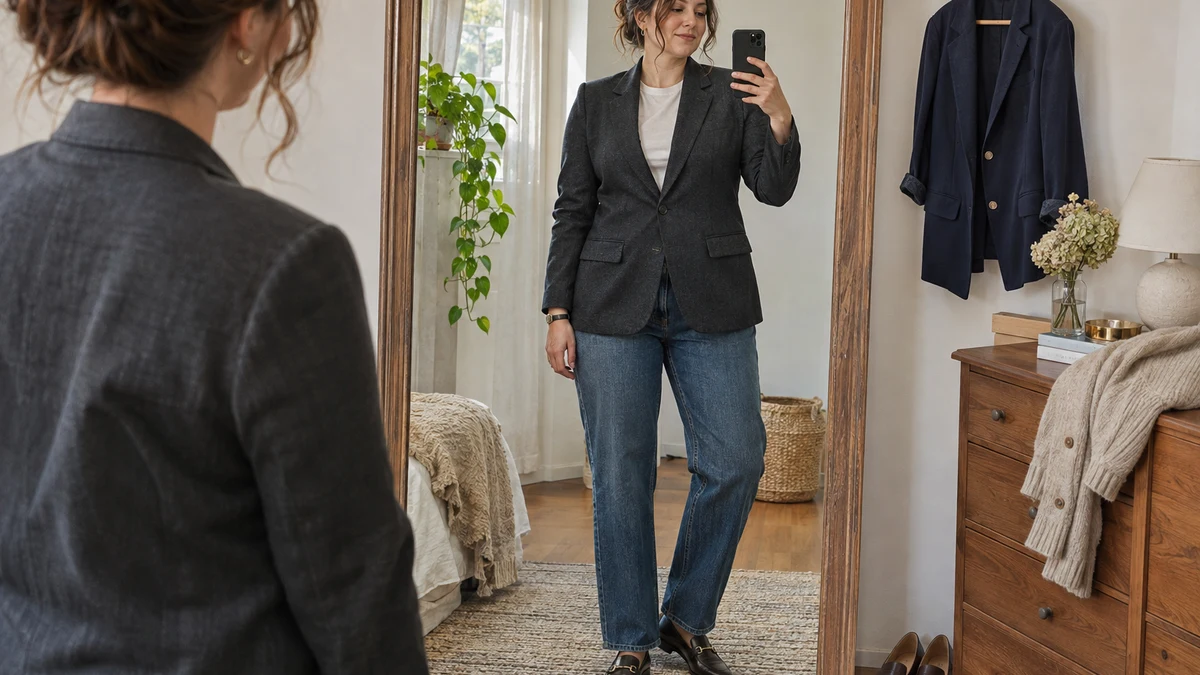
Before choosing, compare the same shirt under two vest shapes: one that follows its outline and one that hangs away from it. Keep your trousers and shoes unchanged. Seeing those combinations on yourself makes it easier to identify whether you prefer more visible shirt, a defined knit outline or an intentionally roomy layer.
 LIVE FITTING
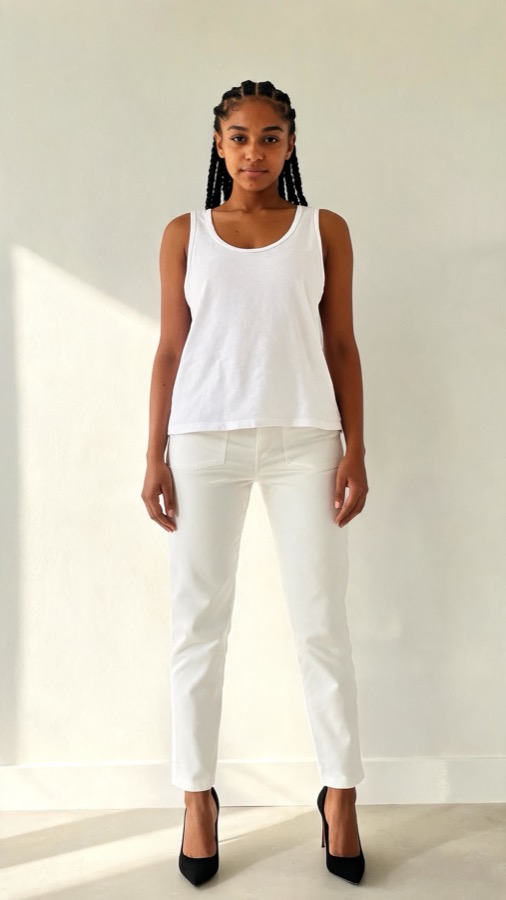

Choose the vest around your base layer
Start with the garment underneath. A fine cotton jersey top takes up little space. Crisp poplin holds folds away from the body, while brushed flannel adds thickness. A vest that works over the first may feel restrictive over the others.
GetWardrobe’s proportion and composition guide treats clothing lengths and volumes as relationships between pieces, including combinations of short, loose tops and wider trousers. Apply that approach here: judge the vest alongside its shirt and bottom half, rather than assuming every loose piece needs a fitted partner.
Look for a shoulder edge that rests where you want it. A narrow shoulder exposes more shirt and makes the vest read as a smaller panel of knitwear. An extended shoulder covers more of the sleeve head and creates a broader, more relaxed garment outline. Both are valid design choices.
Check the openings before changing size
Armholes often decide whether a layered vest feels comfortable. With your shirt underneath, reach forward as though holding a steering wheel. The knit should not dig into the front of the shoulder, and the shirt sleeve should move without dragging the whole vest upwards.
Next, sit down and check the hem. A firm ribbed band can catch at the waistband and push the knit into a fold. That is not automatically a sizing problem: a straight hem, side splits or a different length may suit your preferred outfit better than simply sizing up.
If the neckline ripples, inspect how the vest is hanging before deciding it is too large. A thick collar underneath can displace the ribbing, while a shirt caught at the back can pull it unevenly. Smooth the layers, then check again.
Five outfits showing different vest fits
A closer vest with a thin roll neck
Wear a charcoal fine-knit vest over an ivory cotton-modal roll neck, with straight dark denim and black leather ankle boots. Choose a vest that follows the base layer without stretched stitches or horizontal tension lines. The smooth fabrics keep this combination easy to wear beneath a winter coat.
Let the vest overlap the jeans waistband so it stays covered when you reach. For extra warmth, choose a fine merino base if you tolerate wool comfortably. A thick thermal underneath may require more room, even when the outfit looks similar.
A relaxed vest with a crisp work shirt
Pair a navy V-neck vest with a pale blue poplin shirt, tobacco straight-leg trousers and burgundy loafers. Leave enough space for the shirt to form soft folds rather than trying to press every centimetre flat. A vest ending around the upper hip gives the shirt room without covering most of the trousers.
Tuck the shirt first, then settle the vest over it. If the collar feels crowded, open the shirt’s top button and arrange the collar outside the V. For more neckline options, see shirt collar inside or outside a jumper.


A short, roomy vest with a fluid skirt
Try an oatmeal vest with a straight, relatively short hem over a long-sleeved cream jersey top. Add an olive bias-cut midi skirt and brown boots. The vest can be generous through the chest because its shorter length leaves more of the skirt’s movement visible.
Choose a skirt that moves comfortably when you sit and walk, rather than one that needs constant repositioning. In cold weather, add tights and a lined coat. If the knit catches on the skirt, try a smoother vest or a skirt fabric with less surface texture.
A longer vest over a soft weekend shirt
Combine a deep green, loose lambswool vest with a washed chambray shirt, ecru corduroy trousers and dark brown lace-up boots. A longer vest makes sense here because the soft shirt does not hold a rigid shelf of fabric underneath. Let a modest strip of curved shirt hem show if you enjoy the layered effect.
Check the back as well as the front: the shirt should not collect in a large fold above the vest hem. If the two hems compete, tuck the shirt rather than buying another vest. The guide to whether a jumper hem should show below a jacket offers another way to assess layered lengths.
A neat vest with an evening blouse
Wear a black fine-gauge V-neck vest over a plum satin blouse, with black tailored trousers and pointed flats. Choose enough ease for the blouse to move, but avoid a tight ribbed hem that gathers it into a pouch. A straight-cut vest lets the satin sleeves remain the main texture.
If the blouse has dramatic sleeves, check that its gathers sit outside the armholes rather than being compressed beneath them. For a less dressy version, swap satin for matte viscose and wear leather loafers. You can retain the same vest fit.
Compare proportions without confusing them with fit
A comfortable vest can still create an outline you do not prefer. Try changing its visible length before changing its size: compare it over a tucked shirt, then an untucked one. Take photos from the same position so camera angle does not become another variable.
A virtual preview can help compare colour placement and the apparent balance between layers. It cannot establish whether ribbing presses into your arm, wool feels scratchy or a shirt pulls when you reach. Confirm those points with a physical movement check and the garment’s measurements.
Common questions
Should you size up in a sweater vest?
Size up when the intended base layer feels compressed or movement is restricted, not simply because layering is involved. Compare garment measurements where available. If a larger size creates an unwanted neckline or shoulder shape, choose a vest cut with deeper armholes instead.
Can you wear a loose sweater vest with a loose shirt?
Yes. Choose a shirt fabric that settles comfortably beneath the knit, then check the sleeve gathers and back hem. A shorter vest can leave more shirt visible, while a longer version creates a continuous layered shape. Choose the effect you enjoy rather than forcing a fitted element into the outfit.
How long should a sweater vest be?
Choose the length with your intended waistband and shirt. A vest overlapping the waistband offers coverage without much extra length; an upper-hip or longer style shows more knit. Sit, reach and walk in the complete outfit before deciding whether the hem stays where you want it.