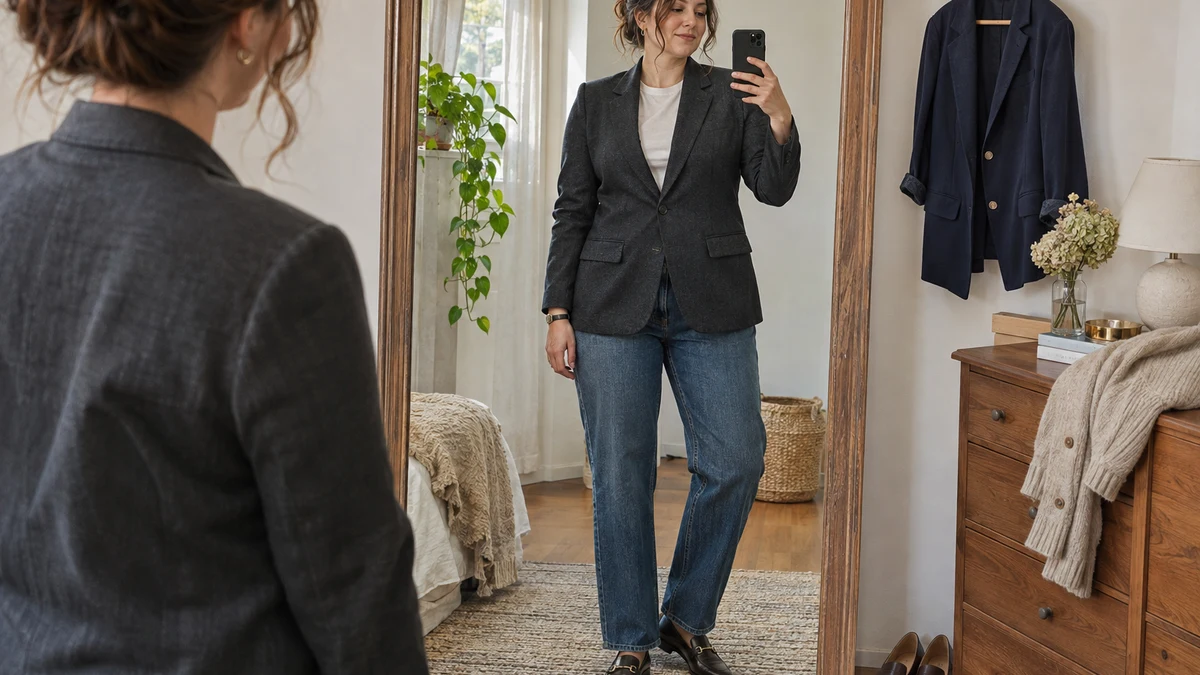
Should a blazer button without pulling? Yes, if it is designed to close, it should fasten comfortably without pronounced diagonal drag lines, sharply splayed vents or a button that feels under strain. You should still be able to breathe normally and sit without feeling squeezed. A blazer will crease as you move; it does not need to remain perfectly smooth.
Wearing it open is also a valid styling choice. The useful question is whether you want an open layer or a jacket that works both ways. That decision changes how you assess the fit and which clothes you put underneath.
A blazer can look relaxed over a thin T-shirt but pull over a ribbed jumper. Comparing those complete outfits on yourself, rather than judging the jacket alone, helps you separate a layering problem from a cut you simply do not enjoy wearing.
 LIVE FITTING

What pulling looks like around the button
Start with the layer you actually intend to wear. Stand naturally, let your arms rest and fasten the intended closure. On a conventional two-button single-breasted blazer, that usually means the upper button; leave the bottom one undone unless the garment has a different fastening design.
Look for persistent diagonal lines radiating from the button, often forming an X. A slight fold is not automatically a problem, particularly in soft linen or unstructured tailoring. Concern increases when the fronts strain apart, the button tilts or the fabric stays taut even after you settle the jacket.
Check the back as well. Vents may move when you walk, but they should not be forced widely apart while you stand still. First check that any temporary stitching securing the vents has been removed. Fabric catching on a thick waistband or bulky pocket contents can also interrupt the hang.
Check movement before choosing another size
Walk a few steps, reach forward as though holding a steering wheel, then sit. Some resistance is normal in structured tailoring, but the jacket should not force you into a careful pose. Unbuttoning a single-breasted blazer before sitting is normal practice, not evidence that it fits badly.
If the closure pulls, try the next size and compare the whole jacket. Check whether the collar now stands away from your neck or the sleeves cover your hands. A larger size may solve the fastening while introducing other compromises; a different cut can be a better answer.
For a conventional tailored shoulder, the seam generally sits near the shoulder edge. Dropped shoulders are intentional on many oversized styles, so do not judge them by the same standard. Neither silhouette needs to follow a body-type rule: choose the outline and movement you prefer.
Separate a layering issue from a cut issue
Repeat the fastening check over a smooth, lightweight top. If the blazer closes comfortably now, the original layer was taking up its available room. Fine merino, cotton jersey and silk crepe usually occupy less space than cable knit, brushed fleece or a shirt with substantial gathered sleeves.
Check underneath before rejecting the jacket. A tucked shirt can bunch above the waistband, while a belt buckle can push against the fastening. Smooth the shirt and empty the blazer pockets. Our guide to how a button-up shirt should fit helps identify pulling that starts in the underlayer.
If the same strain remains over a thin top, try a blazer with more room through the torso, a different button position or a less shaped waist. Stretch fabric can offer comfortable movement, but it should not have to remain visibly stretched just to hold the jacket closed.
Four outfits that make the fit decision easier
A buttoned work blazer with straight trousers
Pair a navy wool-blend blazer with charcoal straight trousers and an ivory fine-gauge crewneck. Add burgundy loafers and thin wool socks for cool, dry days. The smooth knit gives you a useful baseline: the blazer should close without dragging across the fastening.
If you prefer a shirt, choose one with sleeves that fit comfortably inside the jacket. For a warmer office, replace the wool knit with a cotton shell. Keep the same trousers while comparing tops so you can see which layer changes the jacket’s hang.


An open blazer with jeans and a substantial knit
Wear a brown herringbone blazer open over an oatmeal ribbed jumper, dark straight jeans and rubber-soled leather boots. The visible knit creates a continuous centre panel, while the open fronts show the jacket’s texture. This is a deliberate open-layer outfit, not a requirement to conceal anything.
Check that the upper arms still move comfortably and that the blazer does not slide backwards. If you want to close it outdoors, choose a roomier jacket or a thinner jumper. In wet weather, add a raincoat with enough sleeve room rather than expecting the blazer to provide waterproof protection.
A softly tailored blazer with a midi skirt
Try a charcoal unstructured blazer, a pale blue cotton top and a black fluid midi skirt with ankle boots. Button the jacket to create a defined fastening point, or leave it open for a straighter outline. Both versions work; compare where the blazer hem meets the skirt’s movement.
Choose a skirt waistband that does not bunch beneath the button. For cold weather, add opaque tights and a fine thermal layer. If the blazer front catches against the skirt, check the lining and waistband before assuming the jacket needs to be larger.
A double-breasted blazer for dinner
Combine a deep green double-breasted blazer with black tapered trousers, a sleeveless crepe top and loafers or low heels. Fasten it according to its intended button arrangement. The overlapping front should lie comfortably rather than pulling diagonally towards the closure or making the lapels buckle.
Try it open too, particularly if you plan to remove it during dinner. Some softly constructed versions hang easily that way; more structured fronts may swing outward. Assess the version you will actually wear, including how it feels seated.
When alterations or a visual preview help
A tailor can assess whether the seams contain enough allowance to release a tight area. Moving a button slightly may help a minor issue, but it cannot reliably correct substantial strain or an unsuitable overall cut. Avoid buying a restrictive jacket on the assumption that alterations will solve it.
A virtual preview can help compare the appearance of an open versus closed blazer with different layers. It cannot establish button tension, breathing room or how the armhole feels. See what virtual try-on can show about alterations before using an image to plan tailoring.
Common questions
Is it okay if my blazer only fits when it is open?
Yes, if you intentionally want an open layer and it feels comfortable through the shoulders, back and arms. If you need it to fasten for warmth or a particular outfit, choose another size or cut rather than accepting constant strain.
Does an X crease mean a blazer is too small?
A pronounced, persistent X around the button suggests tension, but check the underlayer first. Smooth bunched fabric and try a thinner top. If the crease remains alongside restricted movement or splayed fronts, compare a roomier cut.
Should an oversized blazer still button comfortably?
Yes, when it is designed to fasten. Oversized describes the intended silhouette, not permission for a strained closure. Test it over your planned layers, then check that the extra sleeve length and shoulder width feel intentional and practical.

One thought on “Should a Blazer Button Without Pulling? Fit and Outfit Examples”