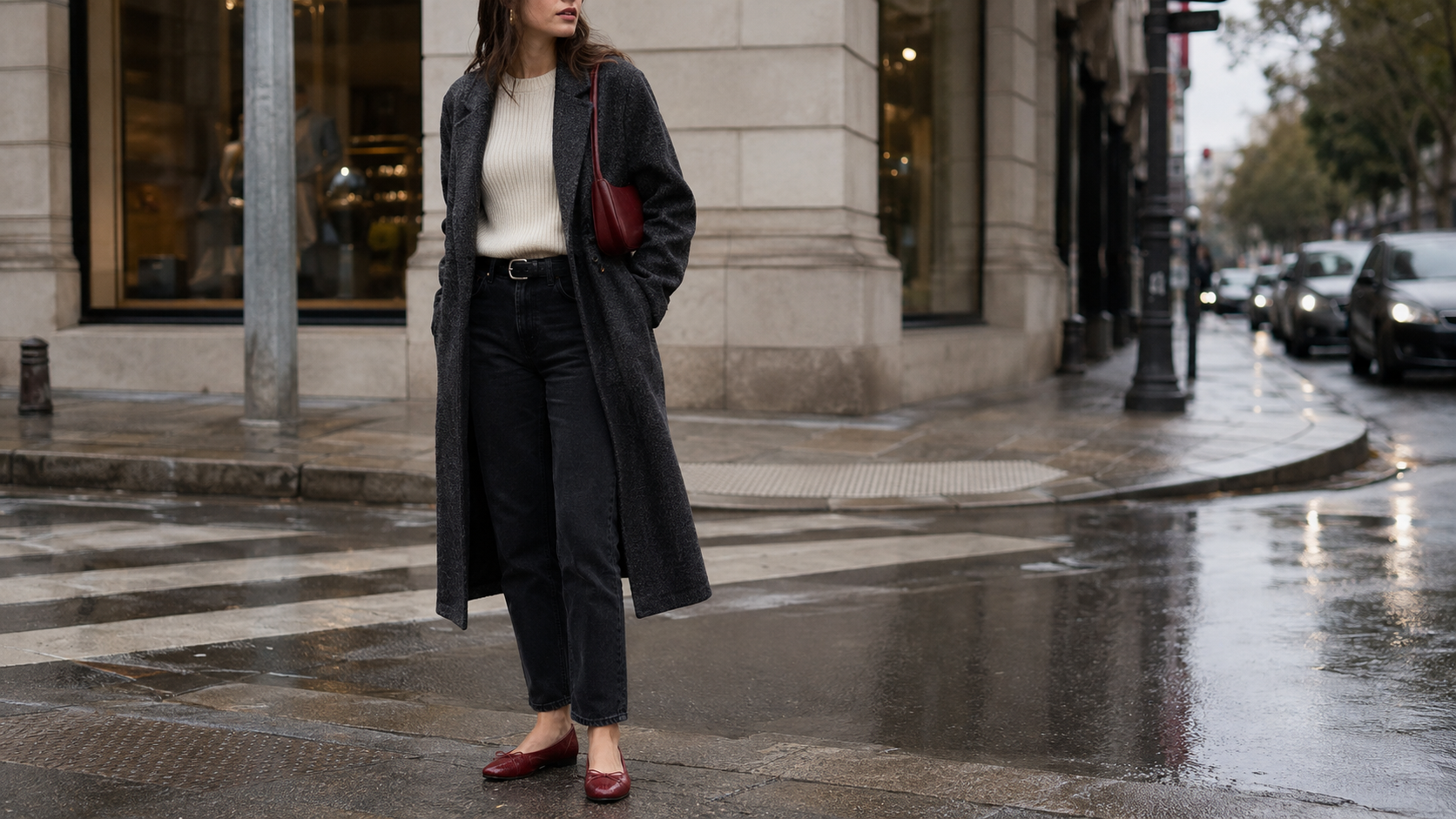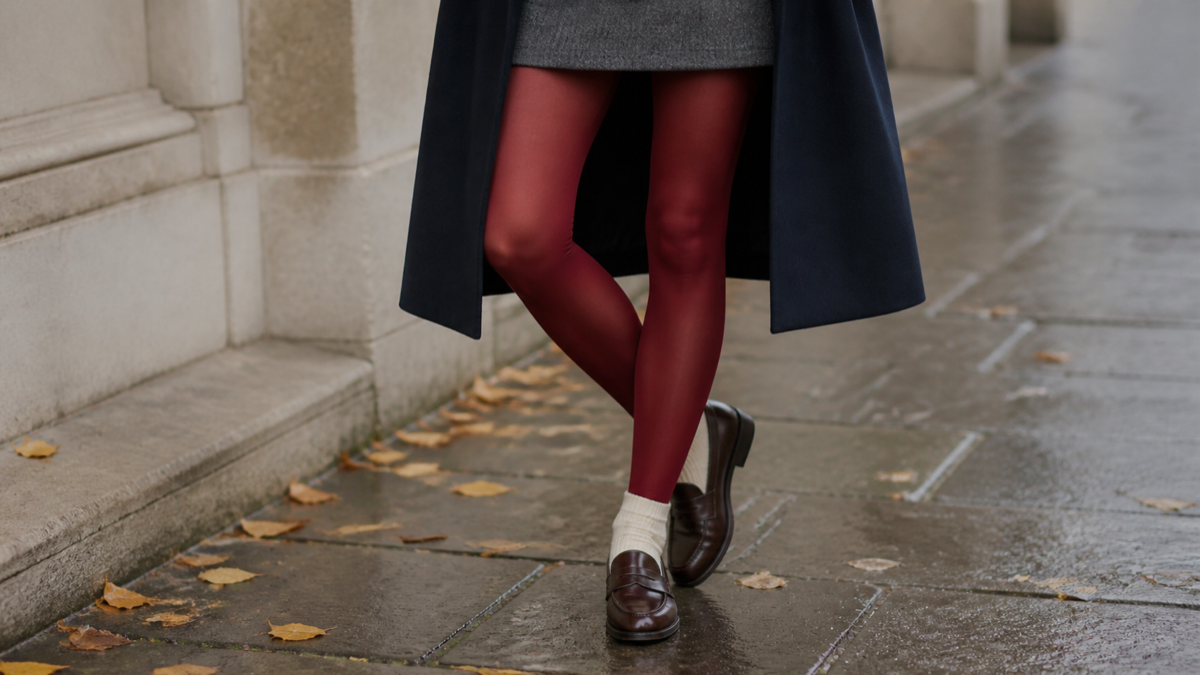
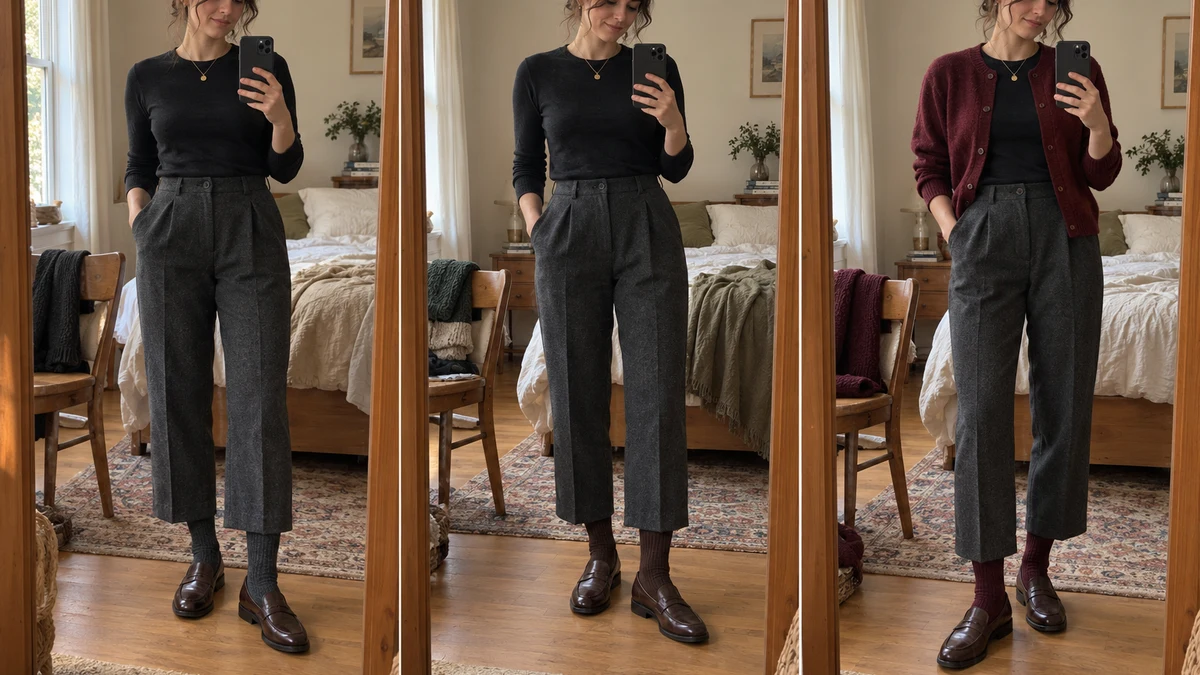
Should socks match trousers or shoes? Match them to your trousers when you want the colour to continue through the ankle, or to your shoes when you want the footwear to read as one unit. Neither is compulsory. A contrasting sock works well when you deliberately repeat its colour elsewhere or make it the outfit’s main accent.
The most useful starting point is how much sock actually shows. Full-length trousers might reveal only a narrow strip when you sit, while cropped hems make the sock a visible part of the outfit. The same burgundy pair can look subtle under long navy trousers and become a prominent colour block under ankle-length cream jeans.
Before buying another pair, compare your existing trousers and shoes with two sock colours. Keep everything else unchanged and look at the whole outfit, not just your feet. A mirror photo or virtual outfit preview can help you decide whether you prefer a continuous colour line or a clear break at the ankle.
 LIVE FITTING

Choose the colour connection you want
Think of socks as a small connector between two larger pieces. Matching trousers extends their colour towards the floor; matching shoes creates a stronger footwear section. Contrast gives the ankle its own emphasis. These are different styling effects, not ways to correct anyone’s body.
Match trousers for a quieter ankle
Try charcoal socks with charcoal tailored trousers and black loafers. The trouser and sock colours stay close, while the leather adds a different texture. This is particularly useful when a patterned shirt or bright jacket already provides the outfit’s focal point.
You do not need an exact dye match. Dark navy socks usually sit comfortably beneath navy trousers even when one is slightly bluer. Compare them in daylight: a faded black sock against crisp black trousers can create a more obvious break than a deliberately different colour.
Match shoes for a defined footwear section
Black socks with black lace-up shoes make a straightforward pairing beneath grey trousers. With cropped hems, more of that black section becomes visible. Choose this version because you like the stronger contrast, rather than because any particular height or shape requires it.
For brown shoes, start with a sock close to the leather’s depth. Espresso socks connect with dark brown loafers; camel socks create a lighter pairing with tan suede shoes. Texture can vary, so a matte wool sock does not need to mimic polished leather.
Use contrast as an intentional accent
Deep red socks can connect a red-striped shirt with navy trousers and black shoes. Keep the repeated colour small if you want a restrained result. Alternatively, let the socks be the only red item and keep the rest of the outfit relatively simple.
Five outfits that show the difference
Office tailoring with charcoal socks
Combine charcoal wool trousers, a pale blue cotton shirt, a navy blazer and black loafers. Charcoal fine-gauge socks keep attention on the shirt and jacket. Choose a length that stays above the trouser hem when seated if you prefer continuous coverage, and check that the cuff remains comfortable through the working day.
Cropped cream jeans with chocolate socks
Wear straight cream jeans, chocolate suede loafers and a forest green crewneck. Chocolate socks echo the shoes and give the pale hem a clear endpoint. A fine rib provides visible texture without filling the loafer excessively. In wet weather, switch to smooth leather footwear with suitable soles rather than relying on untreated suede.
Navy trousers with a burgundy accent
Pair ankle-length navy trousers with black Derby shoes, burgundy socks and an oatmeal knit. The red becomes a small, distinct detail between two dark pieces. Add a burgundy scarf if you enjoy colour repetition, or leave the socks alone as the accent. A lightweight wool blend suits cooler days without demanding a thick shoe fit.
Olive chinos with tonal taupe socks
Try olive cotton chinos, taupe suede desert boots and an ecru overshirt. Taupe socks connect with the boots while keeping the palette soft. For warmer weather, use lighter chinos and thinner socks; in colder conditions, a denser knit can work if the boots still leave room for your toes to move.


Dark denim with visible ivory socks
Combine dark straight-leg jeans, black loafers, ivory ribbed socks and a grey sweatshirt. The light socks create a deliberate break rather than a continuous dark line. Keep the jeans clear of the ground and compare the hem uncuffed with one shallow cuff. A bulky rolled hem can compete with the ribbing, especially when both sit close together.
Adjust for trouser length before changing colour
A small hem adjustment can change the outfit more than a new sock colour. With full-length trousers, assess the combination standing and seated. With cropped trousers, check whether you enjoy the amount of exposed sock and whether the cuff sits neatly beneath the hem.
If the trouser fabric repeatedly catches on the sock, try a smoother knit before replacing the trousers. If several folds collect over the shoe, assess the hem length. Vogue India’s supplied proportion guide considers the relationship between garment length, fit and shape; here, that means checking the trouser opening and footwear together.
Wide-leg trousers may obscure most of the sock while standing, so shoe shape and hem clearance become more visible decisions. For that separate question, see what shoes to wear with wide leg trousers. A sock change cannot solve a hem that drags or footwear that feels uncomfortable.
Choose fabric for the shoe and the weather
Start with the space inside your footwear. Close-fitting loafers generally accommodate fine-gauge socks more easily than chunky hiking styles. Boots may allow a thicker knit, but extra thickness should not make them tight. Try the intended socks with the shoes before committing to a new combination.
For mild days, lightweight cotton blends are practical everyday options. For cold commutes, consider wool or wool-blend socks in a thickness your footwear accommodates. Follow the care label, and change damp socks rather than expecting a particular fibre to compensate for soaked shoes.
Colour also looks different across fabrics. An ivory ribbed sock reads more casually than a smooth dark dress sock, even with the same loafers. When comparing outfits, change colour first and texture second so you can identify which adjustment you actually prefer.
Common questions
Should socks match trousers or shoes for work?
Matching trousers is an easy starting point for conventional office tailoring because it keeps the ankle visually quiet. Matching shoes is equally usable when you prefer a stronger footwear section. Follow your workplace dress code, and choose a comfortable sock length that gives the coverage you want when seated.
Can you wear white socks with black shoes?
Yes. White or ivory socks with black loafers or lace-up shoes create a visible contrast. Try them with dark denim and a grey knit for a casual outfit. Choose fine ribbing if shoe space is limited, and check the combination against any formal dress requirements.
What colour socks should you wear with brown shoes?
Brown socks close to the shoe colour are a reliable starting point. Navy socks work with navy trousers, while olive or burgundy can provide a deliberate accent. Compare the socks beside the actual shoes in daylight, then try the complete outfit before deciding.