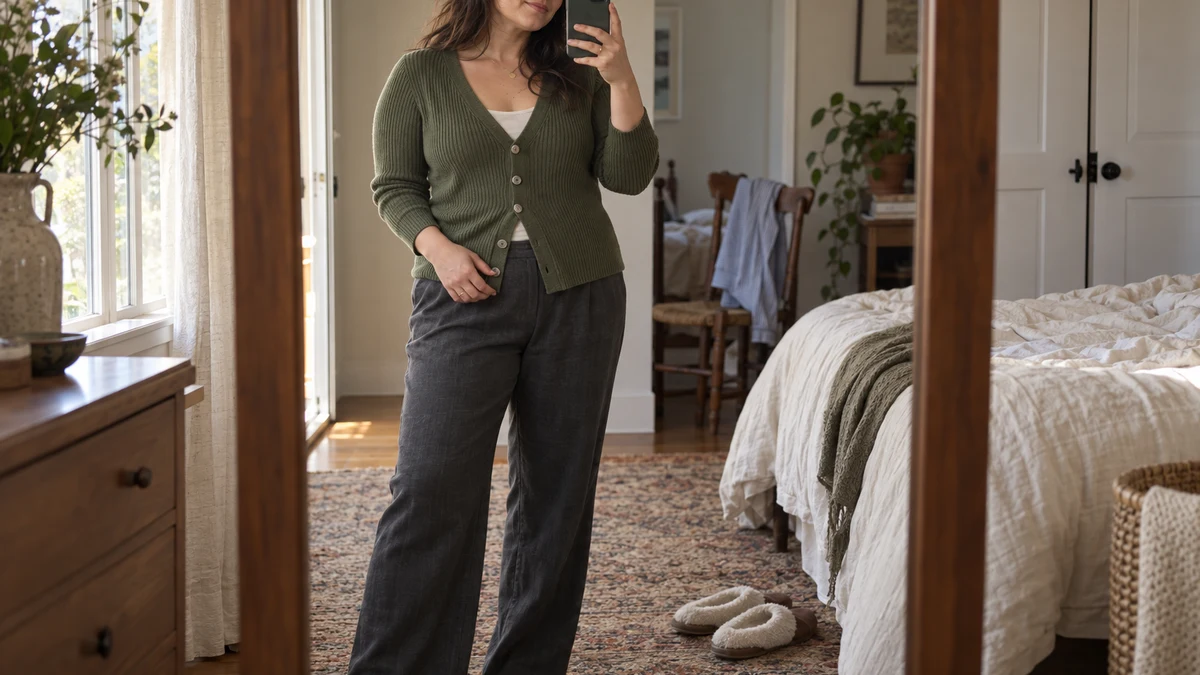
You do not need to button every button on a cardigan. Fasten them all for a continuous knitted top, leave the bottom one or two open for more movement, or wear it completely open as a layer. The best arrangement lets the cardigan sit comfortably without pulling, twisting or needing constant adjustment.
Start with the cardigan’s construction rather than a rule about your body. A fine ribbed knit behaves differently from a chunky cable cardigan, and a firm waistband can catch on a trouser fastening even when the rest fits comfortably. Button placement changes where the fabric separates and how much of the layer underneath appears.
If you are asking, “should you button every button on a cardigan?”, compare the same outfit with three arrangements: fully fastened, bottom button open, and just the middle buttons closed. Keep the trousers and shoes unchanged. Seeing those versions on yourself makes it easier to choose between a tidy hem, a split opening and an open layer.
 LIVE FITTING
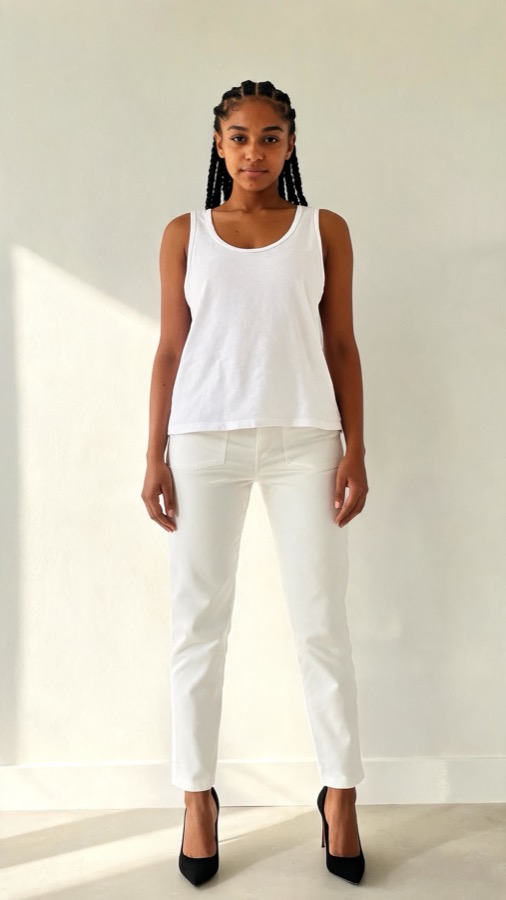

Choose the button arrangement by the hem
Look first at where the cardigan finishes. A waistband-length cardigan can work fully buttoned because there is little fabric below the waist to catch when you sit. A longer cardigan may move more freely with its lower buttons undone, particularly over structured denim or a skirt waistband.
Fully buttoned for a continuous top
Try every button fastened when the cardigan has a soft hem and enough room to settle naturally. Fine-gauge cotton, merino or a smooth wool blend can work well worn this way. Check the care label and your comfort against the fabric before deciding whether to wear it directly against your skin.
Pair a navy crew-neck cardigan with stone cotton trousers and dark brown loafers. Let the cardigan end over the waistband rather than forcing a thick ribbed hem into it. If you prefer a tuck, use a thin knit and check that the buttons do not press against your stomach when seated.
Bottom buttons open for a split hem
Undo the lowest button first, then reassess before opening another. This can release a ribbed band that is catching on your trousers and let the cardigan’s fronts fall separately. You do not need a large opening: a small split may provide all the movement you want.
Try a charcoal V-neck cardigan over a white cotton vest, with indigo jeans and burgundy ankle boots. Keep the vest tucked in if you want a clear view of the split hem. For an untucked base, choose one with a straight edge so the exposed fabric looks deliberate rather than bunched.
Middle buttons closed for a layered opening
Fastening two or three middle buttons leaves the neckline and lower front open. This works particularly well when you want a shirt collar visible without wearing the whole cardigan loose. Choose a base layer you are comfortable showing through both openings, including when you reach or bend.
Check whether the buttons are styling or straining
A small opening between buttons is not automatically a fit problem. Some loosely knitted cardigans separate slightly as they move. Look instead for persistent horizontal tension, buttonholes being stretched out of shape, or a front edge that twists whenever you fasten it.
If the centre pulls but the shoulders and sleeves feel right, try the cardigan open. If you want to wear it closed, compare another size or a cut with more room through the torso. Opening a lower button will not necessarily resolve tension higher up, and you should not have to keep repositioning the knit.
Check the base layer too. A crisp poplin shirt can gather beneath a close-fitting cardigan even when each piece fits separately. Swap it for a fine jersey top, or choose a roomier cardigan if the shirt is essential. For more checks on the layer underneath, see how a button-up shirt should fit.
Four outfits with different button placements
A fully fastened cardigan for the office
Wear a dark green fine-knit cardigan with grey tailored trousers and black loafers. Fasten every button if the neckline and front remain comfortable, then add a thin base layer if needed for coverage. The uninterrupted green front gives the cardigan the role of a top rather than an outer layer.


For a chilly commute, add a lined coat with enough sleeve room to avoid dragging the knit upwards. Once indoors, check the cardigan again without the coat. A front that sits neatly while standing should also let you sit at a desk and reach forward comfortably.
A lower opening with a midi skirt
Combine an oatmeal cardigan with an olive A-line cotton-twill midi skirt and brown boots. Fasten the upper and middle buttons, leaving the lowest one or two open so the hem can sit around the skirt’s waistband. This is useful when a firm cardigan band otherwise catches on the skirt fastening.
In cold weather, add tights and a thin long-sleeved base. If the skirt has a gathered waist, try the cardigan completely open instead of asking its hem to settle over the gathers. Both versions retain the skirt’s shape without requiring a tight top.
Middle buttons over a weekend shirt
Try a rust wool cardigan over a pale blue Oxford shirt, with ecru straight-leg jeans and dark trainers. Fasten two central buttons and leave the shirt collar open. The blue appears at the neckline and lower opening, linking the visible sections of the shirt.
Keep the shirt hem only as long as you enjoy seeing it. If it bunches beneath the knit, tuck it in rather than repeatedly smoothing it down. For other hem options, the guide to wearing a loose top without tucking it in offers practical alternatives.
An open cardigan for changing temperatures
Wear a chocolate chunky cardigan over a washed-black cotton tee, with matching black jeans and leather trainers. Leave the cardigan open so it is easy to remove indoors. In wet weather, add a suitable raincoat rather than relying on the knit as your weather protection.
Compare the look, then test the movement
A virtual try-on can help you compare the overall impression of a cardigan worn as a top or layered over another colour. It cannot establish button tension, warmth or how a ribbed band feels while sitting. Fine details such as exact button placement may also be rendered imperfectly.
Confirm your choice with the actual garment: sit down, reach forward and put on your coat. Check whether the openings reveal more than you intended. If you keep adjusting the fastening, change the button arrangement or base layer before deciding the cardigan itself is wrong.
Common questions
Should you leave the bottom button of a cardigan undone?
You can, especially if the hem catches on a waistband or pulls when you sit. Start with one button undone. There is no universal requirement to leave it open on every cardigan.
Can you wear a cardigan fully buttoned without a top underneath?
Yes, if the fabric feels comfortable and provides the coverage you want. Check between the buttons in daylight and while moving. Add a thin vest if the neckline or openings reveal more than you prefer.
Why does my cardigan gape between the buttons?
Possible causes include tension across the front, wide button spacing, a stretchy knit or a bulky layer underneath. Try a thinner base first. If the buttonholes still stretch when fastened, compare another size or wear the cardigan open.