
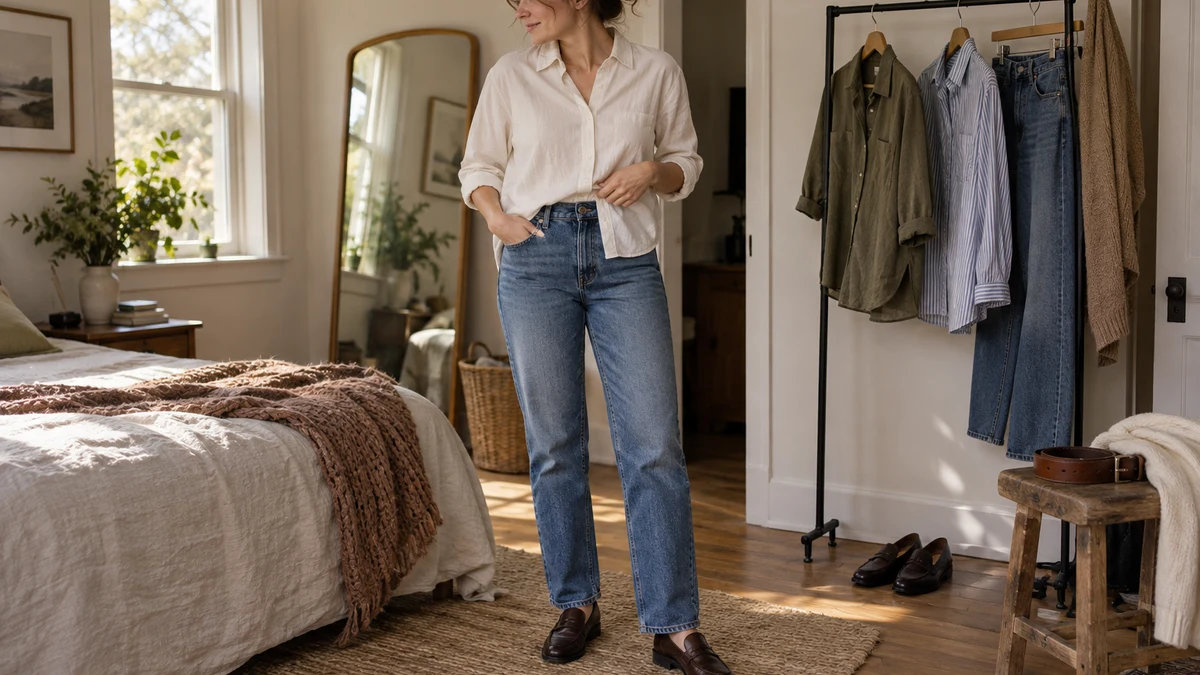
Should you tuck a shirt into straight leg jeans? Tuck it when you want the waistband to become a clear part of the outfit; leave it out when you prefer a continuous shirt silhouette. A small front tuck is a useful middle option, especially with a soft shirt that folds easily rather than bunching inside the jeans.
The choice is about the clothes, not correcting your body. Straight leg jeans provide a fairly consistent line from knee to hem, so the shirt’s length, fabric and amount of volume make a noticeable difference. A crisp cotton shirt and a fluid viscose shirt can need different styling even when their measurements are similar.
Before buying another top, compare the same outfit fully tucked, front tucked and untucked, keeping your shoes unchanged. Seeing those versions on yourself helps answer the real question: which arrangement gives you the shape and comfort you want? A virtual preview can help compare the visual effect, but only wearing the clothes confirms pressure, movement and fabric behaviour.
 LIVE FITTING

Choose the tuck by shirt fabric and hem
Wear What Fits describes contrast in volume as a useful outfit principle: a looser top can work with a slimmer bottom, and vice versa. Straight leg jeans sit between those extremes. You can retain a roomy shirt or bring it closer to the waistband without treating either combination as a rule.
Full tuck for lightweight shirts and visible waistbands
A full tuck works well with cotton poplin, lightweight chambray and fluid woven shirts, provided the jeans have room for the fabric. Start with the shirt tucked smoothly, then raise your arms and let a little material ease out. That small amount of slack lets you reach without the collar pulling down.
Check the side and back views as well as the front. If the shirt creates a firm roll beneath the waistband, change the tuck rather than forcing the fastening. A shorter shirt, lighter fabric or untucked version may solve the problem more comfortably than a belt.
Front tuck for soft fabric and a relaxed finish
For a front tuck, insert a small section around the centre front and leave the sides free. Begin with less fabric than you think you need, then adjust until the hem falls without twisting. Soft cotton, washed linen and viscose generally fold more readily than stiff oxford cloth.
If the front placket buckles or the sides form awkward wings, release the tuck. A shirt with a deep curved hem may fall better completely untucked. The aim is a comfortable fold, not making every shirt imitate the same styling photograph.
Untucked for intentional length and substantial fabric
Keep brushed cotton, corduroy and heavier overshirts outside the jeans when tucking creates excess fabric. Look for a hem that falls where you want it, whether at the upper hip or farther down. A longer shirt gives more coverage; a shorter one leaves more of the jeans visible.
Four outfits that show the difference
Office casual: blue poplin with dark indigo jeans
Combine a pale blue cotton poplin shirt, dark indigo straight leg jeans and black leather loafers. Fully tuck the shirt to show the waistband and add a narrow black belt if you like a defined finish. Keep enough ease across the back to type, reach and sit comfortably.
For a no-tuck alternative, choose a shirt with a shorter, gently curved hem and wear it buttoned. Add a charcoal blazer that clears the shirt hem, or deliberately allows it to show. Lightweight poplin suits mild days; a fine cotton base layer adds warmth without packing extra material into the waistband.
Weekend: cream linen blend with washed blue denim
Try a cream linen blend shirt, washed blue straight leg jeans and tan suede trainers. A small front tuck shows the jeans’ front shape while keeping the shirt loose at the sides. Roll the cuffs once or twice if you want the sleeves to feel less expansive.
On a breezy day, add a cotton jacket and check whether its hem catches the loose shirt. If the layers keep bunching, untuck the shirt completely or switch to a shorter one. In rain, replace suede trainers with smooth leather shoes or weather-appropriate boots.
Dinner: fluid plum shirt with black jeans
Wear a matte plum viscose shirt with black straight leg jeans and black ankle boots. A full tuck creates a clear boundary between the colours, while leaving the shirt out produces a longer block of plum. Choose the version you prefer before adding jewellery or a belt.


A fluid shirt can shift when you sit, so leave enough slack at the back and check the buttons for pulling. For cooler weather, use a wool coat rather than relying on the thin shirt for warmth. Keep the jeans hem clear of the ground with your chosen boots.
Cool weather: checked flannel with ecru jeans
Pair a rust and navy flannel shirt with ecru straight leg jeans and brown lace-up boots. Leave the flannel untucked, either buttoned or open over a close-fitting navy cotton top. The substantial fabric supplies its own structure without needing to be compressed into the jeans.
If the shirt feels longer than you want, try a shorter overshirt instead of forcing a thick front tuck. For wet pavements, swap ecru denim for mid-blue and choose boots with suitable traction. Our guide to matching socks with trousers or shoes can help you choose the visible colour when seated.
Check the fit before deciding on the proportion
The same tuck behaves differently in high, mid and lower rises. A higher waistband leaves less shirt visible above it when tucked; a lower waistband leaves more. Neither is automatically better, and a comfortable rise is more useful than choosing one solely to reproduce an outfit image.
Fasten the jeans, sit down and reach forward. The waistband should allow normal breathing and movement with the shirt inside. If tucked fabric causes discomfort, try an untucked arrangement before changing sizes: jeans that fit well without the shirt may simply lack room for that extra layer.
Also check the shirt shoulders, sleeves and buttons. Persistent pulling across the button line calls for a different fit or cut, not a more elaborate tuck. If the shirt billows more than you want, compare a less oversized version while preserving enough room to move.
Compare one change at a time
Keep the jeans, shoes and shirt constant for your first comparison. Then change only the tuck, followed by the belt if needed. The approach in our guide to comparing two outfits before buying online helps keep the decision focused.
TryFits AI can provide a visual preview of clothes on your own body, but a generated image cannot confirm waistband comfort or whether a tuck stays secure. Use the preview to narrow your styling options, then test the actual outfit seated, walking and with your outer layer on.
Common questions
Can you leave a shirt untucked with straight leg jeans?
Yes. Choose a hem length you enjoy and check that the shirt hangs freely rather than catching on pockets. A shorter woven shirt gives a compact outline; a longer fluid shirt creates a relaxed silhouette.
Do you need a belt when you tuck in a shirt?
No. A belt can add colour or emphasise the waistband, but the outfit can look complete without one. If the jeans stay comfortably in place, decide by comparing the visible waistband with and without a belt.
How do you stop a tucked shirt from bunching?
Start with lightweight fabric and enough room inside the waistband. Smooth the shirt down, then release a little slack for movement. If it still forms uncomfortable folds, use a smaller front tuck or wear it untucked.

2 thoughts on “Should You Tuck a Shirt Into Straight Leg Jeans?”