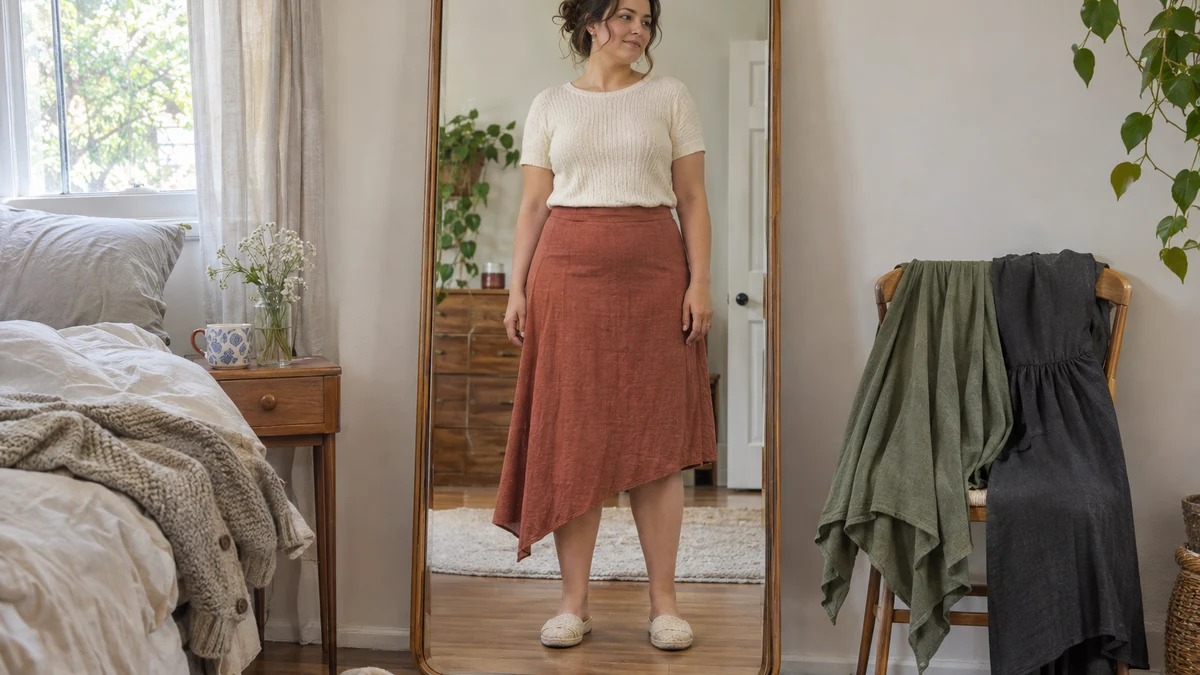
Virtual try on for asymmetric hems can help you decide whether you prefer a diagonal skirt, a handkerchief hem or a dress with one longer side. TryFits AI can generate a visual preview on your digital twin, giving you a way to consider the silhouette on yourself. It cannot guarantee the exact hem position, fabric movement or coverage of the garment you receive.
An asymmetric hem is especially difficult to judge from a shop photograph. A model’s bent knee can exaggerate the diagonal, while a lifted corner can make a soft skirt look more sculptural than it really is. Even the shortest and longest points may be unclear.
Start with one practical question: do you want an obvious diagonal, or just a little unevenness below an otherwise simple outfit? Seeing those shapes against your own proportions can help you choose. Save the separate questions about sitting, walking and catching the hem under a coat for physical checks.
 LIVE FITTING

What TryFits AI can show about an uneven hem
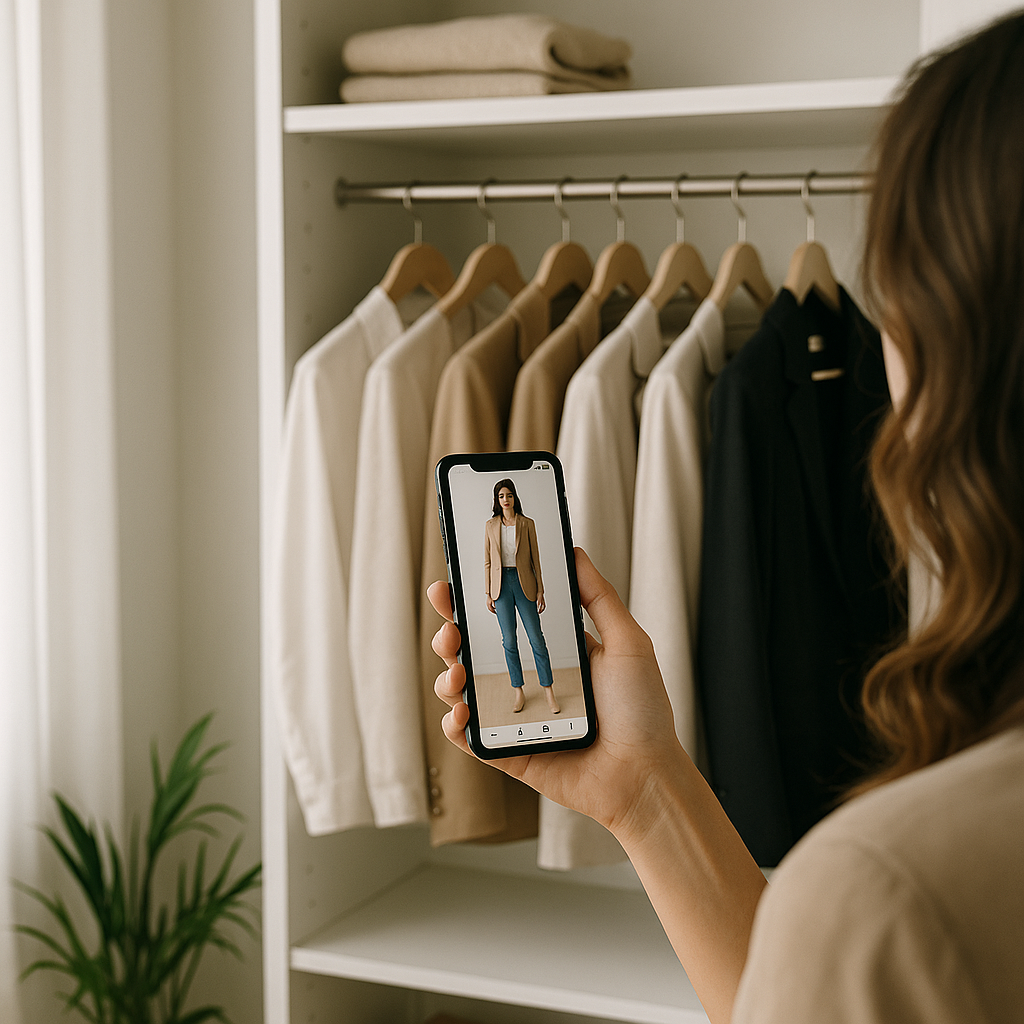
The TryFits AI App Store listing describes trying on store finds and clothes from your own closet, alongside stylist chat and building full looks. Its FAQ describes AI-generated visualizations. That supports using a preview to explore an asymmetric silhouette, not treating the generated image as a measured fitting.
Look at the broad outline first. Does the longer section create the flowing effect you wanted? Does the diagonal remain noticeable beside your top, or disappear beneath it? A preview can help you form a preference without establishing precisely where every point will land.
Keep the retailer’s original photograph beside the result. If a pointed corner becomes rounded, or several hanging panels turn into one smooth edge, the preview has lost a defining detail. Do not use that version to decide whether the actual design suits your plans.
Choose between three asymmetric hem shapes
A single diagonal for a clear, simple outline
A skirt that slopes from one side to the other makes the asymmetry easy to read. Try a charcoal diagonal midi with a fitted ivory merino jumper and black ankle boots. Keeping the upper half uncomplicated gives you a useful starting point for deciding how pronounced you want the slope to look.
Compare a shallow diagonal with a steeper one, keeping the top and shoes similar where possible. The shallow version offers a quieter change from a straight hem. The steeper version exposes more leg on one side, so check the retailer’s shortest measurement rather than relying on the preview.
A handkerchief hem for several soft points
A handkerchief skirt has multiple hanging points rather than one continuous diagonal. Consider a plum woven midi with a navy fine-knit top and dark brown boots. In a lightweight fabric, those points can create a softer outline; in a stiffer fabric, they may stand away more visibly.
Use the preview to judge whether you enjoy that irregular outline with your existing clothes. Then examine product close-ups for panel construction and lining. A photograph cannot establish how freely the corners will swing, and a generated visualization cannot confirm whether they will twist around your legs.
A longer side panel for a stronger focal point
A dress with one extended side panel can make an otherwise restrained outfit feel more directional. Picture a black crepe dress with a simple neckline, opaque tights and plain boots. Before buying, establish whether the extension is part of the skirt, an attached drape or a separate tie.
That construction affects everyday use. A loose panel may need arranging when you sit, while a continuous diagonal hem behaves differently. If the product description leaves this unclear, ask the retailer for an additional photograph rather than filling the gap with an appealing preview.
Compare outfits without changing everything
Begin with the asymmetric garment and a familiar supporting piece. A plain top you already wear is more useful than an entirely unfamiliar outfit because you know its real length and volume. Compare one change at a time, then return to the product photographs to confirm the garment details.


For a skirt, test a top ending near the waistband against one ending at the upper hip. The shorter option reveals more of the skirt’s overall shape; the longer option may cover its upper construction. Our guide to what length top works with a pencil skirt offers another useful way to think about where those horizontal lines fall.
Next, compare footwear with a similar colour but a different shaft height. Black ankle boots leave a different visible gap from black knee-high boots. Neither is automatically better: choose whether you want the uneven edge clearly separated from your footwear or connected to a continuous dark lower half.
Finally, consider the coat you will actually wear. A straight wool coat can partially cover a diagonal skirt, leaving only its longest point visible. If that looks accidental to you, try a shorter jacket or a coat long enough to cover the skirt completely.
Match fabric and weather to the outfit
For a cold commute, consider a lined woven skirt with opaque tights, a fine wool jumper and boots with weather-appropriate soles. A lightweight, unlined handkerchief skirt may be less convenient in gusty conditions. Check composition, lining and care instructions before deciding whether it belongs in your everyday rotation.
For an indoor dinner, a fluid crepe skirt with a neat cardigan offers movement without requiring a complicated top. Satin is another option, but examine retailer images for shine and creasing. The preview can suggest the colour relationship; it cannot reproduce every reflection or predict how the fabric will crease after sitting.
If an uneven hem feels too busy, keep the same colour combination and choose a straight midi instead. If you like the asymmetry but need easier movement, look for a shallower diagonal without trailing panels. Change the garment to suit your day rather than trying to make a dramatic design work everywhere.
Check the shortest point before ordering
Find both the shortest and longest lengths, and confirm where the retailer measures from. Compare those figures with a skirt or dress you own, using the same measuring points. A single listed length may describe only the longest section, so request clarification when coverage is important.
When the garment arrives, try it with the intended underwear, tights and shoes. Sit on a dining chair, walk normally and climb a few steps. Check whether the shortest section rises beyond your preference and whether the longest section catches on your footwear before removing return tags.
Common questions
Can virtual try on show the exact length of an asymmetric hem?
No. Treat the generated hem position as approximate. Use the retailer’s shortest and longest measurements, compare them with clothing you own, and confirm coverage during a physical try-on.
Can TryFits AI show how a handkerchief skirt moves?
A moving digital twin is not proof of a specific fabric’s behaviour. Use it to consider the visual idea, then look for retailer video and test walking and sitting when the skirt arrives.
What should I do if the preview changes the hem shape?
Compare it with the original product image. If points, panels or the diagonal edge have changed, do not rely on that result for this decision. Request clearer garment photographs or consider a simpler design.