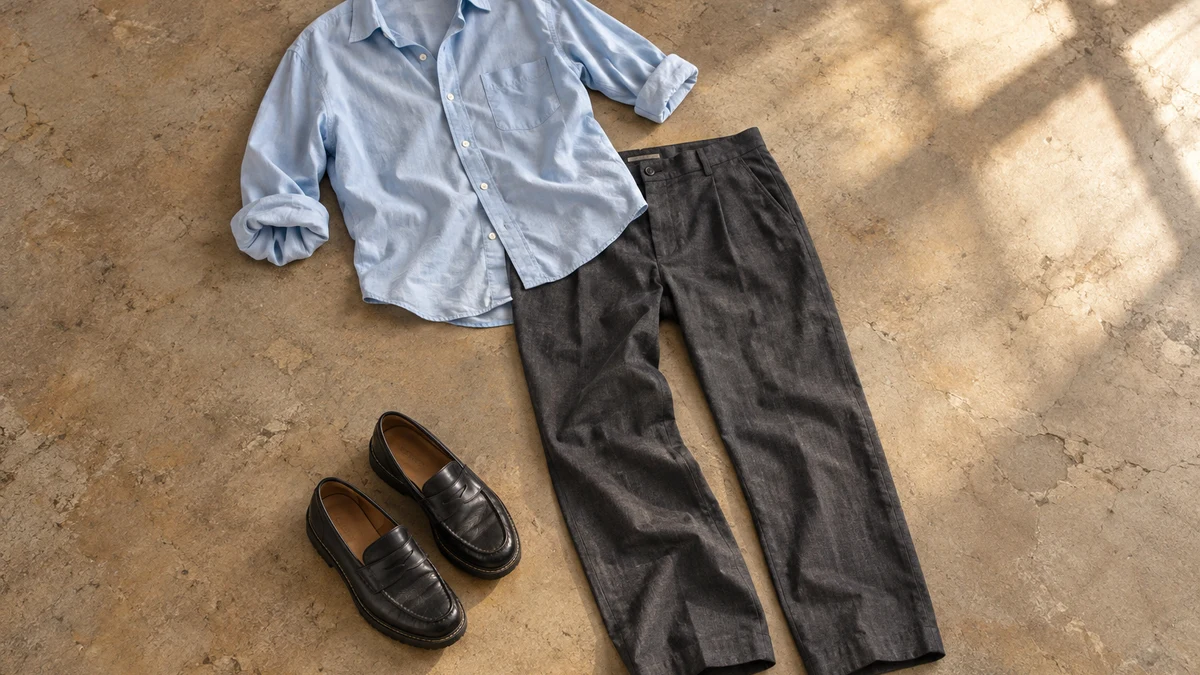
If you are wondering how to wear uniform dressing without looking corporate, start by repeating a simple outfit formula in comfortable fabrics, then keep one detail deliberately relaxed. A cotton shirt with straight trousers and rubber-soled loafers works; a matching business suit is not required. The aim is a recognisable combination you enjoy wearing, not an office dress code.
The named trend signal comes from Vogue’s The Spring 2026 Trend Report: A Season of Uniform Dressing, Rococo Flourishes, and Much More, which explicitly identifies uniform dressing. That establishes a 2026 runway reference, rather than proving a new October search spike. For autumn, the useful question is how to translate the idea into repeatable outfits with warmer layers.
The difficult part is choosing your repeatable shape. A hip-length shirt and wide trousers create a different outline from a short cardigan and straight jeans, even in identical colours. Comparing those combinations on yourself, rather than copying a complete runway look, helps you identify the formula you actually want to repeat.
 LIVE FITTING

What uniform dressing means for your wardrobe
Here, uniform dressing means returning to a consistent combination of garments: perhaps a crewneck knit, straight trousers and loafers. You can change colours or substitute warmer fabrics without changing the underlying structure. It does not require identical clothes every day.
Unlike a capsule wardrobe, which concerns how a collection works together, a personal uniform starts with one outfit. Begin with something you already reach for and identify its useful features. Perhaps the sleeves fit beneath your coat, the waistband feels comfortable sitting down, or the shoes suit your commute.
Avoid buying several versions immediately. Wear your proposed formula through an ordinary day first, including travel and indoor heating. An outfit that needs constant sleeve adjustment or a carefully maintained tuck is a poor candidate for frequent repetition.
Choose a formula with a clear silhouette
A soft shirt with straight trousers
Start with a washed cotton shirt, straight charcoal trousers and dark brown loafers. Choose a shirt with enough room across the back to reach forward comfortably, but without so much extra fabric that it bunches beneath your coat. An Oxford weave feels more casual than a crisp, glossy business shirt.
Wear the shirt open at the neck and try a full tuck before adding accessories. If you prefer it untucked, choose a hem that finishes around the upper hip rather than a long curved tail. A canvas shoulder bag keeps this combination practical without making it resemble formal officewear.
A crewneck knit with dark jeans
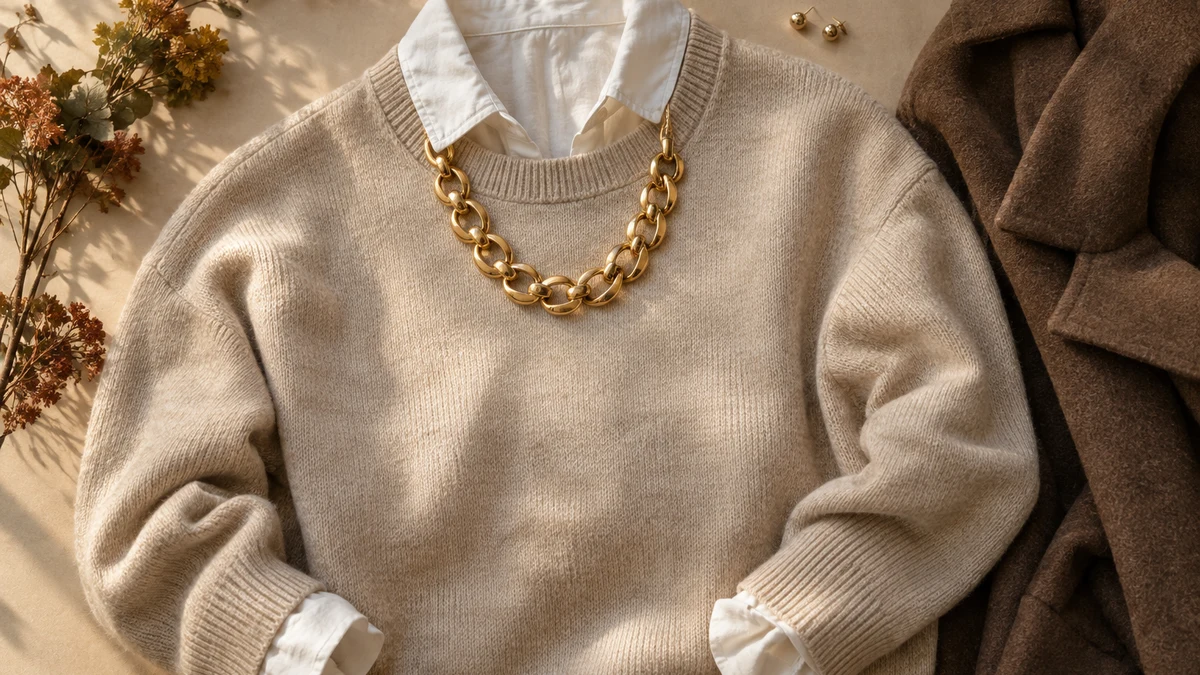
Try an oatmeal lambswool crewneck, dark indigo straight jeans and black leather ankle boots. The jeans provide structure while the knit softens the outfit. A jumper finishing near the waistband gives a clear junction between the two pieces without requiring a tuck.
For a roomier jumper, keep the jeans straight rather than automatically choosing a wider leg. If you enjoy volume throughout, compare both versions: the relevant question is whether you like the complete outline. Our guide to wearing a loose top without tucking it in offers more hem-length options.
A jersey dress with flat boots
A long-sleeved charcoal jersey midi dress with flat black boots makes a useful alternative to trousers. Look for a substantial knit that moves easily rather than thin jersey that catches on tights. A straight or gently A-line skirt gives you room to walk without needing a dramatic slit.
Repeat the formula with a navy dress or change the outer layer from a short jacket to a full-length coat. You still have the same easy base. Check the dress while seated, because a hem that works standing may rise further than you want on a train or office chair.
Keep the outfit from looking corporate
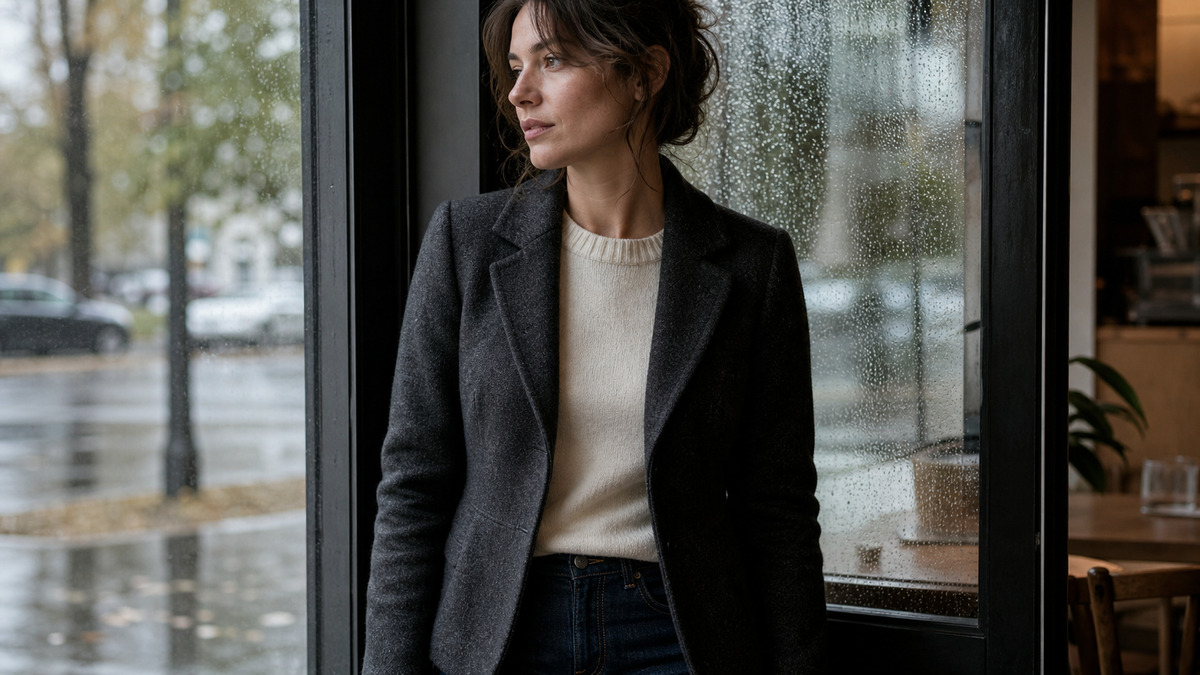
Change the fabric before adding decoration. Brushed cotton, ribbed wool and washed denim make familiar shapes feel less formal. For example, grey flannel trousers with a textured navy knit look softer than the same trousers with a fitted poplin shirt and polished pumps.


Footwear also changes the reading of a repeated outfit. Plain trainers make a shirt-and-trouser combination more casual, while flat boots make a jersey dress practical for walking. Keep trainers clean enough for your setting, but do not choose a delicate pair that cannot handle your usual route.
Use accessories you would wear even without the trend. A narrow leather watch strap or a familiar canvas bag gives the clothes a personal connection. You do not need a coordinating belt, bag and shoe set; our advice on whether your belt should match your bag explains how to combine different finishes.
Adapt the same formula to autumn weather
In mild weather, a cotton shirt and unlined jacket may be sufficient for your journey. As temperatures fall, put a fine merino layer beneath the shirt or replace it with a heavier cotton overshirt. Leave enough sleeve room that bending your elbows does not pull across your shoulders.
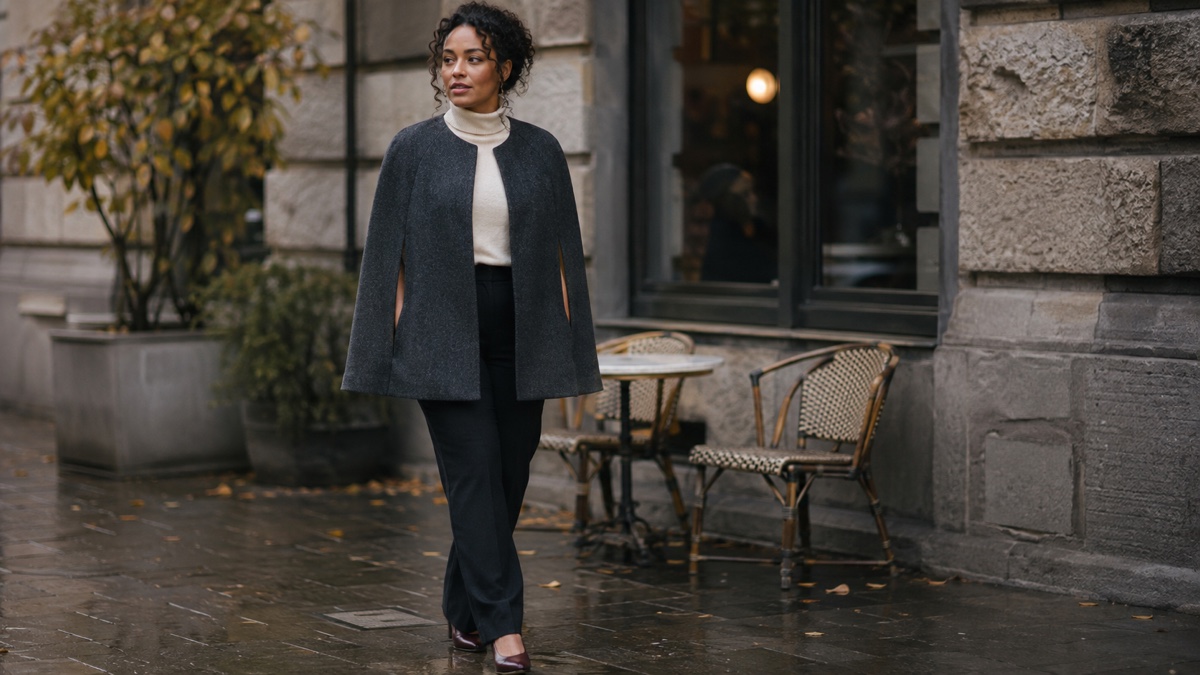
For wet days, prioritise a weather-appropriate outer layer and shoes with reliable grip. Wool trousers should clear the ground rather than collect water at the hem. If your usual loafers have smooth leather soles, substitute rubber-soled boots instead of preserving the formula at the expense of comfort.
Indoors, make sure the outfit works after your coat comes off. A sleeveless base that only feels complete beneath a jacket may frustrate you in a warm café. For more layering depth, use one fine base layer beneath a medium-weight knit rather than squeezing two thick jumpers under a fitted coat.
Compare two versions before buying repeats
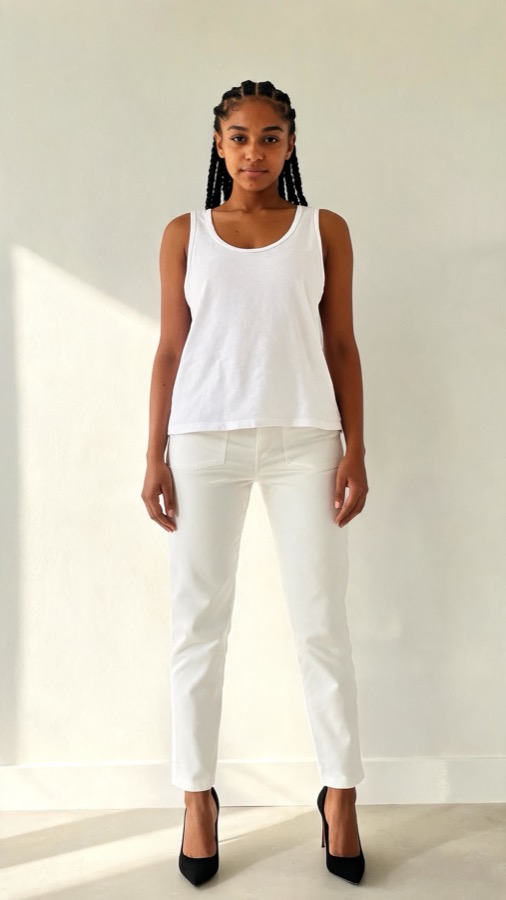
A virtual preview can help compare the broad shape of a shorter knit against a longer one, or straight trousers against a wider pair. TryFits AI can show outfit options on your digital twin. Keep the rest of the outfit consistent so you are judging the changed garment rather than several competing differences.
Treat that preview as a styling comparison, not proof of fit, warmth or fabric behaviour. Check garment measurements and composition separately. In person, sit down, reach forward and walk briskly before deciding that an item deserves a second colour.
Common questions
Does uniform dressing mean wearing the same outfit every day?
No. You repeat the formula, not necessarily the exact garments. A crewneck knit, straight jeans and ankle boots can remain your starting point while the colours change. Keep enough clean alternatives for your laundry routine rather than buying an arbitrary number of duplicates.
Can uniform dressing work with bright colours?
Yes. Choose a bright garment within a familiar silhouette, such as a tomato-red crewneck with indigo jeans. Repeating the shape keeps getting dressed straightforward. You can use colour freely without changing the proportions or adding more accessories each morning.
How do you stop a personal uniform feeling boring?
Change one visible element while keeping the comfortable base: swap loafers for boots, choose a striped shirt, or wear a different coat. If the formula still feels restrictive, keep a second one for another mood. Test each variation with clothes you own before buying replacements.