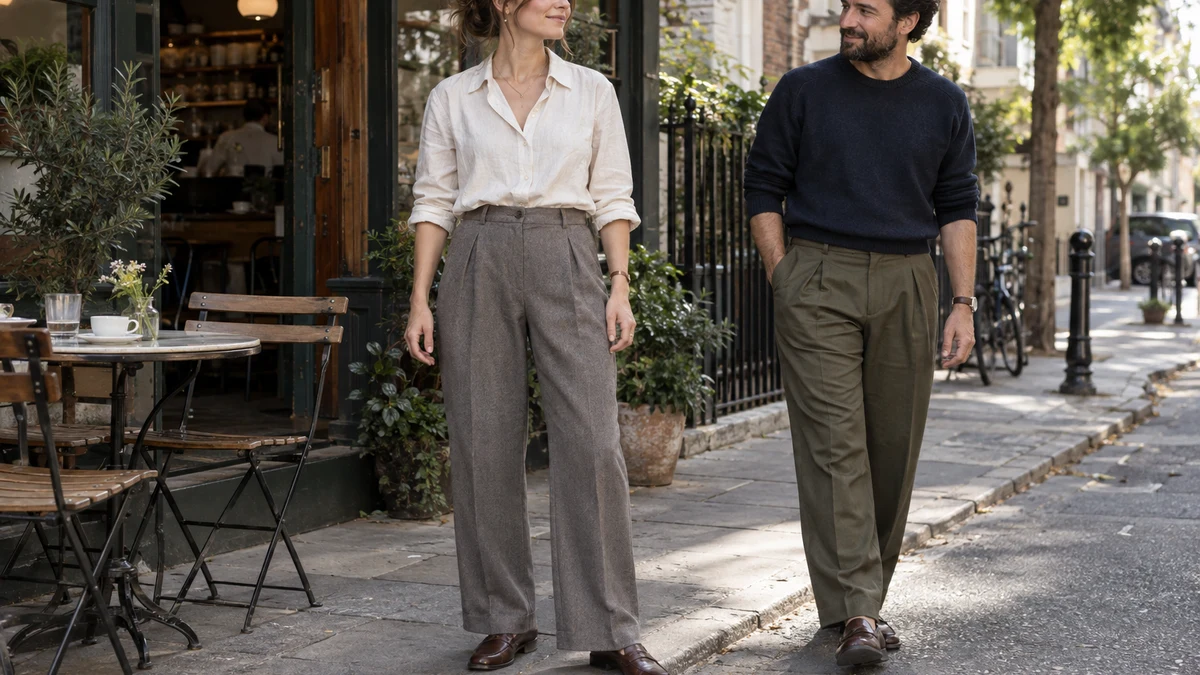
Should trouser pleats stay closed when you stand? Usually, a tailored pleat should rest close to its intended fold when you stand naturally, rather than pulling open under tension. It does not need to remain sealed as you walk or sit: that extra fabric is there to allow movement.
If wide-leg trousers feel more expansive than you expected, check the pleats before changing your top. A fold pulled open by a tight waistband behaves differently from a deliberately rounded pleat in soft fabric. Neither tells you anything negative about your body; you are assessing the garment’s cut.
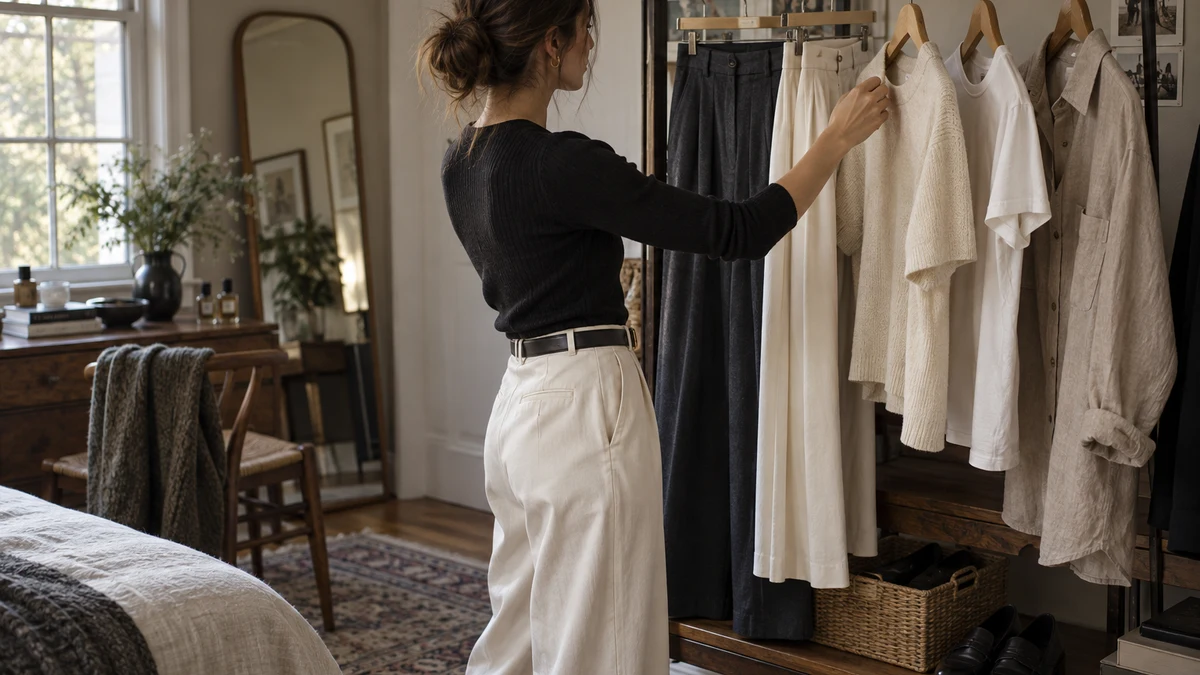
Compare the same trousers with a tucked T-shirt, an untucked fine knit and your usual shoes. Look at where the folds begin, whether the pockets lie comfortably, and how the fabric falls. A visual preview can help compare outfit shapes, but pressure at the waist and freedom of movement need a physical try-on.
 LIVE FITTING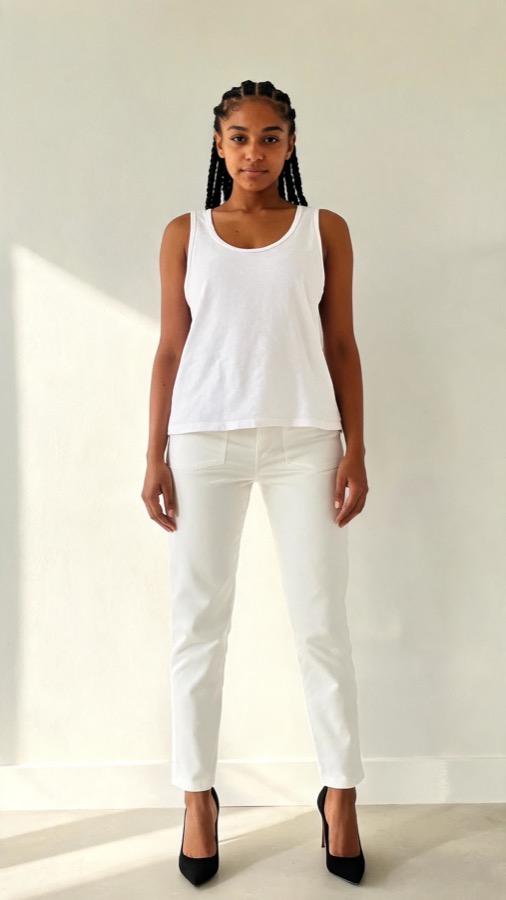

Read the pleat alongside the rest of the fit
A pleat is a fold that releases extra fabric below the waistband. In tailored trousers, it often starts relatively flat and opens farther down or during movement. Some fashion cuts intentionally create more volume immediately below the waist, so a perfectly flat front is not always the design goal.
The supplied Wardrobe guide, Proportion and composition in outfits, separates garment fit from outfit proportion. Apply that approach here: first establish whether the trousers feel comfortable and hang as intended, then decide whether you enjoy their shape with the rest of your clothes.
Stand without holding your stomach in or adjusting your posture for the mirror. Fasten the waistband where it naturally settles, then check the front and side. A softly opening fold with smooth surrounding fabric is different from a pleat accompanied by taut horizontal lines or a pocket mouth pulled outward.
Sit down, take a normal stride and bend to reach your shoes. Pleats opening during these movements is expected. If the waistband digs in, the fastening strains, or the fabric restricts your movement, try another size or cut rather than repeatedly pressing the fold shut.
What to change when pleats pull open
Check the waistband and room below it
A waistband that fastens is not automatically a comfortable fit. If it feels restrictive and the pleats spread immediately beneath it, compare the next size. Check the seat and upper legs too: you need enough room throughout the trousers, not just at the button.
If a larger size improves the drape but leaves the waist loose, a different cut may be easier than using a belt to gather excess fabric. A tailor can assess whether a waistband adjustment is practical. Construction, pockets and available seam allowance affect what can be altered.
Try a different rise before abandoning pleats
The rise determines where the waistband sits and how the fabric travels through the crotch. Pulling trousers higher than their intended position can introduce tension; wearing them lower can change where the folds release. Let the waistband settle, then compare a different rise if the trousers still tug or sag.
A higher rise is not universally better, and a lower rise is not automatically more relaxed. Choose the position that feels comfortable when seated and supports the silhouette you want. The useful comparison is between actual garments, not labels such as “high waist” alone.
Separate fabric behaviour from sizing
Wool twill can hold a pressed fold more clearly than washed linen, while fluid viscose may form softer ripples instead of a crisp crease. Cotton with some structure can make pleat volume more pronounced. Assess whether the fabric hangs freely before treating every visible opening as a fit problem.
If an otherwise comfortable pleat has lost its definition, follow the care label before pressing it. Check the intended fold carefully rather than creating a second crease. Persistent pulling will not be corrected by ironing, and delicate fabrics may need professional care.


Four outfits that let pleats set the shape
Charcoal trousers with a fine cream knit
For work, pair charcoal single-pleat wool trousers with a cream merino crew neck and black loafers. Use a light tuck that leaves enough ease to move, rather than dragging the knit tightly downward. The visible waistband gives the pleats a clear starting point without requiring a close-fitting top.
For a cold commute, add a straight wool coat with sleeves roomy enough for the knit. If you prefer an untucked top, choose a hem that rests just below the waistband and does not catch on the pocket openings. Check the outfit again with the coat removed.
Olive cotton trousers with an open shirt
For a mild weekend, wear olive pleated cotton trousers with an ivory T-shirt, an open blue cotton shirt and canvas trainers. The shirt’s open edges reveal the central layer while preserving an easy silhouette. Tuck the T-shirt only if you prefer a visible division between top and trousers.
On a cooler day, replace the cotton shirt with a brushed overshirt that has enough shoulder room for layering. Keep the trouser hem clear of damp pavement. If pale footwear is your sticking point, see wearing white shoes with dark trousers for colour-pairing examples.
Navy fluid trousers with a matching untucked top
For dinner, combine navy pleated crepe trousers with a navy fluid blouse and burgundy leather flats. Leave the blouse untucked if you enjoy a continuous, relaxed outline. A blouse with side splits can move independently over the waistband rather than bunching against the pleats.
Keep both pieces soft enough to drape, but check that the blouse does not cling or catch when you sit. Matching colours reduce the contrast between layers; they do not fix uncomfortable fit. For wet weather, substitute leather ankle boots and check the trouser length with their actual sole height.
Stone trousers with a textured cardigan
For a casual office or lunch, wear stone pleated trousers with a rust cardigan, a thin cotton base layer and dark brown loafers. Button the cardigan and leave its hem untucked for a softer division. Choose a length that rests freely rather than gripping the fullest part of the pleat.
A dense, heavy cardigan tucked into the waistband can change how the trousers sit. If you want that tucked effect, use a finer knit or tuck only a small section without forcing it. Sit down afterwards to check that the new arrangement remains comfortable.
Common questions
Do open trouser pleats mean the trousers are too small?
Not necessarily. Pleats may open because of their design, fabric or movement. When opening comes with a tight waistband, strained pockets or restricted movement, compare another size or cut. Judge the surrounding fabric and comfort together rather than using the fold as a single sizing test.
Can you wear pleated trousers with an untucked top?
Yes. Try a fine knit that rests near the waistband or a fluid blouse with side splits. The pleats do not have to remain visible. Choose a top that falls freely over them, then check whether its hem catches or bunches when you walk and sit.
Should you size up to make trouser pleats lie flat?
Try sizing up if the trousers feel tight, but compare the whole garment. If the larger pair slips at the waist or leaves unwanted excess through the seat, try a different cut. Keep the pair that allows comfortable movement and gives you the drape you prefer.