Virtual try on for sheer clothes can help you explore an outfit’s appearance, but it cannot reliably confirm how much skin or underwear the real garment will reveal. Use TryFits AI to consider the overall look, then check transparency with retailer details and a physical try-on. A convincing generated image is not proof that a blouse will remain opaque under office lighting.
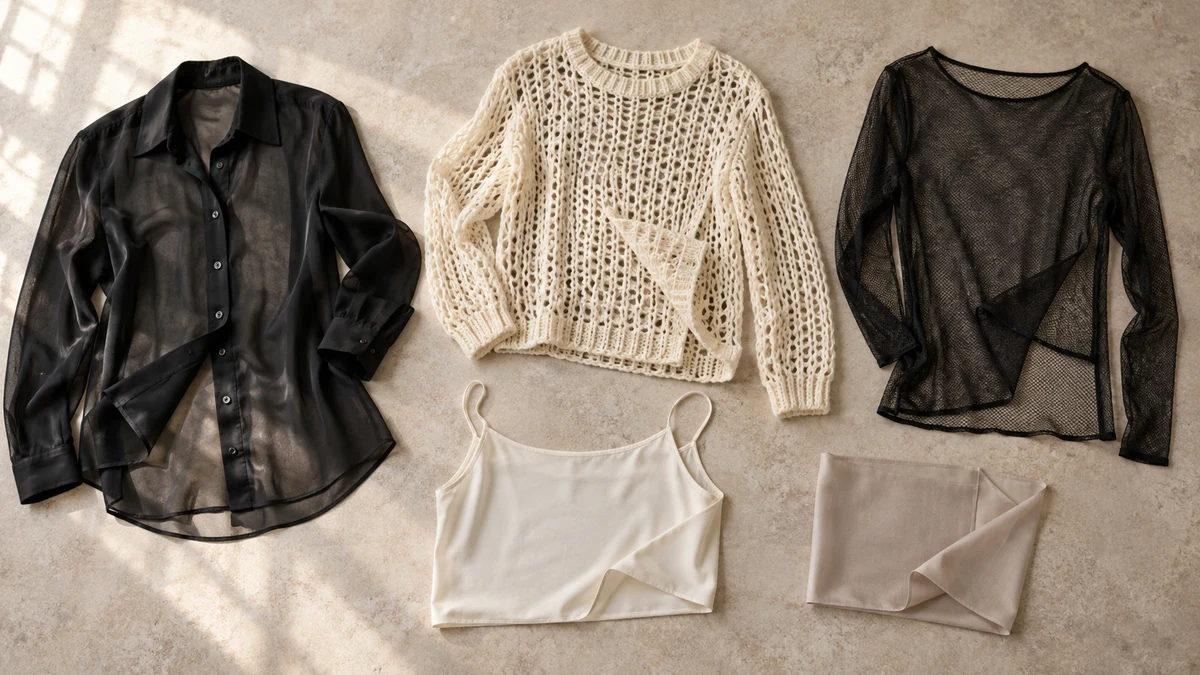
This is especially useful when shopping for a black chiffon shirt, an ivory open-knit jumper or a mesh evening top. You might like the garment but feel unsure about the layer underneath. A tonal camisole creates a different outfit from a contrasting vest, even when the outer piece stays the same.
The useful question is therefore narrower than “Will this be see-through?” Ask which version you would actually wear: a dark base beneath black chiffon, a skin-tone slip beneath an ivory dress, or a substantial vest beneath open knitwear. Previewing the styling can help you choose a direction before investigating the garment’s real coverage.
 LIVE FITTING

What TryFits AI establishes about its previews
According to the TryFits AI FAQ, the app uses generative AI to produce photorealistic previews of how clothes may fit and drape on your body. Its App Store listing also describes trying store finds or clothes from your own closet, building full looks and turning them into video.
Those descriptions support using the app as a visual styling aid. They do not establish that it measures fabric opacity, reproduces underwear visibility accurately or simulates how transparency changes under different lights. Treat any apparent coverage in the preview as an image to assess, not a tested property of the clothing.
Keep the distinction practical: “I prefer this blouse with a black camisole” is a styling decision. “This blouse conceals my bra in daylight” requires evidence from the actual blouse. You can make the first decision with a preview while leaving the second open.
Choose the underneath layer before judging the outfit
Black chiffon for dinner
Start with a black chiffon button-up, a black camisole and charcoal tailored trousers. A matte camisole provides a quieter base than glossy satin, while the chiffon supplies softness around the sleeves and collar. For a more visibly layered look, consider a square-neck camisole beneath an open shirt neckline.
In the preview, assess whether you like the visible camisole edge and the balance between the airy shirt and structured trousers. In person, check whether the camisole covers the areas you want covered when the shirt shifts. For a cold journey, add a wool coat rather than expecting chiffon to provide warmth.
Ivory open knit for daytime
Pair an ivory open-knit jumper with an opaque ivory vest and dark straight-leg jeans. Matching the layers makes the openings less visually prominent, although the vest’s outline may still show. A cocoa vest creates intentional contrast if you want the knit pattern to stand out.
A close-fitting cotton vest works for a mild afternoon; a fine merino base is a warmer alternative for cooler weather. Check sleeve coverage separately because a sleeveless base leaves the arms exposed through the knit. If that feels too chilly, choose a long-sleeved underlayer or a denser jumper.
Mesh for an evening outfit
Try a burgundy mesh top over an opaque burgundy tank with black trousers and ankle boots. The matching tank keeps attention on the colour and sleeve texture. For a sharper contrast, a black tank can connect the top to the trousers, but its neckline becomes a visible part of the outfit.
If you do not enjoy adjusting layers, substitute an opaque jersey top with mesh sleeves. You retain some transparency without needing a separate torso layer. Check the retailer’s photographs carefully: a lined body and unlined sleeves are different from an entirely unlined mesh top.


Build a comparison that answers one question
Choose one outer garment and two plausible base layers. Build or describe the looks using the options available in TryFits AI, keeping the trousers and shoes consistent. This gives you a focused comparison rather than two unrelated outfits whose differences are difficult to interpret.
For example, compare an ivory chiffon blouse with an ivory camisole against the same blouse with a camisole close to your skin tone. The ivory option makes the underlayer part of the colour scheme; the skin-tone option aims for less contrast beneath the blouse. Neither preview establishes that the real camisole will disappear under the fabric.
- Look at where the base-layer neckline meets the outer neckline.
- Decide whether visible straps look intentional to you.
- Check whether a contrasting layer interrupts a pattern you wanted to feature.
- Notice whether the outfit still appeals without the model’s original styling.
If the generated result changes a strap, neckline or garment detail, do not use that area to settle your decision. Refer back to the product image. The guide to why your virtual try on looks different from the photo addresses this broader preview problem.
Check coverage with the real garment
Before ordering, read whether the piece is lined, partially lined or unlined. Look for close-up photographs showing the weave, and inspect the back as well as the front. Fabric names alone cannot settle transparency: two cotton shirts can have very different coverage because their construction and thickness differ.
When the garment arrives, wear your intended underwear and base layer rather than testing it over whatever you happen to have on. Check in daylight and ordinary indoor light, including with light behind you. For an evening outfit likely to be photographed, take a test photograph with flash as an additional check.
Move normally: reach forward, sit down and lift your arms. A camisole that covers you while standing may ride up, and a blouse can pull away from its underlayer. Check the back in a second mirror or photograph, since front coverage does not tell you what happens between the shoulder blades.
Keep the practical cost in view, too. A sheer dress that needs a separate slip, different underwear and an extra warm layer may be less convenient than a lined alternative. Before keeping it, confirm that the complete outfit feels comfortable and that any necessary layers work with the dress’s neckline and hem.
Common questions
Can TryFits AI tell whether my underwear will show?
Its supplied product descriptions do not establish reliable underwear-visibility testing. Use the preview to explore your preferred layering, then check the actual garment with the underwear you intend to wear. Include a back view and more than one lighting condition.
What colour camisole should I wear under a sheer white blouse?
Choose one close to your skin tone for less contrast, or white if you want a visible tonal layer. Select a neckline that sits comfortably beneath the blouse. Check both options in daylight because seams and edges may remain visible even when the colour works.
Can a moving virtual try-on prove a sheer outfit stays covered?
No. Generated video can offer another view of the proposed look, but it does not prove how the physical layers shift against your body. Test the real outfit while sitting, walking and reaching, then adjust the underlayer if coverage changes.