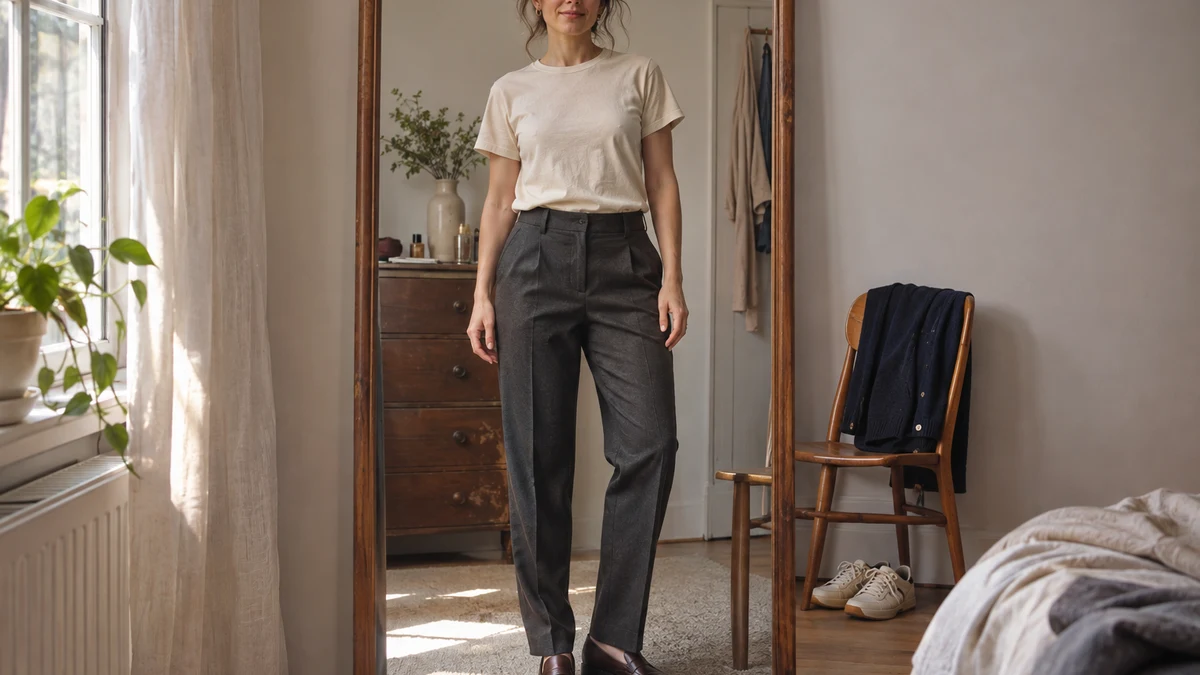
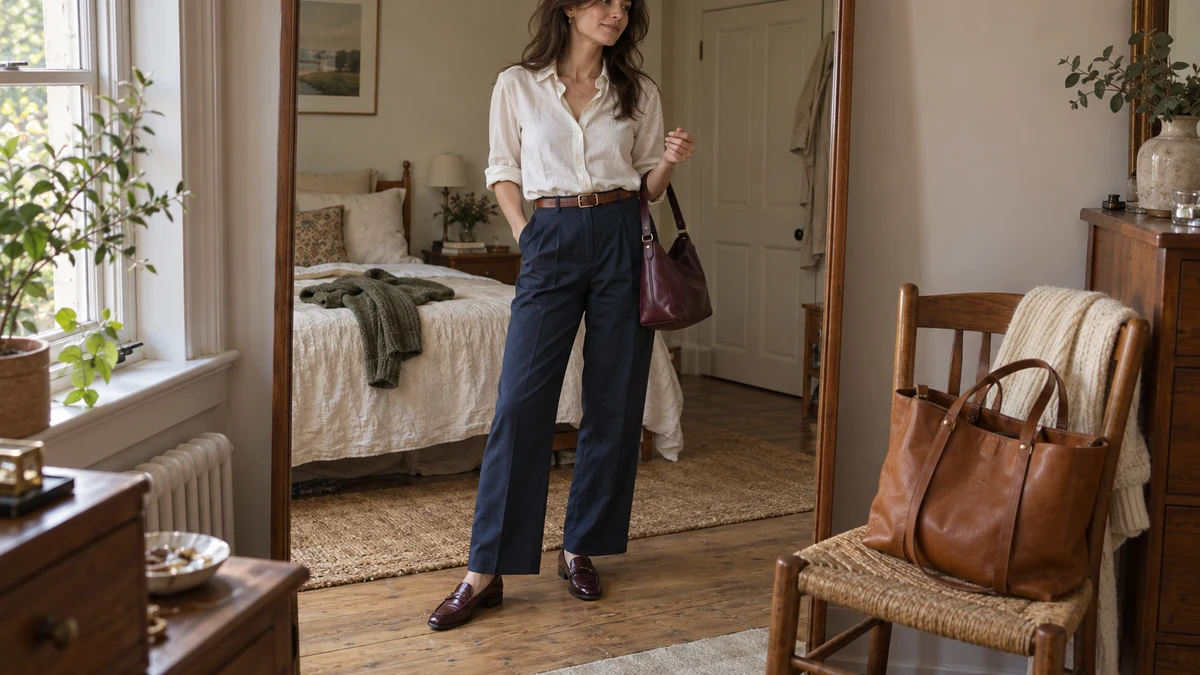
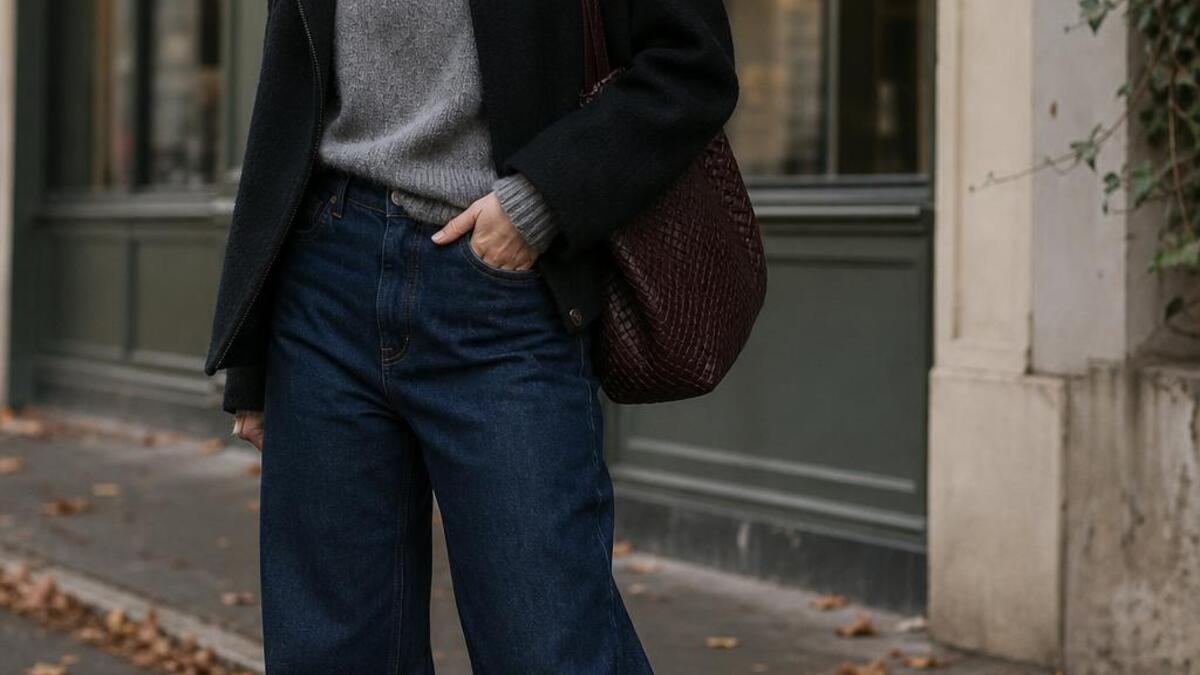
Should trouser pockets lie flat? On most tailored trousers, the pocket openings should sit reasonably close to the fabric when you stand naturally with the pockets empty. They do not need to stay perfectly still when you sit or walk. A persistent opening can come from the cut, pocket construction or fabric, not simply the size on the label.
The useful question is whether you like the pocket shape and can move comfortably. Slanted pockets may open slightly; cargo pockets are designed to project. Neither needs correcting because of your body. Start by comparing the garment with its product photos, then assess how it behaves during ordinary movement.
If two pairs look almost identical on a hanger but create different outlines on you, look at the pockets before changing your whole outfit. One may have a stiff pocket bag, while the other has a softer opening. Comparing both with the same top and shoes makes that difference easier to see.
 LIVE FITTING
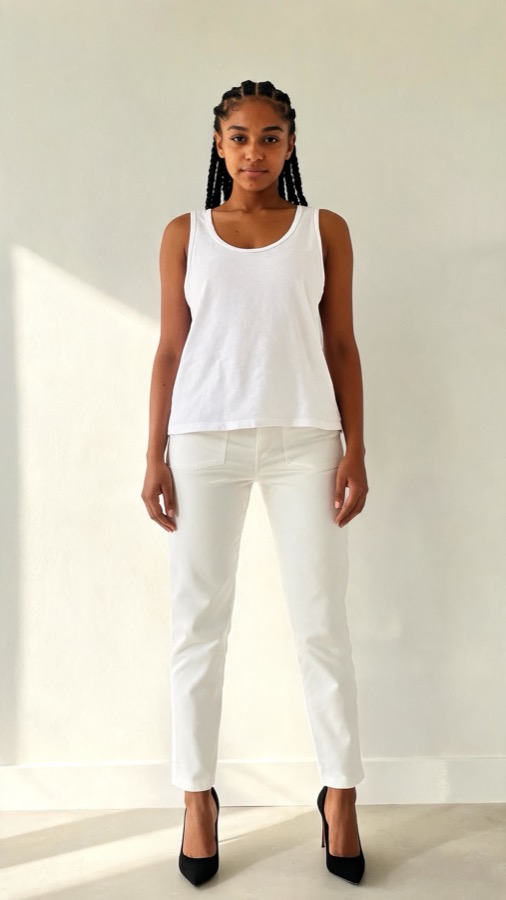

Which trouser pockets should sit close?
Slanted side pockets on chinos and tailored trousers usually follow the line between the waistband and upper leg. A small opening is normal, especially with your hand nearby. If the opening stays pulled into a pronounced curve, check the surrounding fabric for tension rather than judging the pocket alone.
Vertical pockets set into a side seam are often discreet when empty, but they can open as the fabric moves. Curved front pockets on jeans have a different construction: the opening is deliberately visible. Welt pockets, which look like narrow bound slits, should generally remain relatively smooth unless their design says otherwise.
Patch and cargo pockets add visible layers by design. Their corners, flaps and stitching contribute to the silhouette. Assess whether they sit as intended and feel comfortable, rather than applying a tailored-trouser standard to utility clothing.
Check the cause before changing size
Start with empty pockets and your usual waistband position
Remove your phone, keys and anything else inside. Put the waistband where you intend to wear it, then let your arms rest naturally. A phone can pull a lightweight pocket open, while wearing trousers higher than their intended rise can change how the entire front hangs.
Check the waistband without tightening a belt. If you need to cinch it substantially, the gathered fabric may push the pockets outwards. Try another waistband shape or rise before assuming a tighter belt will solve it.
Look for tension beyond the opening
Notice whether diagonal pulling lines extend from the pocket towards the zip or side seam. Sit, take a normal stride and bend your knees. When pocket flare accompanies restricted movement, compare a roomier size or a different cut with more space where you need it.
If the waistband already feels comfortable and the legs move freely, sizing up may introduce new problems without fixing the pocket. A different pocket angle or trouser block may suit your preferences better. The goal is a garment that works for you, not a smaller number.
Separate fabric behaviour from fit
Crisp cotton twill can hold a pocket opening away from the leg; fluid crepe may fall back more readily. A thick pocket bag can also show through lightweight fabric. If the opening looks twisted even off the body, inspect the construction and pressing rather than treating it as a sizing issue.
Four outfits that make pocket comparisons easier
Office trousers with a fine knit
Try charcoal straight-leg wool-blend trousers, a fine burgundy merino crew neck and black loafers. Choose a knit that finishes near the waistband without needing a bulky tuck. This keeps extra fabric away from the pocket bags while letting you see how the trousers hang.
For colder weather, add a lined coat and socks that cover the ankle. If the office is warm, substitute a fine cotton knit. Check the trousers both with and without the coat, since an outer layer can obscure the pocket behaviour you are trying to assess.


Weekend chinos with an overshirt
Pair olive straight-leg chinos with an ivory jersey top, a blue denim overshirt and trainers. Leave the overshirt open so you can compare the trouser outline without rearranging the outfit. Cotton twill has enough structure that a little pocket stand-away may remain even when the fit feels right.
On damp days, swap the trainers for weather-appropriate boots and add a raincoat. Carry a heavy phone in a bag for the comparison, then put it back in your pocket. You can decide whether that practical change in shape bothers you.
Evening crepe trousers with a satin blouse
Wear black crepe tapered trousers with a copper satin blouse and closed-toe flats. A loose, shallow tuck can work, but spread the blouse fabric evenly rather than pushing it into the pocket area. Compare the front before and after tucking to identify whether the added fabric causes the opening.
If you prefer an untucked blouse, choose a hem length you enjoy and leave it out. For more ways to arrange that combination, see how to wear a loose top without tucking it in. You do not need to expose the waistband to make trousers work.
Corduroy trousers with a cotton shirt
Combine chocolate straight-leg cords, a pale blue Oxford shirt and burgundy leather boots. Corduroy’s pile and pocket layers create more visible texture than smooth suiting. Start with the shirt untucked, then try a full tuck if there is comfortable room inside the waistband.
For cold weather, add a wool cardigan rather than forcing a thick jumper inside the trousers. GetWardrobe’s supplied proportion guide suggests using different materials within a close colour family. Here, corduroy and wool provide that variation without needing additional accessories.
What a visual comparison can and cannot tell you
A mirror photograph or virtual try-on can help you compare the overall outline of two trouser cuts with the same outfit. Keep the top, shoes and viewing angle consistent. Look at whether you prefer a visible pocket line or a smoother front, rather than searching for one universally correct silhouette.
A generated preview cannot establish pocket depth, seam tension or sitting comfort. Confirm those on the actual garment, and check the retailer’s measurements and return terms before buying. If an otherwise comfortable pair has a distorted opening, ask a tailor whether pressing or a construction adjustment could help before authorising alterations.
Common questions
Do gaping trouser pockets mean the trousers are too small?
Not always. They can indicate insufficient room when accompanied by pulling lines or restricted movement. Pocket angle, stiff fabric and bulky contents can also cause openings. Compare another size and another cut rather than relying on the pockets alone.
Can you sew trouser pockets shut to stop them opening?
A tailor may be able to close them, but you lose their function and underlying tension can remain. First check the fit with empty pockets. If comfort is good and you prefer a closed opening, ask what the alteration would change.
Should trouser pockets stay flat when you sit down?
No. Sitting changes the fabric’s position, so some opening and creasing are normal. Check that the pocket edges do not dig in and the trousers allow comfortable movement. Stand again afterwards to see whether the fabric settles without repeated adjustment.

One thought on “Should Trouser Pockets Lie Flat? Fit Checks and Outfits”