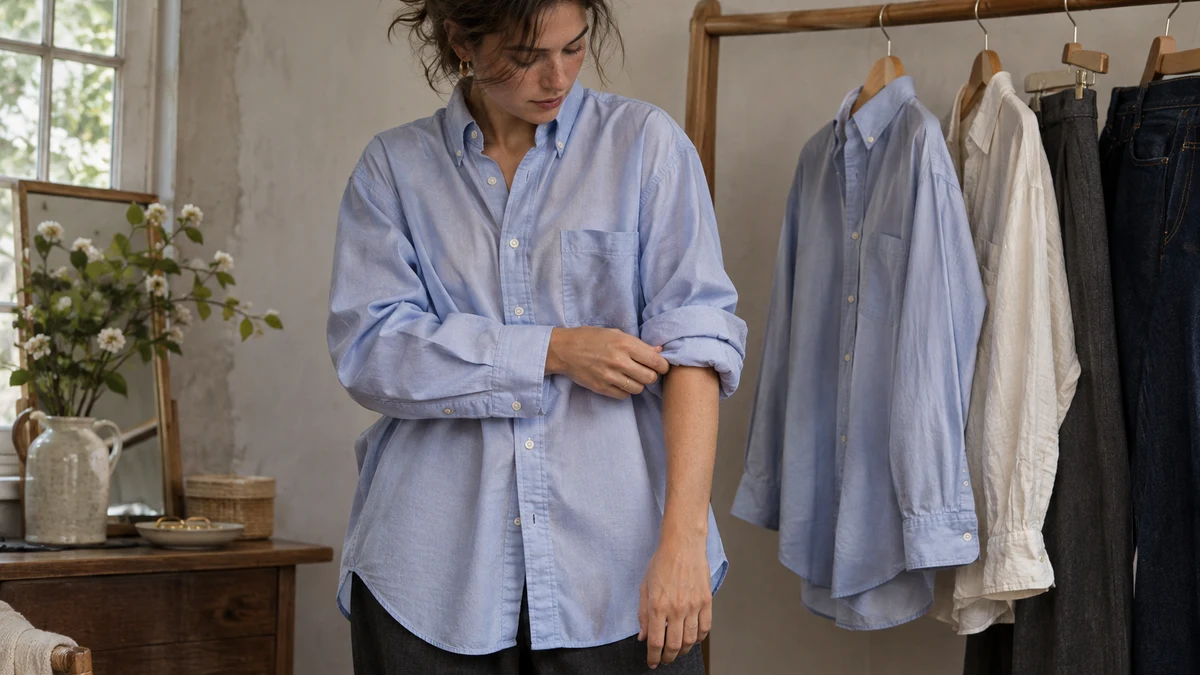
Should you roll oversized shirt sleeves? Yes, if you want a clearer sleeve shape while keeping the shirt loose through the body. Start with two broad turns that finish below the elbow. Leave them down when you prefer a continuous, draped silhouette or need the warmth.
A roomy shirt can feel right across the shoulders yet become awkward around the hands. Long cuffs may cover jewellery, catch on a bag or bunch beneath a jacket. Adjusting the sleeves changes that part of the outfit without requiring a tucked waist, narrower trousers or a different size.
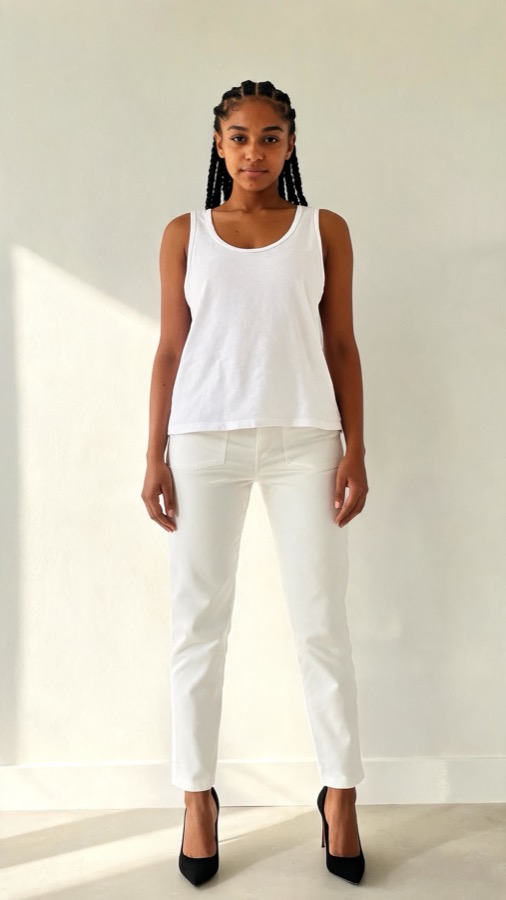
Compare the same outfit with the cuffs buttoned, rolled below the elbow and pushed above it. Keep your trousers and shoes unchanged so you can see what the sleeve adjustment contributes. A visual try-on can help compare the overall shape, but the real shirt needs a movement check to establish whether the fold stays comfortable.
 LIVE FITTING

Choose the sleeve endpoint before the rolling method
A roll just above the wrist keeps most of the sleeve length and exposes your hands. It suits an oversized shirt worn under a sleeveless knit or with relaxed tailoring. Use a shallow fold if the cuff is deep; a large turn may take the sleeve higher than intended.
Below the elbow is a useful starting point for everyday outfits. It leaves room for the elbow to bend without putting a thick fold directly in the joint. Keep a little loose fabric above the roll rather than pulling the sleeve taut.
Above the elbow creates a more abbreviated sleeve, useful in warm weather or when you want the shirt to read almost like a short-sleeved layer. However, the upper sleeve must be wide enough to accommodate the folded fabric comfortably. Stop lower if it grips when you bend your arm.
How to roll without creating a stiff fabric ring
Unbutton the cuff and the small sleeve-placket button, if there is one. Smooth the sleeve before folding: twisted fabric produces an uneven roll that is harder to adjust. Take off a close-fitting jacket first rather than trying to roll the shirt inside it.
For cotton poplin, fold the cuff back once, then turn it again using roughly the same depth. Let the roll sit naturally instead of pressing every edge flat. Two turns often provide enough adjustment; repeated narrow turns can become dense and uncomfortable.
For linen, try one generous fold followed by a smaller turn that catches the cuff. Soft creases belong to the fabric, so there is no need to make both sleeves geometrically identical. With slippery viscose or silk, a low single turn may be more realistic than a high roll that repeatedly falls down.
Get Wardrobe’s guide to proportion and composition suggests testing adjustments such as tucks and belts, while also recognising that fit can be the underlying issue. Apply that approach here: change one garment detail, then assess it. Sleeves that restrict movement need a fit adjustment, not a tighter roll.
Four outfits that keep the relaxed silhouette
Blue poplin shirt with straight ecru jeans
Wear a pale blue oversized poplin shirt untucked over straight ecru jeans, with tan loafers or canvas trainers. Roll the sleeves twice to finish below the elbow. The firmer cotton gives the folds a visible edge while the shirt body stays loose.
For a cool morning, add a navy wool coat and leave the shirt cuffs down inside its sleeves. Roll them after removing the coat indoors. If the jeans collect fabric over your shoes, check the straight-leg trouser hem examples before changing anything else.
Striped linen shirt with fluid navy trousers
Pair a roomy blue-and-white striped linen shirt with navy drawstring trousers and flat leather sandals in dry, mild weather. Make a broad, relaxed roll below the elbow, leaving the hem untucked. The trousers provide movement; the turned cuffs give the shirt a more deliberate endpoint.


Choose linen trousers instead of a heavier wool blend for warmer days. If both pieces are very soft, try a cotton-linen shirt with a little more structure rather than adding a belt you do not want. A compact crossbody bag keeps your hands free without changing the outfit’s easy character.
Olive overshirt with a T-shirt and dark denim
Wear an olive cotton-twill overshirt open over a cream T-shirt, with dark straight jeans and brown lace-up boots. Start with one cuff turn at the wrist. Thick twill builds volume quickly, so a high roll may feel cumbersome rather than relaxed.
On colder days, leave the sleeves down and let the open front provide definition through layering. This is a useful alternative when rolled sleeves would leave you chilly. Check that the overshirt still allows you to reach forward comfortably over the T-shirt.
Soft black shirt with charcoal evening trousers
Combine a loose black viscose shirt with charcoal trousers and burgundy flats for an informal dinner. Leave the cuffs buttoned if the fabric falls cleanly around the wrists. A fluid sleeve can be part of the intended silhouette rather than something that needs shortening.
If the cuffs cover your hands, test one low turn and move around before leaving. Avoid repeatedly rolling delicate fabric into a tight band. Small earrings or a textured bag can provide detail while the clothes remain soft and unstructured.
When rolling is not the best adjustment
If a roll keeps sliding down, first check the fabric and sleeve width. A very wide, slippery sleeve may never hold a compact fold reliably. Use a lower turn, wear it down or choose a shirt with a sleeve tab designed to secure a roll.
Do not size down solely to shorten the sleeves if you like the shirt’s overall volume. That can also change the shoulder position and room through the chest. For a shirt you wear frequently, ask an alterations professional whether shortening the sleeve is practical given its cuff and placket construction.
Definition can also come from a visible neckline or a different hem endpoint. Our guide to wearing a loose top without tucking it in offers alternatives if you want to keep both the waist and sleeves unrestricted.
Common questions
Should oversized shirt sleeves finish above or below the elbow?
Start below the elbow because it usually requires fewer folds and leaves the joint free to bend. Try above it for warmer weather, provided the sleeve has enough room. Bend and straighten your arms several times; the roll should not grip or need constant repositioning.
Can you roll shirt sleeves under a jumper?
You can, but folded cuffs may create pressure inside a close-fitting jumper sleeve. Keep the shirt sleeves down beneath a fine knit. Under a roomy sleeveless jumper, rolling is easier because there is no outer sleeve competing for space.
Do both rolled sleeves need to match exactly?
No. Aim for a similar endpoint and fold depth rather than identical creases, especially with linen. For a tidier finish, roll both sleeves before adding jewellery, then check them with your arms relaxed. Adjust any fold that twists or presses against your elbow.